Direct factory configurations engineered for tool rooms, electronics micro-assembly, specialized mold rebuilding, and jewelry manufacturing with unmatched beam quality.
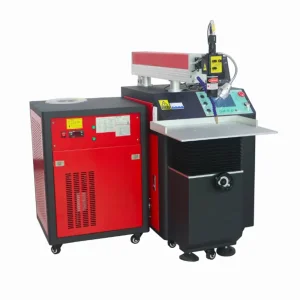
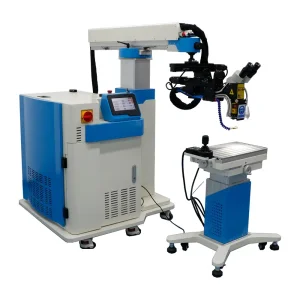
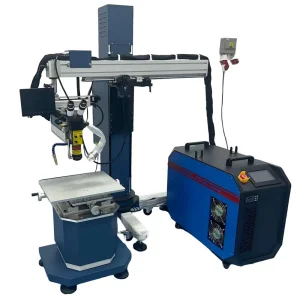
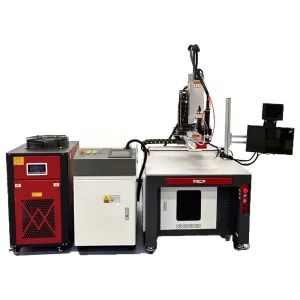
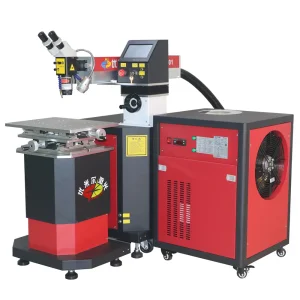
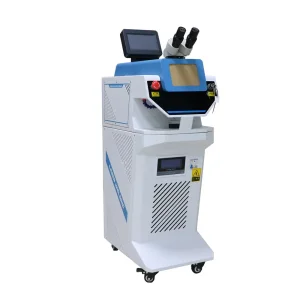
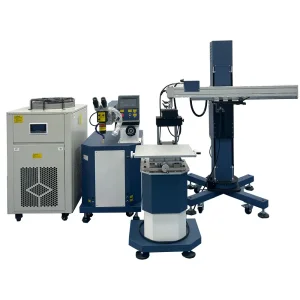
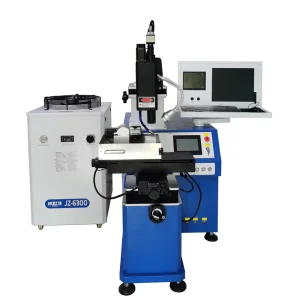
How high-density solid-state fiber architectures and air-cooled thermodynamic management transformed multi-ton floor welders into agile, high-throughput mini units.
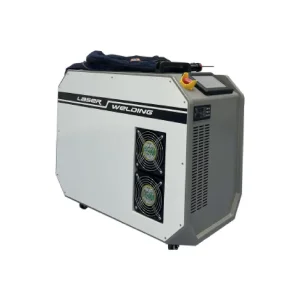
In modern industrial manufacturing, the demand for precision joined metal components has reached an unprecedented inflection point. Historically, industrial laser welding was reserved for capital-intensive automotive production lines, characterized by multi-kilowatt, floor-mounted gantries with dedicated water chillers that occupied excessive footprint. The emergence of the Laser Welding Machine Mini category represents an engineering breakthrough in solid-state semiconductor pumping, specialized single-mode fiber delivery, and advanced thermal dissipation algorithms.
By shrinking the physical envelope of fiber laser systems by up to 70% while sustaining raw optical power densities exceeding 106 W/cm2, contemporary mini laser welding factories have democratized deep-penetration keyhole and conduction welding. From precision medical telemetry housings to intricate die-cast mold restoration, the capability to execute low-heat, zero-distortion metallurgical bonds within a compact benchtop or rollable mini cabinet has revolutionized manufacturing floor economics globally.
Single-mode continuous wave (CW) and Quasi-Continuous Wave (QCW) architectures focus energy into concentrated micro-spots, yielding high aspect ratio welds with virtually zero thermal distortion across thin-gauge alloys.
High-speed dual-galvanometer wobble heads compensate for imperfect joint gaps (up to 1.5 mm) with dynamic frequency sweeping, eliminating strict tolerance requirements for sheet fabrication.
Transition from bulky compressor chillers to integrated vapor-chamber or compact closed-loop refrigerant circuits allows full 100% duty cycles in mini enclosures weighing under 45 kilograms.
Shenzhen and the Greater Bay Area represent the core apex of optoelectronic component vertical integration, offering overseas clients an irreproducible price-to-performance matrix.
The global dominance of Chinese original equipment manufacturers (OEMs) in the mini laser welding machine market is not accidental. It is the output of an hyper-concentrated industrial ecosystem located within Shenzhen and Guangdong Province. Within a 50-kilometer radius, top-tier laser factories integrate domestic fiber optical sources (such as Raycus, MAX, and JPT), German-engineered quartz collimating lenses, military-grade CNC controllers, and specialized copper wire feed systems into unified, turnkey machinery.
From sheet metal chassis fabrication to SMT board placement and optical fiber cleaving, 100% of the bill of materials (BOM) is sourced locally, eliminating lead-time bottlenecks and third-party markups.
Chinese factories excel in bespoke modification: dual-voltage internal transformer adaptation (110V/220V/380V), multi-language HMI interfaces, personalized industrial styling, and automated robotic line integration.
Modern tier-one Chinese laser facilities deploy 72-hour continuous thermal stress cycling, power-meter stability logging, and helium mass spectrometer leak testing to guarantee zero failure upon arrival overseas.
Furthermore, direct-from-factory pricing bypasses multiple tiers of European or American distributor markups. International procurement departments secure industrial equipment at 40% to 60% lower capital expenditure while retaining industry-standard components, worldwide manufacturer warranties, and round-the-clock direct engineer support.
From GaN-based air cooling to multimodal 4-in-1 multi-processing, the frontier of portable fiber laser engineering is expanding at hyper speed.
The elimination of deionized water requirements, distilled water anti-freeze maintenance, and external water hoses. Gallium Nitride (GaN) high-efficiency power stages permit sub-30kg total machine weights that operate smoothly between -15°C and +45°C ambient temperatures.
Modern mini factories are consolidating four critical fabrication operations into a single chassis: continuous laser welding, weld-bead seam cleaning, surface rust/oxide ablative cleaning, and thin-sheet laser severing via rapid quick-change nozzle optics.
Mini welders are increasingly pre-configured with open industrial fieldbus protocols (Modbus, EtherCAT, Profinet). This enables plug-and-play mounting onto collaborative robots (Cobots) for cost-effective 6-axis automated micro-welding cells.
Targeted metallurgical deployment where localized thermal input, micro-weld geometries, and superior aesthetic finishes are absolute operational prerequisites.
Challenge: Heat checking, chipped corners, and micro-cracking in H13 and P20 steel tooling.
Solution: Boom-mounted mini QCW/fiber lasers deposit specialized wire without annealing adjacent hardened cavities, saving tens of thousands in mold recutting costs.
Challenge: Joining gold, 925 silver, and titanium without melting heat-sensitive emeralds, diamonds, or porcelain veneers.
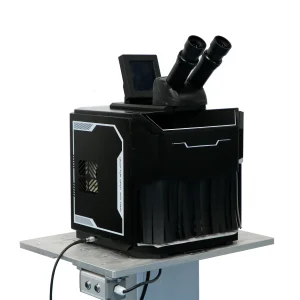
Solution: Enclosed mini desktop YAG & QCW welders equipped with stereo microscopes provide 0.1 mm spot sizes with 50-millisecond pulse shaping control.
Challenge: Hermetic encapsulation of sensitive pressure diaphragms and lithium battery busbars.
Solution: Fiber transmission mini lasers guarantee zero splatter, ultra-low helium leak rates (10-9 mbar·l/s), and pinpoint structural integrity.
A rigorous economic breakdown evaluating the systemic advantages of compact fiber laser systems versus conventional arc welding technologies.
At an executive level, global manufacturing facilities face dual headwinds: a critical shortage of certified veteran TIG welders and rising electrical tariffs. A factory deploying mini laser welding units addresses both challenges concurrently. Operators with minimal technical training achieve aerospace-grade, polished welds within 48 hours of onboarding. Furthermore, post-weld grinding, pickling, and planar rectification are reduced by up to 90%.
| Operational Metric | Traditional TIG / GTAW | Manual MIG / GMAW | Mini Handheld Fiber Laser |
|---|---|---|---|
| Welding Speed (1mm SS) | 150 - 250 mm/min | 300 - 450 mm/min | 1,200 - 2,500 mm/min |
| Heat-Affected Zone (HAZ) | Extremely Wide (High Warping) | Wide (Noticeable Warping) | Ultra-Narrow (< 0.2mm) |
| Post-Weld Grinding | Mandatory & Labor-Intensive | Heavy Spatter Chipping | Virtually Zero Grinding |
| Operator Training Time | 12 - 24 Months | 3 - 6 Months | 2 - 5 Days |
| Electrical Efficiency | 20% - 30% Plug Efficiency | 40% - 50% Plug Efficiency | Up to 85% Electro-Optical |
| Shielding Gas Consumption | High Continuous Flow | Moderate Flow | Low Focused Flow (N2/Ar) |
Essential checklist for international importers, plant managers, and procurement officers evaluating Chinese laser machinery factories.
When sourcing industrial mini laser welders across international borders, engineering and compliance compatibility must take precedence over headline price tags. Tier-1 manufacturing facilities verify the following parameters prior to dispatch:
Ensure Class 4 laser certifications, dual-channel emergency stop interlocks, protective optical grounding, and verifiable CE, FDA, and ISO9001 registration labels for customs clearance.
North American installations demand single-phase 110V/220V 60Hz tolerance, while European and Asian sites require 230V/400V 50Hz. Verify internal industrial step-up transformers in mini units.
Contractual commitments for DHL/FedEx priority dispatch of protective lenses, copper nozzles, and wire guide tips, backed by 24/7 direct remote video engineering support.
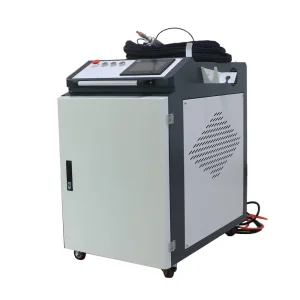
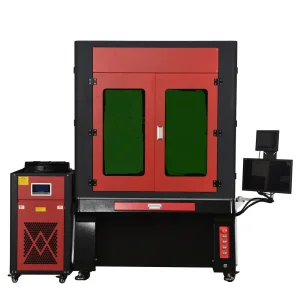
Heavy-duty, automated CNC, and high-wattage complementary systems manufactured directly in our certified production facilities.




In-depth technical answers addressing operational mechanics, material metallurgical compatibility, optical maintenance, and factory warranty protocols.
