Explore our certified industrial laser welding systems engineered for structural tool-and-die restoration, continuous production sheet joins, and automated high-throughput manufacturing lines.
Why modern automotive, aerospace, and energy infrastructure sectors are aggressively decommissioning legacy Gas Tungsten Arc Welding (TIG/GTAW) in favor of intelligent continuous fiber laser systems.
Over the last five years, the global sheet metal and structural assembly sector has witnessed a tectonic migration toward handheld and automated fiber laser welding systems. Historically limited by high kilowatt-source capital costs and microscopic beam alignment tolerances, modern fiber lasers with dual-axis galvanometer oscillation (wobble welding) have bridged gaps up to 2.5 mm wide without sacrificing weld integrity. This technical leap empowers industrial workshops across North America, the European Union, Southeast Asia, and the Middle East to bypass severe shortages of master welder artisans while increasing overall production throughput by up to 400%.
When computing capital outlay, consumables, electrical load, and labor hours, laser welding demonstrates an ROI timeline of under 6.5 months for multi-shift facilities. While legacy TIG welding requires expensive argon flood rates (15–20 L/min), consumable tungsten electrodes, and extensive post-process wire brushing or flap-disc grinding, fiber laser systems operate at high lineal speeds with modest nitrogen/argon shielding (10–12 L/min) and virtually zero weld spatter. The extreme energy density of the 1064–1080 nm fiber wavelength confines heat to a microscopic keyhole, completely eliminating panel warpage in thin-wall 304/316 stainless and structural aluminum alloys.
Ex-factory baseline pricing, optical resonator specifications, maximum single-pass full penetration thresholds, and targeted industrial applications.
| System Architecture | Resonator Source & Power | Penetration (Stainless Steel) | Penetration (Aluminum / Cu) | Shielding Gas | Factory Price Estimate (USD) |
|---|---|---|---|---|---|
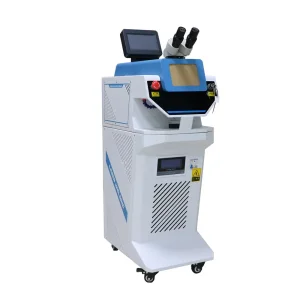
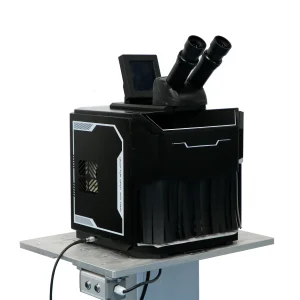
| Compact Desktop Jewelry Welder | Nd:YAG Pulsed (60W – 200W) | 0.1 – 1.0 mm spot | 0.1 – 0.8 mm spot | Argon (99.99%) | $2,800 – $4,600 |
| Handheld Continuous Fiber Welder | Single-Mode CW (1000W / 1kW) | Up to 3.0 mm | Up to 1.5 mm | Nitrogen / Argon | $3,200 – $5,200 |
| Mid-Power Wobble Fiber Welder | Multi-Mode CW (1500W / 1.5kW) | Up to 4.5 mm | Up to 3.0 mm | Nitrogen / Argon | $4,200 – $6,800 |
| Heavy-Duty Handheld System | Continuous Fiber (2000W / 2kW) | Up to 6.0 mm | Up to 4.5 mm | N2 / Ar / CO2 mix | $5,600 – $8,500 |
| Deep-Penetration High-Power | Continuous Fiber (3000W / 3kW) | Up to 8.5 mm | Up to 6.0 mm | Nitrogen / Argon | $7,900 – $12,500 |
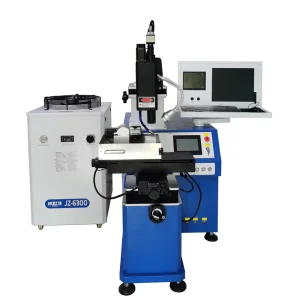
| Integrated Boom Mold Repair System | QCW / CW Fiber (1500W – 2000W) | Up to 5.0 mm build-up | Tool steel H13 / P20 | Pure Argon | $9,500 – $15,800 |
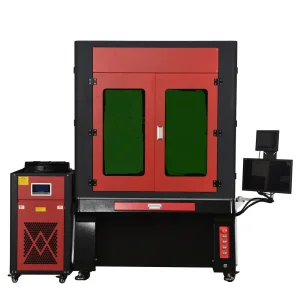
| 3-Axis Automatic CNC Workcell | Enclosed Fiber (2000W – 4000W) | Up to 10.0 mm | Up to 7.0 mm | Custom Coaxial Gas | $14,500 – $28,000 |
| High-Speed Galvanometer Scanner | Quasi-Continuous / Fiber (1kW–2kW) | Precision Spot / Stitch | Battery tabs / micro-joints | Argon Shielding | $12,000 – $22,500 |
Why Shenzhen and the Greater Bay Area photonics corridor deliver unrivaled lead-time precision, proprietary optical path innovation, and cost-to-performance supremacy.
Operating within Shenzhen’s high-density laser manufacturing cluster allows instantaneous, on-demand component synthesis. Optical lenses, dual-circuit industrial water chillers, digital wire feeders, and FPGA controller motherboards are manufactured within a 30-kilometer radius. This eliminates international supply bottlenecks and delivers ready-to-ship production turnarounds within 7 to 10 business days.
Every laser resonator undergoes an exhaustive 72-hour continuous beam stability burn-in cycle, power drift thermal imaging tests, and vibration torture analyses prior to container crating. In-house optical cleanrooms verify beam-parameter product (BPP) and spectral consistency, assuring that equipment arriving in overseas container ports operates at peak efficiency from Day 1.
Direct engagement with our factory engineers provides brand distributors and high-volume factories full flexibility: custom RAL powder-coating, localized human-machine interfaces (supporting 18 languages), automated safety interlocking schemes, custom gantry dimensions, and dedicated PLC communication protocols (EtherCAT, Profinet, Modbus TCP).
Examine how diverse manufacturing sectors leverage distinct laser architectures to overcome physical metallurgy constraints and achieve stringent structural tolerances.
Automotive injection mold toolrooms frequently face edge chipping, parting line degradation, and heat-checking cracks in hardened tool steels (SKD11, H13, NAK80). Utilizing our Integrated Boom Mold Laser Welder, technicians position high-reach optical articulating arms directly over 10-ton mold blocks while clamped in the injection press. Pulsed energy deposition achieves metallurgical bonding with filler wire matching the substrate hardness (50–55 HRC) with zero annealing or thermal softening of adjacent cavities.
Lithium-ion energy storage manufacturing demands high-speed, hermetic joining of dissimilar metals (copper-to-aluminum foil terminals and 3003-aluminum battery enclosure caps). Utilizing our High-Speed Galvanometer Scanner and dual-beam wobble lasers, technicians manipulate high-frequency circular spiral beam motions at 1,500 mm/sec. This breaks oxide layers, manages molten pool keyhole dynamics, and eliminates hot cracking and porosity in conductive copper interfaces.
Commercial stainless catering fabrication (sinks, cabinets, ventilation ducts) and signage channel lettering require immaculate cosmetic seams that avoid hours of flap-wheel polishing. With our Handheld Continuous Fiber Welder, operators run continuous butt, corner, and tee joints on 1.2 mm to 3.0 mm stainless sheet at 35 mm/second. The smooth convex fillet needs no post-weld pickling or abrasive grinding, preserving the original mill finish.
The evolutionary trajectory of industrial materials processing: how hybrid wavelength pairing, real-time closed-loop optical sensors, and edge-AI controllers define modern high-yield fabrication.
Traditional laser welding required strict joint fit-up (gap < 0.1 mm). The integration of high-speed CMOS coaxial cameras combined with edge-neural inference enables sub-millisecond seam tracking. The machine automatically recognizes bevel shifts, regulates wobble amplitude between 0.5 mm and 5.0 mm, and modulates laser power on-the-fly to guarantee penetration uniformity across unevenly sheared metal panels.
Welding pure copper (C11000) or gold has long been challenged by extreme infrared reflectance (> 95% at 1064 nm). The emerging industry standard combines a 450 nm blue diode beam with a 1080 nm fiber laser. The blue beam is absorbed efficiently at room temperature, instantly liquefying the copper surface so the infrared beam couples fully into the keyhole with zero spatter and zero micro-voiding.
Replacing destructive metallographic cut-and-polish testing, OCT technology projects a low-coherence measurement beam directly down the center of the welding keyhole. By measuring interference fringes at 100 kHz, the system maps real-time keyhole depth and cross-sectional bead geometry, providing 100% inline quality verification for safety-critical automotive structural assemblies.
Our complete machinery architecture meets rigorous safety directives for seamless customs clearance, factory insurance approval, and operator safety across North America, Europe, and Australasia.
Fully compliant with EN ISO 11553-1 (Laser Processing Machines) and EN 60825-1 (Safety of Laser Products). Equipped with redundant dual-channel safety interlocks, optical loop grounding clips that inhibit laser emission unless the nozzle touches the workpiece, emergency shut-offs, and laser safety goggle OD6+ certification.
Export models destined for the United States and Canada comply strictly with FDA Center for Devices and Radiological Health (CDRH) 21 CFR 1040.10 and 1040.11 regulations, complete with key-switch safety controls, remote interlock connectors, manual reset mechanisms, and protective housing warnings.
We provide comprehensive warranty coverage on the fiber laser source (24 to 36 months) with replacement optics, nozzles, and protective windows stocked in regional hubs across Germany, the USA, and Southeast Asia. We guarantee 24-hour remote video troubleshooting and dispatchable field-commissioning technicians.
In-depth technical answers addressing operational mechanics, power selection, utility infrastructure requirements, and metal metallurgy behaviors.
Explore our specialized industrial series: enclosed multi-axis production workcells, precision goldsmith benchtop welders, signcraft welders, and industrial surface cleaning systems.