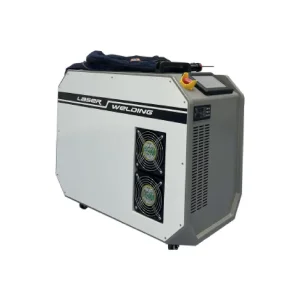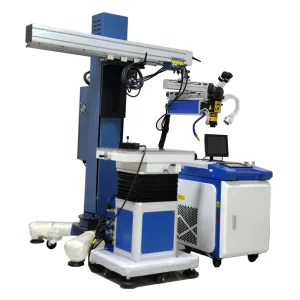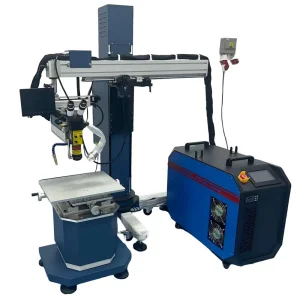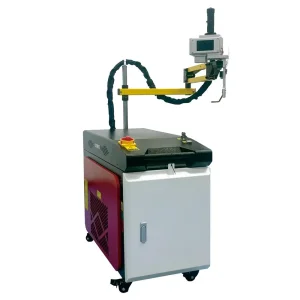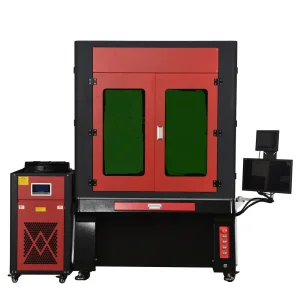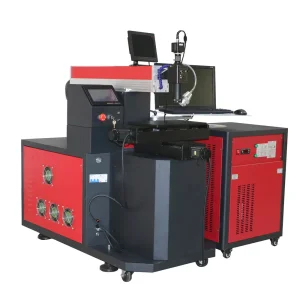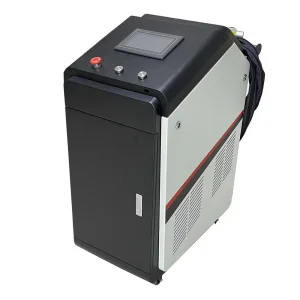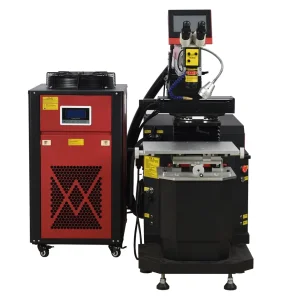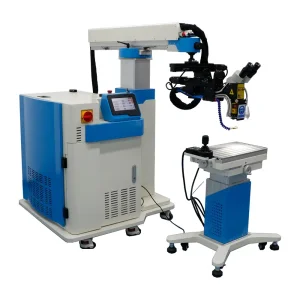
Explore high-precision fiber and pulsed welding equipment engineered specifically for mold maintenance, hardfacing, and micro-defect metallurgical bonding.
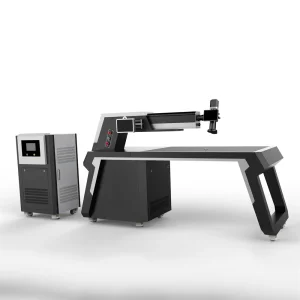
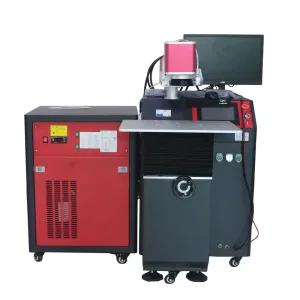
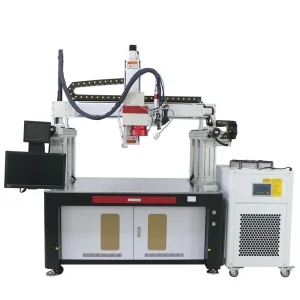
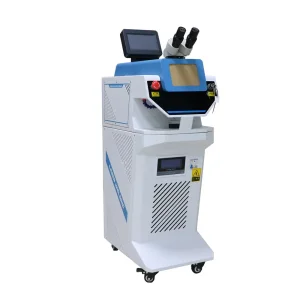
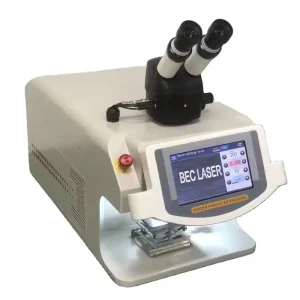
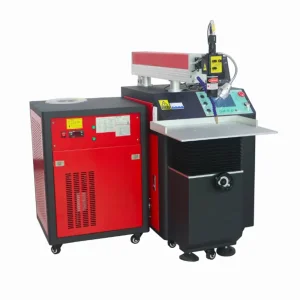
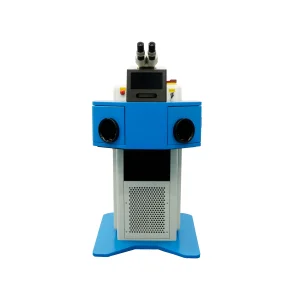
Tool steels—categorized broadly into hot-work (e.g., H13, 1.2344), cold-work (e.g., D2, SKD11, 1.2379), and plastic mold steels (e.g., P20, 718, NAK80)—possess high carbon equivalents and intensive alloying elements. Welding these grades requires deep metallurgical management to avoid martensitic micro-cracking.
Traditional TIG processes inject massive heat, yielding a sprawling HAZ (often >3.5mm) characterized by untempered coarse martensite and severe tensile residual stress. Industrial fiber laser welding constrains the HAZ to under 0.25mm, curtailing distortion and eliminating sink marks around precision parting lines.
Cold-work steels containing high chromium (>12%) and vanadium require strict thermal control. Incorporating localized inductive or infrared preheating between 250°C and 400°C stabilizes the austenite-martensite transformation temperature, completely suppressing hydrogen-assisted cold cracking.
Achieving homogeneous hardness without micro-porosity requires matching laser welding consumables. From Cobalt-base Stellite alloys for severe erosive tooling to grade-matched maraging filler wire (18Ni300) with low carbon contents, laser deposition produces defect-free structural matrices.
| Steel Grade & Classification | Typical Carbon / Alloy Eq. | Preheat Regimen | Recommended Laser Source | Post-Weld Hardness (As-Welded) |
|---|---|---|---|---|
| AISI H13 (1.2344 / SKD61) Hot-Work Die Casting Steel |
0.40% C, 5.0% Cr, 1.3% Mo, 1.0% V | 300°C – 350°C | Pulsed Nd:YAG or QCW Fiber | 52 – 55 HRC (Homogeneous tempered core) |
| AISI D2 (1.2379 / SKD11) Cold-Work Stamping Steel |
1.55% C, 11.5% Cr, 0.8% Mo, 0.9% V | 350°C – 420°C | High Peak Power QCW / Fiber Wobble | 58 – 62 HRC (Requires micro-tempering) |
| AISI P20+Ni (1.2738) Pre-hardened Injection Steel |
0.37% C, 2.0% Cr, 1.0% Ni, 0.2% Mo | Optional (150°C recommended) | Continuous Fiber (CW) / Wobble Head | 32 – 36 HRC (Polishable, no orange peel) |
| NAK80 (Pre-hardened) High-Polish Optical Mold Steel |
0.15% C, 3.0% Ni, 1.0% Al, 1.0% Cu | Not required | Precision Micro-Spot Fiber Laser | 38 – 41 HRC (Direct diamond-finish polishable) |
Industrial tool steel refurbishing has shifted from localized manual repairs to high-throughput, automated CNC laser cells. Exploring direct Chinese manufacturing ecosystems delivers distinct capital expenditure and lead-time advantages.
Situated in the heart of Shenzhen and Guangdong’s high-tech manufacturing corridors, our direct factory facilities leverage localized component fabrication—from galvo-scanning mirrors to beam delivery optics—drastically reducing lead times compared to Western assembly plants.
Procuring direct from Shenzhen Youmir Laser removes intermediary agent layers. Overseas buyers secure enterprise-grade fiber resonators, multi-axis automated boom arms, and German-designed galvo heads at competitive, transparent manufacturer direct factory quotes.
Stringent factory acceptance testing (FAT) includes 72-hour continuous burn-in tests, laser beam quality (M² factor) verification, and metallurgical weld cross-section micro-hardness validations on your specific steel samples prior to international shipment.
Laser welding of tool steel solves high-stakes downtime challenges across automotive pressing, die-casting, aerospace tooling, and precision micro-cavities.
Shearing edges and draw beads constructed from D2 and high-carbon cast steel suffer severe galling. Mobile boom laser welders reconstruct cutting edges in situ without removing multi-ton dies from 2000-ton stamping presses.
Thermal fatigue in H13 cores causes micro-heat checking and cracking. Laser deposition seals micro-cracks with maraging or cobalt filler, preventing molten aluminum infiltration and extending mold lifecycle by >200,000 shots.
Tooling for medical respirators or optical lens components machined from Stavax (ESR 420) require SPI A-1 diamond mirror polishes. Laser micro-welding deposits homogeneous steel without gas porosity, ensuring invisible polish transitions.
Titanium and nickel superalloy hot-extrusion dies undergo extreme thermal friction. Fiber laser cladding delivers localized cobalt hardfacing layers directly onto die radiuses, radically boosting surface wear and erosion resistance.
The convergence of photonics, robotics, and machine vision is actively re-architecting precision tool steel repair and maintenance workflows.
Next-gen systems leverage dual optical cameras with machine learning edge-detection to map worn radius profiles automatically, generating adaptive laser toolpaths that feed exact micro-wire volumes without operator intervention.
Integrating dual-axis galvo oscillation into handheld and CNC fiber welding heads agitates the molten weld pool at frequencies up to 1000Hz. This disrupts columnar crystal formation and eliminates micro-cracking in high-carbon steels.
Beyond wire feeding, powder-based high-speed cladding integrated into 5-axis CNC machining centers allows direct deposition of specialized tool steel alloys onto low-cost base substrates, accelerating rapid tooling prototyping.
B2B industrial buyers should evaluate tool steel laser welders using these engineering metrics before submitting RFQs or factory audit assessments.
Examine whether the system supports real-time pulse shaping. Pulsed Nd:YAG or Quasi-Continuous Wave (QCW) lasers provide programmable preheat, soak, and cooling sub-pulses within a single 10ms flash to control cooling rates.
Tool steels readily oxidize under high heat. Ensure the welding head is configured for dual coaxial and lateral inert gas (High-Purity Argon >99.999% or Argon-Helium mix) to isolate the micro-weld pool from nitrogen embrittlement.
Never procure without empirical validation. Shenzhen Youmir Laser conducts metallurgical cross-section analysis, Vickers micro-hardness testing, and dye-penetrant crack tests on your actual mold components before finalizing equipment proposals.
Direct answers from Youmir Laser’s metallurgical application engineers regarding tool steel welding, machine selection, and factory quotes.
TIG welding introduces excessive heat input, producing an extensive Heat-Affected Zone (HAZ), base metal deformation, and annealing of surrounding hardened areas. Laser welding concentrates photon energy into a sub-millimeter spot, maintaining localized cooling rates, eliminating sink marks, and enabling repair directly on finished mold surfaces without post-weld re-hardening.
Continuous (CW) lasers produce high continuous heat, ideal for deep penetration welds on sheet metal or structural steel. For tool steels (such as H13, D2, S7), Quasi-Continuous Wave (QCW) or pulsed YAG lasers are preferred because they achieve peak pulse powers of 3kW–6kW while keeping average power low, drastically mitigating heat build-up and cracking risks.
Three primary conditions must be controlled: 1) Thoroughly de-grease and laser-clean the repair groove to remove hydrocarbons; 2) Utilize 99.999% pure argon shielding gas at 10-15 L/min with appropriate trailing cups; and 3) Utilize preheating (150°C-300°C) depending on the carbon equivalent, alongside high-frequency beam wobble to degas the molten pool.
Yes. When matched with identical chemical filler wire (e.g., using 1.2738 wire on 1.2738 base metal), laser welds blend smoothly with the parent microstructure. The deposited zone exhibits uniform electrical conductivity and chemical composition, allowing chemical etching (photo-texturing) and wire EDM without ghost lines or color variance.
Our industrial solid-state fiber laser sources boast an MTBF (Mean Time Between Failures) exceeding 100,000 operational hours. Replaceable consumables include protective quartz cover slides (lifespan 1–3 months depending on plume management) and copper wire-guide nozzles. All replacement consumables are readily supplied from our Shenzhen factory.
We export to 50+ countries worldwide under FOB, CIF, or DDP terms with reinforced anti-shock seaworthy crating. Global buyers receive 24/7 video support, remote cloud system diagnostics, comprehensive English operating manuals, and on-site training via our certified local regional agents.
Explore our heavy-duty CNC automatic enclosed laser welding centers, flexible boom arms, and portable pulse processing units built for high-uptime manufacturing facilities.