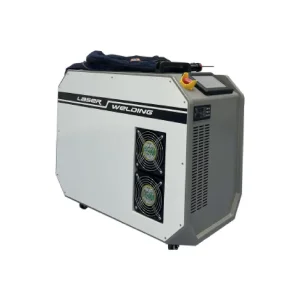
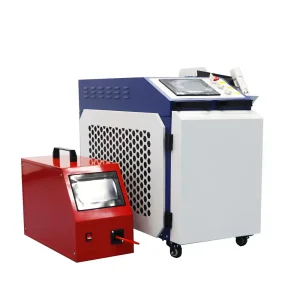
Factory-direct quotes on our proprietary high-energy-density micro welding machines, pulsed cleaning units, and CNC laser equipment.
Modern manufacturing requires sub-millimeter precision, reduced heat-affected zones (HAZ), and ultra-reliable metallurgic bonding. Shenzhen Youmir Laser Technology Co., Ltd. sits at the heart of this global transformation.
Unlike simple assemblers, our Shenzhen facility operates proprietary beam-shaping R&D, optical isolators, and galvo-scanner software calibration. This guarantees beam quality factors (M² < 1.1) essential for sub-100-micron spot sizes and precision micro-welds.
Leveraging China's concentrated industrial electronics supply cluster in Guangdong, we achieve a 30%–45% lead-time reduction over Western and Japanese competitors, supporting both single custom R&D prototypes and 100+ unit OEM distributor batches.
By producing control software, structural gantry frames, and optical delivery paths in-house, Youmir delivers QCW and fiber micro-welders with peak power up to 3000W at capital expenditure (CapEx) thresholds that maximize operational ROI for global purchasers.
Pioneering fiber laser development since 2010.
Europe, North America, Southeast Asia, & Middle East.
Ultra-narrow heat-affected zone for sensitive chips & foils.
Direct video diagnostic and rapid modular spares dispatch.
From sub-millimeter medical implants to electric vehicle lithium battery busbars, discover how our micro-laser systems eliminate thermal cracking, porosity, and post-weld machining.
Micro-joining of 316LVM stainless steel, nitinol stents, endoscopes, and titanium pacemaker casings. Zero-flux, hermetic micro-sealing prevents cytotoxicity and maintains structural integrity under extreme biocompatibility audits.
Welding highly reflective materials (copper to aluminum tabs) in cylindrical, pouch, and prismatic cells. Quasi-Continuous Wave (QCW) peak power eliminates spatter and thermal degradation of electrolyte seals.
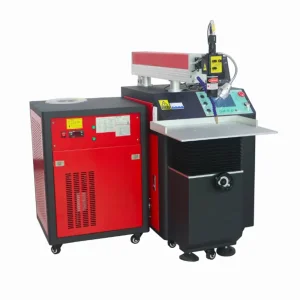
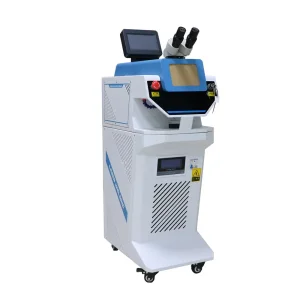
Precision spot welding for gold, platinum, titanium watch bezels, and stone-adjacent mountings. Our integrated stereomicroscope with crosshair alignment preserves delicate precious stones from thermal fracturing.
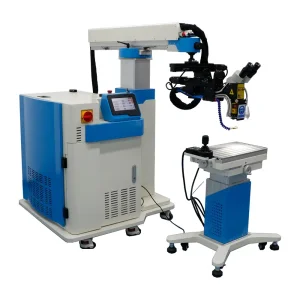
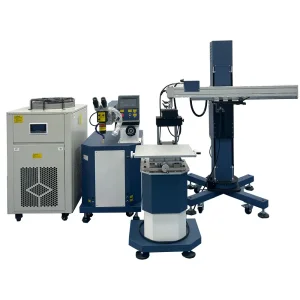
Dynamic boom-arm systems capable of deep-cavity laser deposition on hardened tool steels (SKD11, H13, P20). Eliminates preheating procedures and eliminates sink marks or base-metal annealing.
Micro-relay reed switches, thermocouple tips, pressure transducers, and thin copper leads. Wobble welding head technology allows bridging of varying joint gaps without burning through thin foil barriers.
Hermetic welding of MIL-SPEC circular connectors, wave guides, and sensor housings. In-line coaxial vision inspection guarantees 100% weld verification compliant with AS9100 quality guidelines.
Engineering parameters evaluated by procurement managers, process architects, and quality inspectors.
| Performance Metric | Youmir Fiber Micro Laser | QCW Pulsed Nd:YAG | Micro TIG / Resistance |
|---|---|---|---|
| Minimum Spot Diameter | 0.05 mm – 0.2 mm | 0.15 mm – 0.5 mm | > 1.0 mm |
| Heat Affected Zone (HAZ) | Negligible (< 0.05 mm) | Ultra-Low (< 0.15 mm) | Extensive (Thermal Warping) |
| Dissimilar Metal Capability | Exceptional (Cu-Al, Ti-SS, Ni-Cu) | High (Controlled Peak Power) | Poor / High Intermetallic Cracking |
| Electro-Optic Efficiency | > 35% (Minimal power draw) | ~ 3% – 5% (High water cooling cost) | ~ 40% (Poor arc energy density) |
| Diode / Source Lifespan | 100,000 Hours (Maintenance-free) | Flashlamp exchange every 1,500 hrs | Frequent electrode dressing |
| CNC Automation Readiness | Full EtherCAT, Profinet, Analog | Standard I/O trigger | Manual / Semi-rigid |
B2B purchasing directors evaluate more than the headline unit price. Below is our framework for de-risking capital investments across key operational verticals.
Global laser tool distributors require custom sheet metal RAL colors, tailored touch-screen GUI software in native languages (English, German, Spanish, French, Japanese), and unbranded industrial enclosures ready for domestic market certification.
Youmir fiber systems utilize solid-state diode architectures requiring zero flashlamp replacements, minimal deionized water consumables, and standard 220V/380V phase connections, lowering 5-year running costs by up to 60% compared to legacy YAG platforms.
Our lab provides cross-sectional metallographic microscopy, tensile pull testing, and helium leak testing reports on your actual sample materials prior to machine shipment, mitigating process risk before full payment settlement.
Discover how intelligent optical feedback, blue/green laser wavelengths, and artificial intelligence are revolutionizing manufacturing lines through 2030.
Infrared (1064nm) lasers struggle with absorption when processing pure copper and gold (often reflecting 90%+ of light). Combining 450nm blue or 532nm green wavelengths produces spatter-free, keyhole micro-welds on conductive battery and semiconductor pins.
Real-time depth measurement during high-speed automated joining allows the laser head to compensate for workpiece warping on the fly. Real-time weld seam inspection eliminates expensive offline X-ray auditing in zero-defect automotive production lines.
Modern galvo-controlled wobble optics dynamically tailor oscillating paths (circle, figure-eight, spiral, line) at frequencies up to 5000Hz, stirring the weld pool, eliminating gas pockets, and accommodating uneven part tolerances automatically.
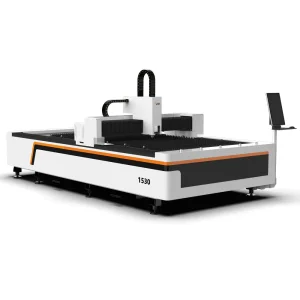
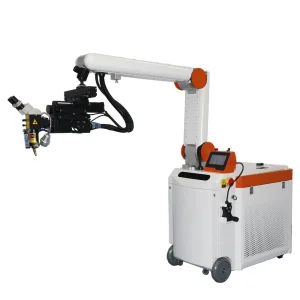
Explore our complete range of CNC enclosed units, cantilever boom mold welders, jewelry benchtop units, and fiber cutting tables.
Key answers addressing technical specifications, international trade standards, sample trials, and factory after-sales service.