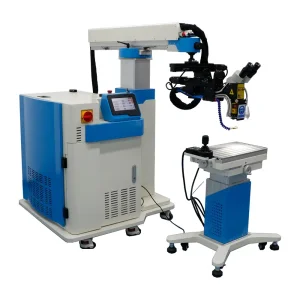
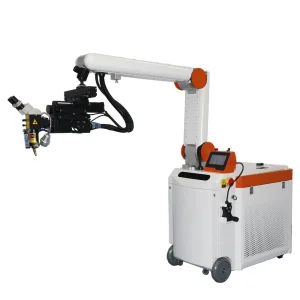
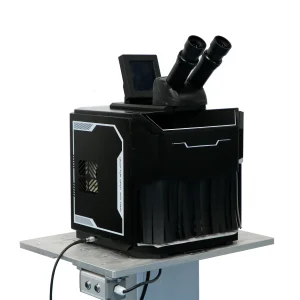
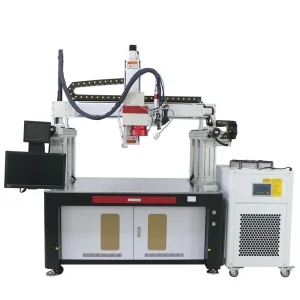
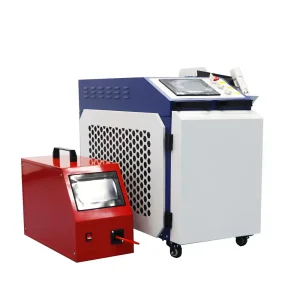
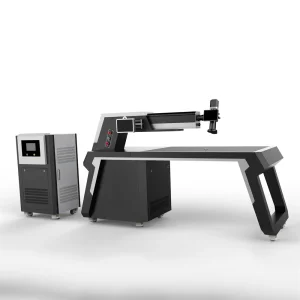
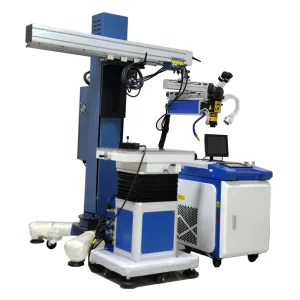
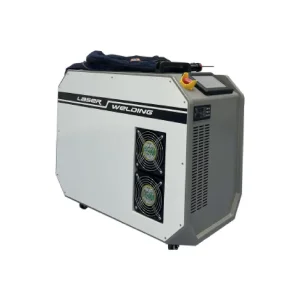
Explore custom-engineered 1000W platforms, cantilever stations, dynamic boom systems, and high-frequency pulsed welders directly assembled in Shenzhen cleanroom facilities.
Strategic shift from legacy TIG/MIG arcs to focused continuous-wave (CW) 1000W fiber photonics in modern automotive, HVAC, battery enclosure, and metal fabrication plants.
The 1000W fiber laser operates at a nominal 1070nm wavelength, delivering high power density in excess of 10⁶ W/cm². This localizes thermal energy input into a microscopic melt pool, eliminating sheet buckling and distortion across thin gauge metals.
By modulating beam oscillations via biaxial wobble collimation systems, custom 1000W systems break oxide layers effortlessly, facilitating high-integrity bonds between copper-brass, nickel-steel, and alloyed aluminum series.
Achieving electro-optical conversion efficiencies beyond 35%, a 1000W fiber source requires a fraction of the line draw needed for conventional tungsten or submerged arc welders, slashing plant utility footprints.
Empirical laboratory metrics recorded at Shenzhen Youmir Laser cleanrooms under industrial Argon and Nitrogen shielding atmospheres.
| Base Material Substrate | Optimal Single-Pass Penetration | Welding Speed Range | Shielding Gas Specification | Recommended Wobble Pattern |
|---|---|---|---|---|
| Austenitic Stainless (304/316L) | 0.5 mm – 3.0 mm | 25 – 65 mm/sec | Pure Nitrogen (99.999%), 12-15 L/min | Circle / Figure-8 (1.5mm width) |
| Carbon Steel (Q235 / 1018) | 0.5 mm – 2.8 mm | 20 – 55 mm/sec | Industrial Argon, 10-14 L/min | Linear Oscillation (2.0mm width) |
| Galvanized Sheet Steel | 0.6 mm – 2.2 mm | 18 – 45 mm/sec | Nitrogen (High Pressure Venting) | Triangle wobble (evaporates zinc) |
| Aluminum Alloys (5052 / 6061) | 0.5 mm – 1.8 mm | 15 – 35 mm/sec | Pure Argon (99.999%), 15-20 L/min | High Frequency Circle (1.2mm width) |
| Brass / Copper Alloys (H62/C11000) | 0.5 mm – 1.2 mm | 12 – 28 mm/sec | Pure Argon with High-Flow Nozzle | Dual-frequency Spiral |
Custom 1000W laser welding equipment configured for localized compliance, automated factory robotics, and high-duty fabrication cycles.
Integration into exhaust catalytic manifolds, door hemming lines, and structural seat brackets. 1000W fiber systems create hermetic gas-tight welds without burn-through, satisfying stringent TS 16949 acoustic and structural guidelines.
Replaces manual TIG fillet welding on commercial sinks, refrigeration enclosures, and kitchen ventilation. Zero discoloration on stainless decorative surfaces reduces downstream buffing cycles by over 80%.
Boom-mounted and cantilever optical heads allow on-tool micro-deposition of high-hardness tool steels (H13, P20, NAK80). Repairs surface spalling and gating erosion directly on machine presses, eliminating downtime.
Understanding the cost composition of industrial 1000W laser welders allows overseas procurement officers to optimize configurations and avoid hidden failure costs.
Represents 35% – 50% of machine build cost. Premium Tier-1 sources (Raycus, Maxphotonics, IPG Photonics) guarantee beam stability (M² < 1.3), continuous power linearity, and fiber core longevity.
Dual-galvanometer wobble heads deliver variable beam oscillation patterns (triangle, circle, line) to bridge fit-up gaps up to 1.5mm. Internal protective window chambers isolate dust from focal collimators.
Industrial refrigeration circuits maintain independent temperatures for the QBH laser output coupler (ambient circuit) and the fiber source (dew-point stabilized circuit), safeguarding continuous 24/7 duty cycles.
Synchronized dual-drive digital wire feeding ensures constant deposition for gap filling. Integrated gas solenoids provide pre-flow and post-flow purges to guarantee mirror-finish seams without porosity.
Shenzhen Youmir Laser constructs industrial platforms tailored to regional grid conditions, regulatory safety directives, and clean electrical frameworks across North America, the EU, and APAC.
Equipped with dual-channel safety interlock circuits, emergency category-0 stop circuitry, Class 4 laser shielding barriers, and calibrated OD6+ laser safety protective viewing windows conforming to EN 60825-1.
Engineered for 110V/220V/480V 60Hz split-phase configurations with integrated industrial step-up transformers, UL-certified Schneider electrical contactors, and registered FDA/CDRH accession documentation for seamless US customs clearance.
Standardized optical interfaces ensure protective lenses, copper nozzles, and wire guide tubes can be sourced locally or replenished overnight from regional partner depots in Europe, the Americas, and Southeast Asia.
Youmir Laser's engineering pipeline transitions 1000W architectures toward adaptive closed-loop AI diagnostics, real-time seam tracking, and multi-wavelength hybrid welding.
Real-time visual CMOS sensors tracking workpiece joint centerlines dynamically, compensating for joint alignment deviations up to 2mm in robotic applications.
Infrared pyrometric monitoring integrated into the optical collimation cavity, continuously adjusting power output to eliminate thermal accumulation on thin corners.
Combining 450nm blue semiconductor diodes with 1070nm fiber resonators to overcome copper reflection barriers and achieve zero-spatter battery tab welds.
Predictive maintenance telemetry continuously tracking pump diode degradation, chiller conductivity, and protective lens transmittance to avert line downtime.
Essential operational, commercial, and maintenance questions answered by senior laser welding engineers.
The 1000W platform provides optimal balance for metal thicknesses under 3.0mm. It yields superior beam quality, lower overall heat-affected zone (HAZ) risk, reduced electrical power consumption, smaller chiller footprint, and lowest capital cost for workshops focusing on precision sheet assemblies, kitchenware, and thin-gauge electrical enclosures.
For 300-series stainless steel, 99.999% industrial Nitrogen produces bright silver, oxide-free weld beads. For aluminum, brass, or carbon steel, ultra-pure Argon (99.999%) is necessary to shield the melt pool against nitriding and oxidation, ensuring maximum tensile elongation and zero porosity.
We provide complete OEM chassis restyling, custom RAL color powder coating, laser-etched distributor branding, multilingual software interfaces (English, Spanish, German, French, Russian, etc.), and white-label operating manuals tailored to distributor dealer networks.
The main consumables are protective quartz cover slides (lenses), copper contact nozzles, and wire feed tips. Under correct gas flow conditions, a protective lens typically lasts 150 to 300 welding hours. Total consumable running cost is usually less than $0.50 USD per production operating hour.
Explore continuous fiber platforms, pulse-laser cleaning modules, multi-axis automated CNC gantries, and industrial signage welders backed by direct Shenzhen factory quotes.