Explore standard, continuous, and custom-configured laser welding stations manufactured to meet global aerospace, automotive, tooling, and fabrication standards.
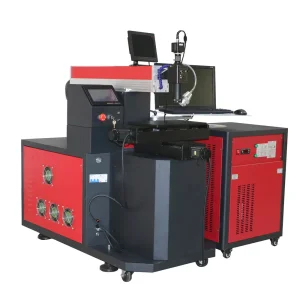
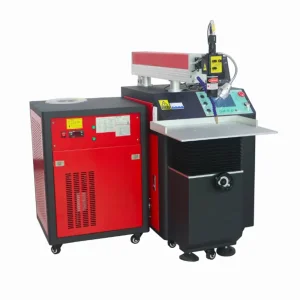
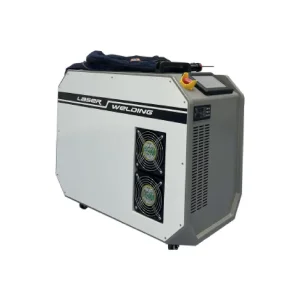
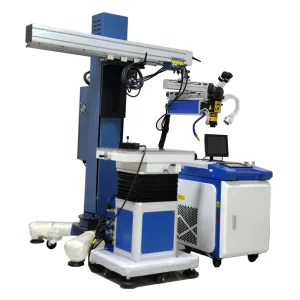

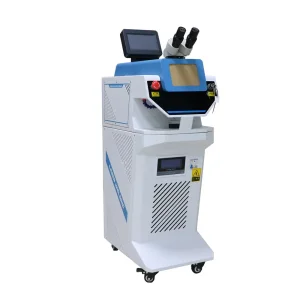
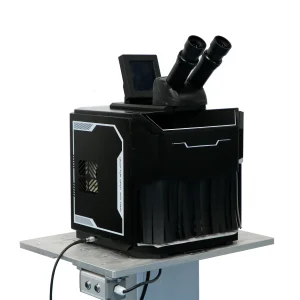
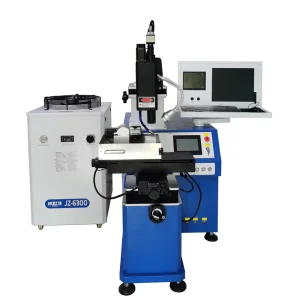
Analyzing thermal dynamics, beam delivery physics, and keyhole keypoint stability in modern continuous wave (CW) and quasi-continuous wave (QCW) fiber laser systems.
Traditional arc welding methods—such as Manual Metal Arc (MMA), Metal Inert Gas (MIG), and Tungsten Inert Gas (TIG)—disperse excessive thermal energy into the parent metal, creating extensive Heat-Affected Zones (HAZ), metallurgical recrystallization, and mechanical warpage. Handheld fiber laser systems operate at a central optical emission of 1064nm–1080nm, delivering power densities exceeding 106 W/cm2. This produces a keyhole mode of penetration characterized by high aspect ratio weld profiles (depth-to-width ratios reaching up to 6:1), negligible mechanical distortion, and minimal sacrificial post-weld abrasive dressing.
Early iterations of manual laser welding relied on static single-mode focal spots that demanded ultra-tight joint clearances (≤0.05 mm). Modern custom systems designed by Youmir Laser incorporate galvanometer-driven dual-axis wobble optical heads. By oscillating the collimated laser beam in programmable geometric trajectories (linear, circular, figure-eight, triangular) at frequencies up to 300 Hz and beam sweep widths between 0.2 mm and 5.0 mm, wobble heads bridge root gap variations up to 2.5 mm when matched with integrated multi-channel wire feeding algorithms.
Solid-state fiber laser engines achieve wall-plug electro-optical conversion efficiencies ranging between 30% and 40%, far outperforming carbon dioxide (CO2) lasers (8–10%) and traditional flashlamp-pumped Nd:YAG resonators (2–4%). This radical thermal efficiency drastically reduces power consumption per linear meter of weld joint. Combined with rapid travel rates—averaging 2 to 4 times the linear travel velocity of high-frequency pulsed TIG—fabricators realize a 60% to 75% contraction in total fabrication operating expenses (OPEX).
| Joining Technology | Travel Speed (1.5mm SS) | Heat-Affected Zone (HAZ) | Pre/Post Finishing Overhead | Operator Skill Threshold | Thermal Energy Efficiency |
|---|---|---|---|---|---|
| Fiber Laser (Wobble Handheld) | 15 – 35 mm/s | Ultra-Narrow (< 0.4 mm) | Near Zero (Direct to Coat/Polish) | Low (Rapid Training within Days) | 35% – 42% Wall-Plug |
| Pulsed TIG (GTAW) | 3 – 8 mm/s | Wide (1.8 – 3.2 mm) | High (Grinding, Pickling, Passivation) | High (Certified Master Welders) | 10% – 15% Equivalent |
| MIG / GMAW (Short-Circuit) | 6 – 12 mm/s | Substantial (> 3.5 mm) | Extensive (Spatter Deslagging, Leveling) | Moderate to High | 15% – 20% Equivalent |
| Flashlamp Nd:YAG Laser | 2 – 6 mm/s | Micro-Local (< 0.6 mm) | Low to Moderate | Moderate | 2% – 4% Optical Conversion |
Critical engineering parameters, duty cycle resilience, and vendor assessment criteria for Tier-1 engineering procurement contractors and original equipment manufacturers.
Procurement teams must inspect internal laser module architecture. Tier-1 systems leverage single-emitter fiber combiner architectures with Mean Time Between Failures (MTBF) exceeding 100,000 operational hours, incorporating dual-stage active back-reflection isolators that absorb 99.8% of retro-reflected beams when welding highly specular substrates such as C101/C110 copper, gold alloys, and mirror-finished AA6061 aluminum.
Continuous heavy-gauge welding demands rigorous thermodynamic balance. Youmir Laser engineers match laser engines with multi-stage dual-circuit refrigeration systems. The secondary cooling loop maintains the laser collimator and protective optical windows at a stable 28°C ± 0.5°C, effectively eliminating thermal blooming and focal point shift during extended ambient operation up to 45°C.
Automated wire feed systems must operate synchronously with the laser firing trigger. Sub-millisecond latency control prevents initial weld pooling blowout or end-cratering. Our high-torque stepper-motor driven feeder assemblies accommodate wire diameters of 0.8mm, 1.0mm, 1.2mm, and 1.6mm with dedicated anti-kink feed liners for soft aluminum wires (ER4043 / ER5356).
Manual shop throughput depends heavily on torch mass. Youmir’s lightweight handheld welding head weighs under 0.75 kg, equipped with center-of-gravity balance to mitigate wrist fatigue. Armored conduit umbilical lengths (available in 10m, 15m, and 20m configurations) incorporate integrated internal fiber guides, dual water channels, and shielding gas paths protected by Kevlar braiding.
Deployment methodologies engineered to resolve complex metallurgy, heat sensitivity, and mechanical geometry across mission-critical fabrication environments.
Electric vehicle manufacturing requires low-resistance, high-integrity joints across dissimilar conductive non-ferrous metals. Youmir laser systems utilize tailored beam oscillation profiles to join copper to aluminum busbars, prismatic battery enclosures, and cooling plate heat exchangers. High peak-power density pierces copper oxide films while minimizing cumulative heat dispersion, avoiding damage to nearby electrolyte seals and sensitive thermal management coatings.
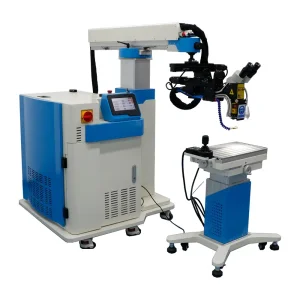
High-capital injection mold tooling, die-casting cavities, and stamping punches regularly experience edge chipping, thermal fatigue cracking, and dimensional wear. Our dedicated Mold Laser Welding series integrates cantilevered multi-axis optical booms, 360° rotational heads, and stereo microscope observation. Depositing matching alloy filler wires as thin as 0.2mm restores critical parting lines without base metal softening, tempering degradation, or undercut defects.
Sanitary standards across the food processing, pharmaceutical, and architectural hardware industries enforce non-porous, crevice-free joint geometries. Operating with pure Nitrogen (N2) shielding gas, our handheld systems create smooth, hermetically sealed, oxide-free weld beads on AISI 304, 316L, and duplex stainless sheets. The lack of surface oxidation and thermal blueing slashes secondary chemical passivation and mechanical polishing steps.
A decade-and-a-half of proprietary laser development, vertically integrated component assembly, and comprehensive global technical delivery.
Unlike simple assemblers who source commercial black-box subassemblies, our core Shenzhen engineering teams independently develop optical collimation systems, digital galvanometer drive software, specialized CNC firmware, and integrated PLC safety monitors. This end-to-end design ownership enables rapid OEM/ODM modifications, custom user interface localization, and custom multi-axis robotic kinematics.
Procurement validation begins before purchase orders are signed. In our Shenzhen sample application laboratory, technical specialists conduct empirical sample joining on client-supplied materials. Using metallographic cross-sectioning, micro-hardness testers, and tensile coupon pulling, we provide comprehensive laboratory validation reports documenting optimal pulse frequency, shielding gas flow, and wobble geometries.
Tracing technical roots to continuous fiber laser R&D initiated in 2010 and incorporated in Shenzhen in 2012, Youmir has expanded with specialized production facilities in Zhongshan (established 2017) and Hunan (launched 2018). Spanning over 5,000 square meters of assembly, cleanroom optical mounting, and continuous aging test cells, our output supports demanding high-volume deliveries worldwide.
Comprehensive engineering compliance ensuring operator protection, EMC stabilization, and international statutory alignment.
Handheld laser emissions present severe Class 4 ocular and cutaneous radiation hazards if triggered unintentionally. Youmir systems utilize a certified safety loop circuit. The laser generator will strictly not fire unless the conductive nozzle establishes continuous physical and electrical loop contact with the earthed workpiece. Instantaneous emission cut-off triggers within 5 milliseconds if surface continuity is broken.
Export models are fully certified under the EU Machinery Directive (2006/42/EC), Low Voltage Directive (2014/35/EU), and Electromagnetic Compatibility (EMC 2014/30/EU) under harmonized standard EN 60825-1:2014 (Safety of Laser Products). US-bound machinery complies with FDA CDRH 21 CFR 1040.10 and 1040.11 accession documentation, including keyed master controls and emergency shutoff stages.
Factory lines are engineered to function across unstable regional line voltages. Handheld systems ship with selectable multi-tap transformers and active filtering modules compatible with single-phase 110V/220V/240V (50/60Hz) or three-phase 380V/415V/480V industrial grids. Internal phase-monitoring relays prevent damage from phase loss, voltage drop spikes, or inverse polarity connection.
Anticipating the technological convergence of artificial intelligence, multi-wavelength photonics, and lightweight field-serviceable components.
Emerging developments in Youmir’s automated portfolio integrate high-speed CMOS visual sensors and edge AI compute chips directly into the welding torch housing. Neural networks analyze surface seam topologies, calculate gap widths in real-time, and dynamically modulate wobble frequency, wire feeding speed, and laser power within 2 milliseconds, maintaining weld penetration even over imperfect automated jigging.
Welding pure copper, brass, and gold alloys has historically been challenging due to high reflection of 1064nm infrared light (copper absorbs under 5% at room temperature). Youmir’s photonic roadmap leverages dual-wavelength combined sources: a 450nm visible blue laser creates a liquid molten pool by achieving >40% room-temperature copper absorption, while a synchronized fiber infrared laser provides deep-penetration keyholing without spatter.
Field repair teams in shipbuilding, petrochemical pipelines, and structural maintenance require ultra-compact equipment. Our development pipeline incorporates compact air-cooled fiber engines utilizing micro-channel copper heat pipes and refrigerant phase-change loops. This layout eliminates bulky liquid chillers, lowering total machine mass below 35 kilograms for mobile site operations.
Specific technical answers regarding shielding gases, metal thickness limits, optic protection, and comparative process economics.
For stainless steel (304, 316, 430) and carbon steel, industrial-grade Nitrogen (N2, purity ≥99.99%) is typically optimal because it suppresses surface oxidation and enhances surface hardness. For aluminum, titanium alloys, and brass, high-purity Argon (Ar, purity ≥99.999%) is mandatory to prevent nitriding embrittlement and porosity formation. Operating gas flow rates should be set between 15 to 20 Liters/min.
With matched wire feeding: a 1000W system produces single-pass full penetration on stainless steel up to 3mm and aluminum up to 1.5mm; a 1500W unit achieves 4mm on stainless and 2.5mm on aluminum; a 2000W system delivers 5mm on stainless and 3.5mm on aluminum; while a 3000W fiber system penetrates up to 8mm on stainless steel, 6mm on carbon steel, and 5mm on structural aluminum.
Youmir optical welding torches use a dual-barrier safety design: an aerodynamic coaxial gas air-knife purges heavy particulates before they enter the nozzle orifice, while an internal sacrificial fused-silica protective window (AR-coated at 1064nm) shields the focus lens. The machine controller tracks optical window temperature via integrated sensors and pauses operation if contamination occurs.
Yes. Our standard laser generators and wobble controllers feature discrete 24V industrial I/O, Modbus TCP, and PROFINET communication protocols. The handheld torch head can be removed and fixed to 6-axis industrial articulated arms (such as Fanuc, Kuka, ABB, or Yaskawa) or collaborative robots (cobots), enabling automated cell switching between manual repair and high-volume line runs.
Under regular industrial usage with appropriate gas flow, a fused-silica protective lens functions reliably for 150 to 240 operating hours before cleaning or replacement is needed. Pure copper gas contact tips offer a working life of 200 to 500 hours, depending on arc proximity and spatter clearing. Both items are standard consumables easily exchanged without factory service visits.
Because fiber laser energy absorption is regulated by electronic parameters rather than manual arc length manipulation, beginner operators typically produce clean, structurally sound fillet and butt joints within 4 to 8 hours of training. Comprehensive machine instruction focuses on safety protocols, nozzle angle management, travel velocity maintenance, and routine optic cleaning.
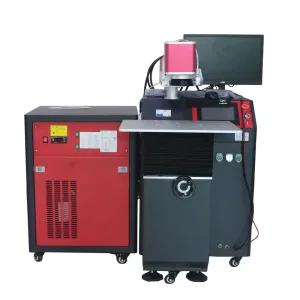
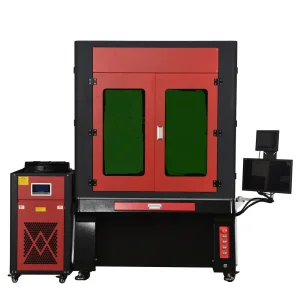
Targeted manufacturing solutions covering mold cavity reconstruction, high-speed galvanometer spot welding, and integrated fiber sheet cutting machinery.
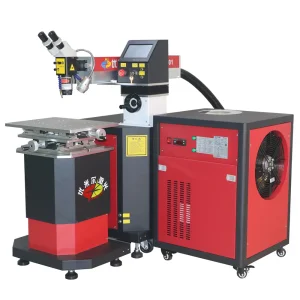




Send your dimensional drawings, target materials, and production cycle requirements to our Shenzhen headquarters. Receive a comprehensive laboratory feasibility report complete with micro-etched cross sections and parameter optimization windows.
