Explore our core compact laser welding series, engineered for high-integrity joint metallurgy, thermal zone limitation, and agile industrial workshop integration.
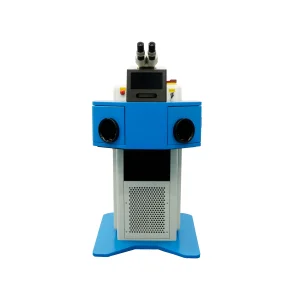
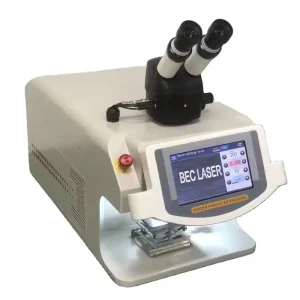
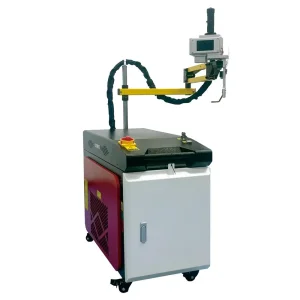
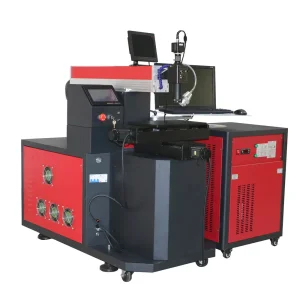
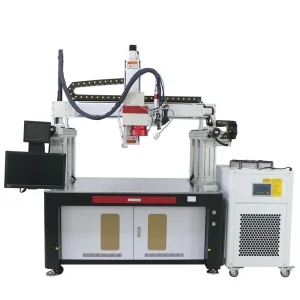
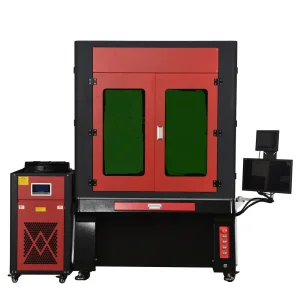
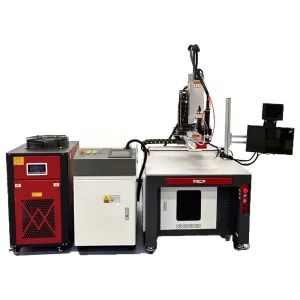
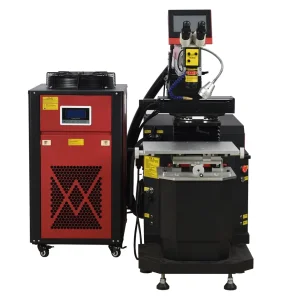
Analyzing key industrial market trends, metallurgical transition from traditional arc processes, and the engineering thermodynamics governing micro-laser fusion.
Traditional arc welding methods such as TIG and MIG introduce massive heat input into thin-gauge alloys, leading to severe angular distortion, oxidation, and micro-cracking. Custom laser mini welding machines concentrate coherent light into a focused spot size of 0.2 mm to 0.6 mm, yielding an energy density exceeding 106 W/cm2. The resultant keyhole weld geometry confines the Heat-Affected Zone (HAZ) to microscopic margins, preserving temper and eliminating post-weld straightening.
Global fabrication is transitioning from monolithic, centralized welding cells to agile, cellular manufacturing stations. As industrial footprints become constrained and real estate costs escalate, tier-1 and tier-2 manufacturers demand mini desktop and compact vertical laser welders. These lightweight, mobile units allow surgical deployment directly onto assembly lines, medical cleanrooms, and maintenance suites without massive auxiliary infrastructure.
Modern engineering involves joined combinations of dissimilar and high-reflectivity alloys—including pure copper, brass, aircraft-grade 6061 aluminum, Kovar, and medical-grade titanium (Ti-6Al-4V ELI). Shenzhen Youmir Laser utilizes proprietary dual-wave and high-peak quasi-continuous wave (QCW) lasers to breach the high initial reflectivity threshold of non-ferrous metals without thermal runaways or surface spatter.
Shenzhen Youmir Laser Technology Co., Ltd. does not rely on third-party design houses. We develop the core optical paths, digital control software, and structural mechanics directly in-house.
Customization of continuous wave (CW), pulsed Nd:YAG, and Quasi-Continuous Wave (QCW) fiber laser engines ranging from 60W precision outputs to 3000W high-penetration powerheads. Fiber core diameters matched from 14 μm to 50 μm.
Proprietary galvanometer control boards support multiple oscillation geometries: linear, circular, figure-eight, and triangle wobble patterns up to 5 mm seam width, compensating dynamically for imperfect part clearances.
From compact desktop chassis with built-in stereo microscopes (10X-20X Leica/Olympus optical integration) to articulated cantilever booms for massive injection mold maintenance, chassis footprints are modified to client specifications.
Equipped with standardized industrial fieldbus protocols (Modbus-TCP, Profinet, EtherCAT). Handshake modules allow instantaneous communication with robotic arms (KUKA, ABB, Fanuc) and automated rotary indexing tables.
Field data from operational production plants utilizing Youmir Laser micro-welding stations for critical structural and micro-electronic components.
Use Case: Micro-seam joining of 18K yellow/rose gold, platinum 950, and 925 sterling silver. Fine repair of prong settings holding heat-sensitive diamonds, sapphires, and emeralds without thermal damage.
Empirical Result: Spot-weld diameter controlled at 0.15 mm under argon inert atmosphere. Porosity reduction of 98.4% compared with micro-torch flame soldering, zero gemstone discolouration.
Use Case: Hermetic laser micro-sealing of endoscopic surgical probes, orthopedic titanium pins, and cardiovascular sensor housings utilizing 316LVM stainless steel and Grade 23 Ti-6Al-4V ELI.
Empirical Result: Helium mass spectrometer leak detection rate < 1×10⁻⁹ mbar·l/s. Meets strict ISO 13485 bio-compatibility standards with zero flux residues and mirror-smooth surfaces.
Use Case: In-situ restoration of worn parting lines, sharp internal corners, and gating areas on plastic injection molds (NAK80, H13, P20 steel) without dismounting 2-ton core blocks.
Empirical Result: Deposition hardness matches parent alloy (50–54 HRC) utilizing 0.3–0.6 mm filler wire. Thermal sink completely negates annealing or micro-crack development around cooling channels.
Verified laboratory process parameters recorded on Youmir Laser factory test lines for single-pass micro-welding across critical engineering metals.
| Alloy Classification | Material Grade | Recommended Laser Engine | Wobble Oscillation Width | Shielding Gas & Flow Rate | Single-Pass Depth | Joint Tensile Efficiency |
|---|---|---|---|---|---|---|
| Austenitic Stainless | AISI 304 / 316L | 1000W – 1500W Fiber (CW) | 1.2 mm – 2.0 mm | Pure Argon (12-15 L/min) | 0.5 – 4.0 mm | ≥ 98% Base Metal |
| Structural Carbon Steel | Q235 / AISI 1020 | 1500W Fiber (CW) | 1.5 mm – 2.5 mm | Nitrogen / Argon (15 L/min) | 0.8 – 3.5 mm | ≥ 96% Base Metal |
| Wrought Aluminum | AL 6061-T6 / 5052 | 2000W Fiber + Wobble | 2.0 mm – 3.5 mm | Pure Argon 99.999% (18 L/min) | 0.5 – 2.5 mm | ≥ 88% Base Metal |
| Oxygen-Free Copper | C10200 / C11000 | QCW / Dual-Wave Hybrid | 1.0 mm (Circular pattern) | Argon (20 L/min) | 0.3 – 1.8 mm | ≥ 92% Base Metal |
| Precious Jewelry Gold | Au 750 (18K) / Au 999 | 60W – 200W Pulsed YAG | 0.2 mm – 0.8 mm Spot | Argon (4-6 L/min) | 0.1 – 1.5 mm | 100% Fusion Integrity |
| Medical Titanium | Grade 5 (Ti-6Al-4V) | 200W YAG / 1000W Fiber | 1.0 mm – 1.5 mm | Argon Trailing Shoe (22 L/min) | 0.2 – 3.0 mm | ≥ 99% Base Metal |
*Note: Real penetration profiles fluctuate according to joint fit-up tolerance, wire alloy chemistry, and surface cleanliness. Youmir Laser provides free metallurgical cross-section reports on client-supplied samples prior to machinery dispatch.
Deploying machinery across borders requires strict adherence to international safety directives, electrical compatibility, and dependable after-sales engineering.
Every system conforms to the European Machinery Directive 2006/42/EC and Low Voltage Directive 2014/35/EU. Optical assemblies meet EN 60825-1:2014 laser safety standards with fail-safe safety interlocks, optical path shutters, and dual-channel emergency cutoff loops for operator shielding.
Designed with wide-band power frequency controllers operating seamlessly on 110V/220V/380V (±15%) across 50Hz and 60Hz grids. Integrated Power Factor Correction (PFC) stabilizes input against brownouts, common in industrial zones across North America, Southeast Asia, and Latin America.
Pre-programmed with multi-language HMIs (English, Spanish, German, French, Portuguese, Russian, Vietnamese, Thai). Our factory maintains tier-3 remote diagnostic engineers on 24/7 rotation and supports physical dispatch for distributor commissioning and operator certification.
Shenzhen Youmir Laser continuously reinvests 12% of annual turnover into next-generation photonic architecture and automated intelligence.
Developing sub-millisecond optical recognition units that detect weld seam deviation down to 10 micrometers in real-time, autonomously adjusting beam deflection angles and filler wire speed without human reprogramming.
Integrating 450nm direct diode blue lasers with 1080nm fiber resonators. The 450nm wavelength achieves exceptional room-temperature absorption on pure copper (over 65%), eliminating initial spatter and keyhole instability completely.
Deploying Optical Coherence Tomography (OCT) sensors co-axially down the welding nozzle. OCT measures keyhole depth and melt pool freezing dynamics at 100 kHz, certifying 100% penetration quality directly on the fly.
Comprehensive engineering clarifications addressing the procurement, process capability, and operation of mini laser welding systems.
Review our specialized tooling, mold deposition systems, signage advertising fabricators, and heavy-duty 3-axis CNC workstations.
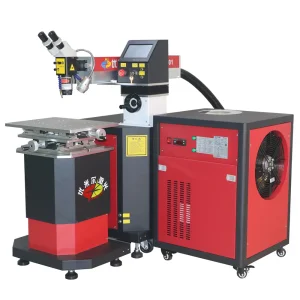
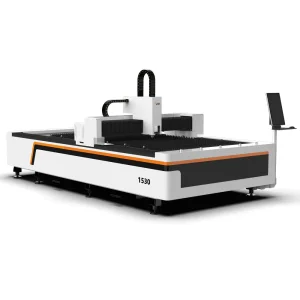

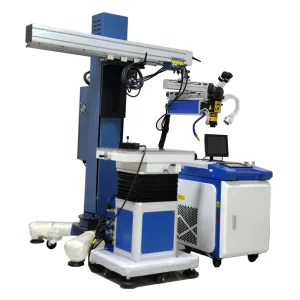
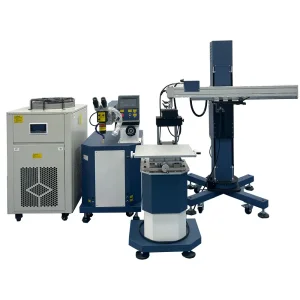
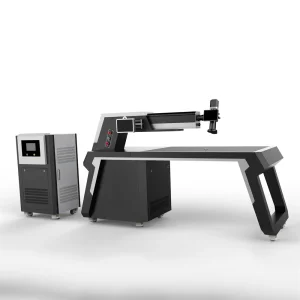
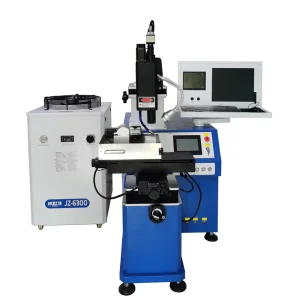
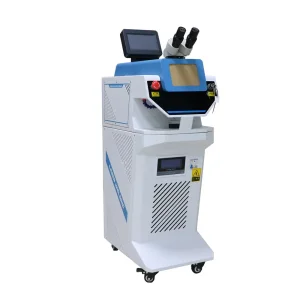
Accelerate your production throughput, eliminate weld distortion, and partner with a direct Shenzhen laser manufacturer. We provide comprehensive FAT, full OEM/ODM branding, and swift international delivery.
