Direct factory procurement with verified beam quality, integrated wire feeders, and tailored wobble-head optics.
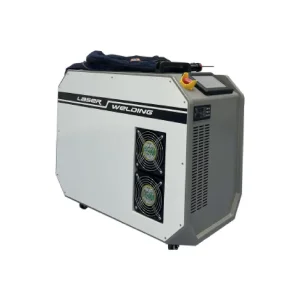
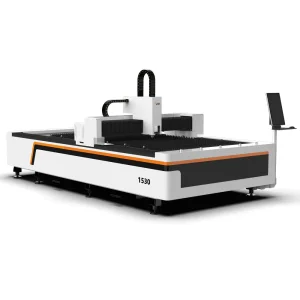
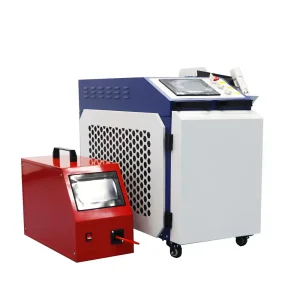
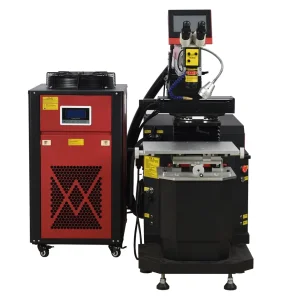
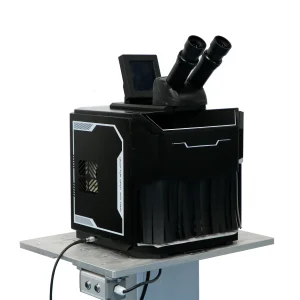
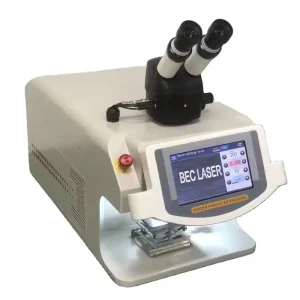
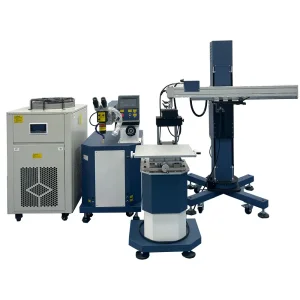
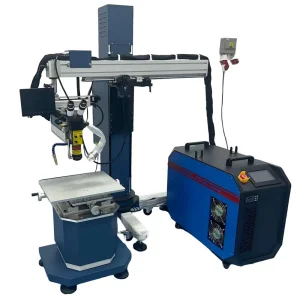
The global metal fabrication industry is transitioning rapidly from conventional arc welding (MIG/TIG) toward high-coherence, low-distortion fiber laser technology driven by ergonomics, energy optimization, and labor shortages.
Traditional TIG processes waste up to 75% of input thermal energy into ambient air and broad parent material heat-affected zones (HAZ). Modern continuous-wave (CW) fiber lasers focus energy into a 0.2mm - 0.5mm spot, reducing energy expenditure per weld linear meter by over 80% while limiting metal buckling.
With an acute shortage of certified Class-A TIG welders across Europe and North America, handheld wobble laser welders democratize production quality. Entry-level operators reach consistent ASME/ISO standard cosmetic welds within hours of guided digital parameter training, raising output 400%.
Conventional weld beads require extensive secondary abrasives, grinding, pickling, and mechanical polishing. Handheld fiber laser joints exhibit mirror-smooth, oxidation-free root penetration on stainless steel and aluminum, decreasing downstream shop-floor labor costs by 70%.
Comprehensive benchmarking for procurement officers, plant operations managers, and strategic tooling buyers.
| Evaluation Metric | Shenzhen Youmir Handheld Fiber Laser | Traditional TIG (Gas Tungsten Arc) | MIG / GMAW (Metal Inert Gas) |
|---|---|---|---|
| Welding Linear Speed | 15 - 80 mm/sec (2x to 5x faster) | 3 - 8 mm/sec (Operator limited) | 8 - 18 mm/sec (Moderate) |
| Heat Affected Zone (HAZ) | Extremely Narrow (< 0.6 mm), zero plate deformation | Wide (3 - 6 mm), high structural warping | Broad, extensive spatter and distortion |
| Post-Weld Processing | Negligible (Direct-to-powder coat/shipment) | Intensive mechanical grinding & pickling | Slag removal, aggressive abrasive discing |
| Operator Training Lead Time | 2 to 4 Hours for cosmetic seam stability | 2 to 5 Years certified apprenticeship | 3 to 6 Months practical training |
| Dissimilar Metal Joining | High repeatability (Cu to Al, SS to Carbon Steel) | Extremely difficult, high brittleness | Unviable without specialized cladding |
| Comprehensive Operating Cost | Ultra-Low: Gas savings & negligible abrasives | High: Heavy shielding argon & grinding tools | High: Wire consumption and post-grinding |
Custom-tuned optical profiles, wavelength delivery fibers, and real-time wire feeding engineered to solve tough metallurgy challenges.
Automated and manual joining of EV battery pack casings, busbars, aluminum chassis frames, and exhaust components. Enables deep-penetration joining of high-reflectivity aluminum alloys (5000/6000 series) and copper terminals with zero micro-cracking.
Ultra-low mass joint synthesis for titanium structural ducts, Inconel combustion baffles, and satellite casing panels. Provides precise quasi-continuous wave (QCW) and high-peak pulse control that prevents grain enlargement and maintains metallurgical integrity.
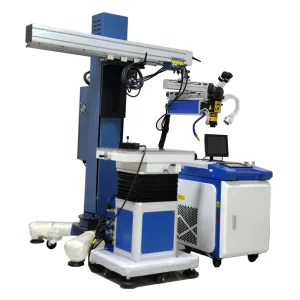
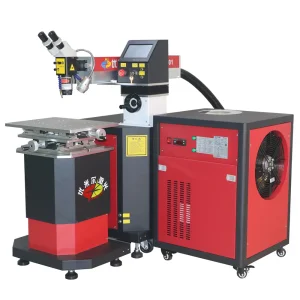
Boom-mounted and cantilever repair stations equipped with microscope coaxial optics. Eliminates expensive die scrap cycles by micro-depositing P20, H13, and NAK80 tool steels directly into chipped edges, washouts, and micro-cracks without pre-heating.
Crevice-free joining of 304/316L stainless steel tanks, commercial catering cabinetry, and pharmaceutical mixers. Smooth, pore-free laser welds satisfy stringent FDA and EHEDG biological cleanability codes straight from the welding head without acid passivating.
Rapid assembly of HVAC ducting, electrical control enclosures, elevator panels, and architectural bronze/brass structures. Wobble beam profiles bridge seam gaps up to 3.0mm with auto wire feeding, maintaining flat surfaces without panel oil-canning.
Micro-spot welding workstations with internal stereomicroscopes and protective inert chambers. Designed for precision prong retipping, seam closing, and porous repair on platinum, 18K/24K gold, and 925 sterling silver without removing heat-sensitive precious gemstones.
Deploying Class 4 laser radiation equipment across North America, Europe, and Asia-Pacific requires strict mechanical, electrical, and optical interlock compliance.
Certified conformity under ISO 11553-1 (Laser Processing Machine Safety), EN 60825-1 (Laser Product Safety), and EN 60204-1 (Electrical Equipment of Machines). Every machine features redundant safety loops, dual contactor isolation, and real-time earth loop impedance monitoring.
Fully compliant with US Federal Standard 21 CFR 1040.10. Built with keyed operator switches, certified protective housings, beam attenuators, safety interlocks, and remote interlock connectors ready to integrate with laser-controlled cleanrooms and production cells.
Supported by our direct factory hub in Shenzhen, international distributors, and dedicated overseas agency networks. We ensure 24/7 video engineering diagnostics, express replacement optic delivery (protective windows, nozzles, focal lenses), and localized parameter calibration.
Shenzhen Youmir Laser's R&D department continues to develop new capabilities in lightweight optomechanical heads, edge-computing feedback, and hybrid multi-process sources.
Integration of coaxial high-speed photodiode arrays and pyrometric sensors inside the handheld torch. The next-generation architecture monitors thermal plumes and keyhole stability in real-time, micro-adjusting duty cycles to prevent internal pore formation.
Pioneering phase-change sub-ambient cooling systems and ultra-high efficiency semiconductor pump diodes. Eliminates bulky external water chillers in 1000W and 1500W platforms, lowering gross weight to 38kg for portable site installation and maritime work.
Coupling 450nm visible blue diodes with standard 1080nm near-infrared fiber lasers. Blue light absorption on zero-oxygen copper reaches ~45% (vs. <5% for standard IR), enabling spatter-free, mirror-finish welds on hairpins and lithium battery packs.
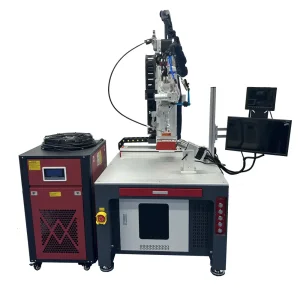
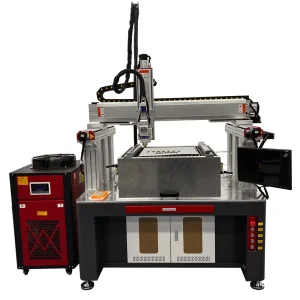
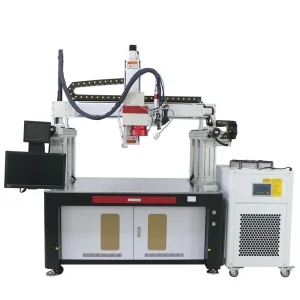
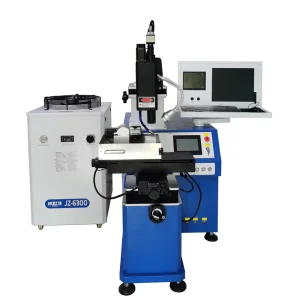
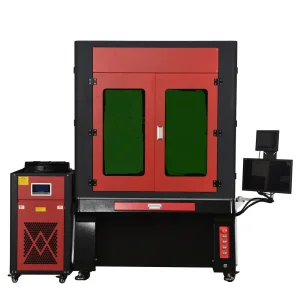
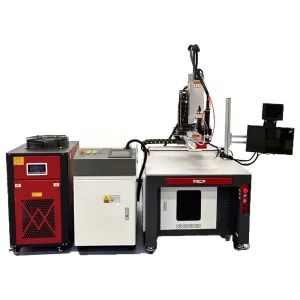
Continuous-wave fiber welding workcells, automated multi-axis motion stages, and heavy mold restoration systems.
Direct technical responses on optics, power ratings, shielding gases, and international freight logistics.
