Explore our core engineering catalog engineered directly at our Shenzhen manufacturing hub. Every unit undergoes rigorous 72-hour operational aging and precise optical alignment.



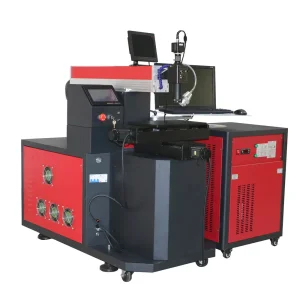
A comprehensive analysis of solid-state continuous wave (CW) fiber lasers replacing conventional Gas Tungsten Arc Welding (GTAW/TIG) and Gas Metal Arc Welding (GMAW/MIG) in global fabrication.
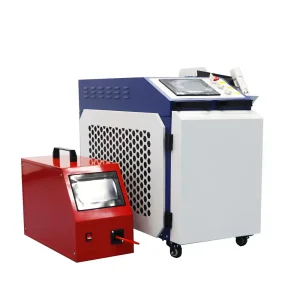
The global metal fabrication landscape is experiencing its most radical technological transition in over half a century. While conventional arc welding techniques have anchored industrial manufacturing for decades, modern industrial pressures—ranging from skilled welder deficits to stringent thermal tolerance mandates—have accelerated the shift toward custom handheld fiber laser welding systems. Engineered around near-infrared solid-state fiber laser engines emitting typically at 1064 nm to 1080 nm wavelengths, handheld laser welders deliver an extraordinary concentration of energy density exceeding 106 W/cm2.
At Shenzhen Youmir Laser Technology Co., Ltd. (operating from our Guangming District headquarters with manufacturing nodes in Zhongshan and Hunan), our technical engineering teams have driven this innovation curve since 2010. By integrating proprietary fiber collimation optics, high-frequency dual-axis galvanometer oscillation (wobble welding heads), intelligent synchronized wire feeding, and adaptive DSP control firmware, modern handheld laser welders achieve penetration-to-width aspect ratios previously attainable only via capital-intensive automated CNC robotic gantry cells.
For procurement directors, OEM brand builders, and plant managers worldwide, the business justification is rooted in clear physics: conventional arc processes radiate excessive heat across parent materials, creating severe Heat-Affected Zones (HAZ), warping, and structural grain coarsening. In contrast, handheld fiber laser welding minimizes thermal diffusion by operating within the localized deep-penetration "keyhole" or controlled conduction regime. The result is a structural weld characterized by ultra-fine dendritic microstructure, exceptional tensile yield strength, virtually nonexistent mechanical distortion, and the total elimination of costly secondary grinding operations.
Multiplied linear welding speed over TIG welding across stainless steel and aluminum sheet alloys.
Reduction in grinding, pickling, passivating, and mechanical rework on cosmetic assemblies.
Novice operators achieve certified X-ray quality seams versus years required for Master TIG qualification.
Rated operational lifespan of premium solid-state continuous-wave fiber laser optical resonators.
Empirical technical and metallurgical comparison across key manufacturing metrics, electrical consumption, and labor expenditure.
| Evaluation Parameter | Wobble Handheld Fiber Laser | Gas Tungsten Arc (TIG) | Gas Metal Arc (MIG) |
|---|---|---|---|
| Welding Speed (1.5mm SS) | Up to 35-60 mm/sec | 5-10 mm/sec | 12-18 mm/sec |
| Heat Affected Zone (HAZ) | Ultra-Narrow (0.2–0.5 mm) | Broad (2.0–5.5 mm) | Extensive (3.0–8.0 mm) |
| Component Thermal Distortion | Virtually Undetectable | High; Requires post-weld straightening | Severe thermal buckling |
| Operator Skill Dependency | Low (Standardized HMI presets) | Critical (Years of manual motor skill) | Moderate to High |
| Gap Bridging Capacity | Up to 2.5 mm (Dual-wobble + wire feed) | Requires precise manual filler rod feed | Up to 3.0 mm (Excessive splatter) |
| Secondary Grinding Demands | Zero to Minimal Cosmetic Wipe | Frequent blending and chemical passivating | Heavy mechanical slag & spatter grinding |
| Electrical Power Efficiency | Electro-optical conversion > 35% | Efficiency approx. 15-20% | Efficiency approx. 20-25% |
| Dissimilar Metal Joining | Excellent (Cu to Al, SS to Mild Steel) | Extremely difficult / Brittle intermetallics | Poor metallurgy control |
Our proprietary galvanometer optical wobble units dynamically modulate focal beam geometry. By oscillating the beam in spiral, linear, triangle, or figure-8 patterns at frequencies up to 300 Hz, the melt pool remains dynamically stirred, degassing trapped hydrogen, eliminating porosity, and delivering clean, ripple-free mirror seams.
Integrated micro-stepper motor dual-drive wire feeding ensures synchronized pulsed delivery of filler alloy (0.8 mm, 1.0 mm, 1.2 mm, 1.6 mm). Microsecond firmware coordination matches laser output power ramp-up to wire feed velocity, avoiding un-melted wire stick-out or undercut defects.
Through instantaneous optical barrel interchange and software profile switching, our machines seamlessly morph from a continuous deep-penetration welder into a surface rust ablation cleaner, weld seam deoxidation scourer, or a precision manual fiber sheet-cutting torch.
How our vertically integrated Shenzhen R&D hub and localized Greater Bay Area component supply ecosystem guarantee quality, cost leadership, and unmatched delivery agility.
The manufacturing supremacy of modern Chinese industrial laser systems is no longer driven solely by competitive labor structures; it is anchored in the world's most sophisticated and concentrated photonics innovation ecosystem. Operating from the Guangming District of Shenzhen—widely recognized as the Silicon Valley of Industrial Optics—Shenzhen Youmir Laser Technology Co., Ltd. leverages a tightly knit supply perimeter where optoelectronic diodes, fused silica crystals, CNC chassis assemblies, precision chillers, and DSP microchips are co-developed within a 50-kilometer industrial radius.
This geographic concentration creates an insurmountable competitive advantage in terms of R&D iteration speed and component provenance. While Western machine aggregators face 16 to 24-week component lead times and inflated sub-assembly costs, our Shenzhen production lines run with continuous integration agility. We directly engineer the optical collimators, thermal heat-sink management manifolds, ergonomic welding torches, and multi-language PLC touch controllers in-house.
Partnerships with tier-one optical resonator foundries (Raycus, Maxphotonics, IPG) alongside our proprietary QBH fiber delivery assemblies ensure sustained M2 beam quality factor and minimal power degradation over extended runtimes.
Every unit houses our customized dual-circuit intelligent refrigerant compression chillers, providing ±0.5°C thermal stability to independently regulate the optical collimation cavity and fiber pump cavity under harsh 45°C ambient conditions.
Before global export packaging, every machine runs a relentless 72-hour continuous cycling test: power meter wattage calibration, insulation resistance validation, pneumatic gas leakage checks, and dynamic wire-feed load testing.
Complete mechanical housing branding, proprietary UI firmware skins, custom connector pinouts, multi-voltage transformer adaptations (110V/220V/380V/480V 50/60Hz), and turn-key private label packaging for global distributor channels.
From high-volume commercial architectural hardware to mission-critical aerospace assemblies, explore how Youmir Laser technology serves global fabrication demands.
Custom kitchen countertops, commercial catering equipment, architectural handrails, and elevator interiors demand blemish-free finishes. Handheld fiber laser welding leaves no black burn halos or bead crowns on 304/316 grade stainless, slashing mechanical polishing labor by 90%.
High-thermal-conductivity materials such as 5000/6000 series aluminum alloys, battery tray enclosures, and exhaust manifold assemblies benefit from concentrated laser energy density, successfully overcoming aluminum oxide reflection barriers.
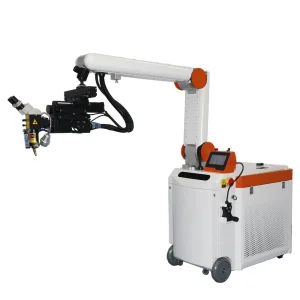
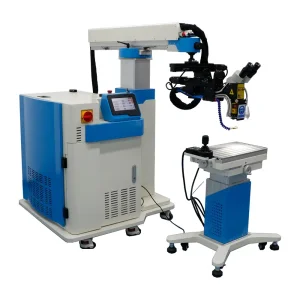
Injection molds, stamping tooling edges, and casting cavities suffer expensive mechanical wear. Utilizing our Boom Mold or QCW laser repair series allows metallurgical micro-deposition without annealing parent tool steels (H13, P20, NAK80).
Scientific guidelines to match laser wattage, fiber core diameters, and shielding gas configurations to your specific alloy thicknesses.
| Laser Source Power | Stainless Steel (Single Pass) | Carbon / Mild Steel | Aluminum Alloys | Brass & Copper | Typical Applications |
|---|---|---|---|---|---|
| 1000 Watt CW | 0.5 – 3.0 mm | 0.5 – 2.5 mm | 0.5 – 1.5 mm | 0.5 – 1.0 mm | Precision jewelry, sheet metal ducting, decorative enclosures, thin cabinet fabrication. |
| 1500 Watt CW | 0.5 – 4.5 mm | 0.5 – 4.0 mm | 0.5 – 3.0 mm | 0.5 – 2.0 mm | The Industry Standard: Commercial kitchenware, light chassis, furniture, advertising letters. |
| 2000 Watt CW | 0.8 – 6.0 mm | 0.8 – 5.5 mm | 0.8 – 4.5 mm | 0.8 – 3.0 mm | Pressure vessels, structural trailers, heavy machinery covers, thick industrial frames. |
| 3000 Watt CW | 1.0 – 8.5 mm | 1.0 – 8.0 mm | 1.0 – 6.5 mm | 1.0 – 5.0 mm | Heavy shipbuilding, mining equipment fabrication, heavy piping, high-speed multi-pass joints. |
Selecting the optimal shield gas is crucial for stabilizing the metal vapor plume and avoiding oxidation during high-velocity laser welding:
Pure Argon (Ar ≥ 99.999%): Essential for titanium, high-strength aluminum alloys, and reactive metals to prevent severe embrittlement. Delivers a soft, highly stabilized melt pool with high ionization resistance.
Industrial Nitrogen (N2 ≥ 99.99%): The preferred economical shielding choice for austenitic stainless steel (AISI 304/316). The dissolved nitrogen acts as an austenite stabilizer, boosting weld seam tensile strength and preventing micro-corrosion.
Exhaustive answers formulated directly by our chief application engineers to assist global purchasing managers and technical evaluators.
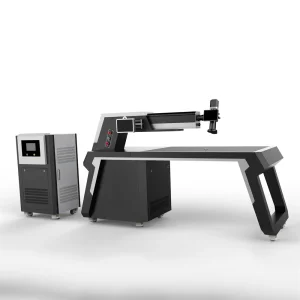
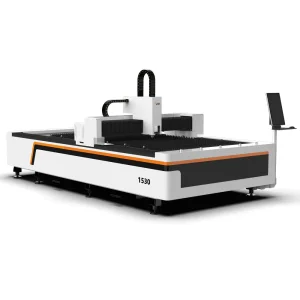
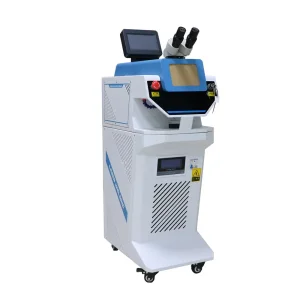
Explore our high-precision multi-axis CNC systems, jewelry micro-welders, and heavy-duty industrial cantilever structures built for specialized manufacturing sectors.






Whether you require a custom OEM fleet solution, dedicated automated gantry line integration, or a free metallurgical sample validation report for your specific alloys—our factory is ready to assist.
