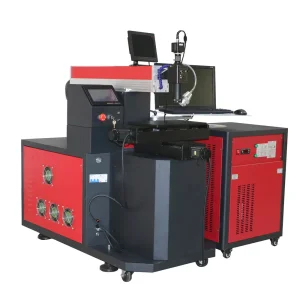
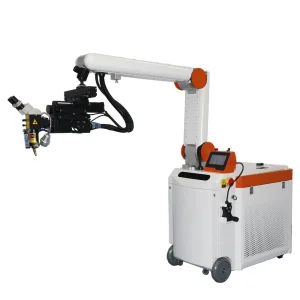
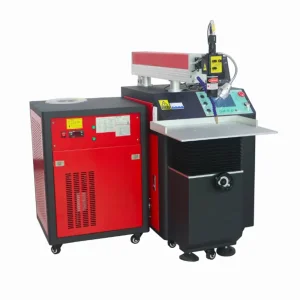
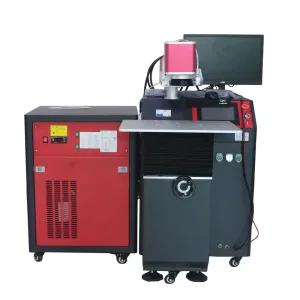
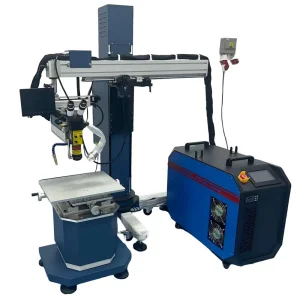
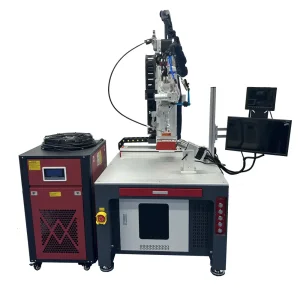
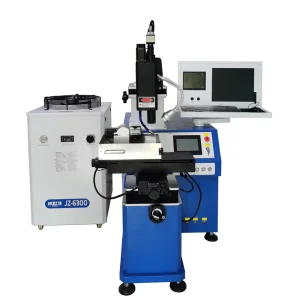
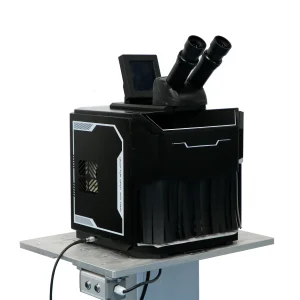
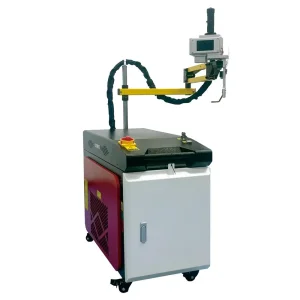
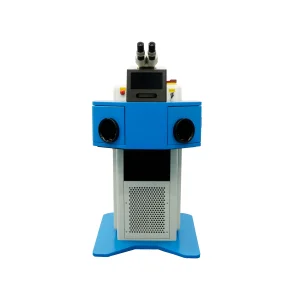
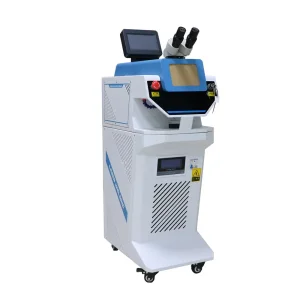
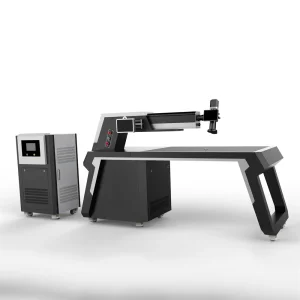
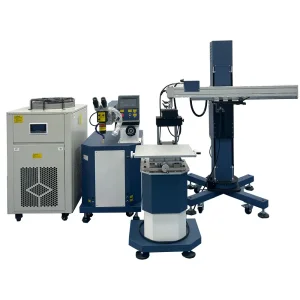
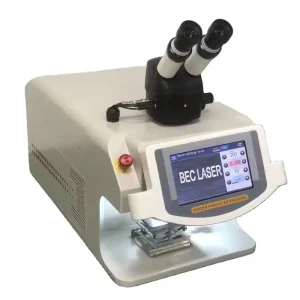
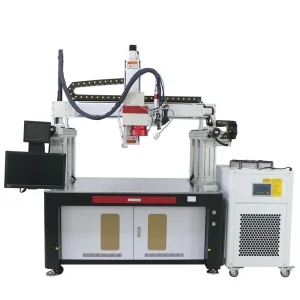
Factory-direct configurations engineered in Shenzhen, integrating fiber, QCW, and high-frequency galvo delivery heads for zero-stress micro-soldering and delicate metal fusion.
Shenzhen and the Pearl River Delta industrial cluster deliver unmatched engineering synergy, integrating solid-state laser diodes, sub-micron precision motion stages, and localized CNC software architecture into turnkey micro-joining stations.
Chinese original equipment manufacturers maintain direct partnerships with domestic photonics institutes and global diode foundries. Mini laser soldering platforms achieve beam focus spots as fine as 15 to 80 microns. Through co-axial charge-coupled device (CCD) vision systems, each thermal pulse is focused onto microscopic pad arrays with micron-level spatial repeatability, overcoming the mechanical constraints of traditional contact soldering irons.
Modern China-based machine builders integrate high-speed dual-wavelength infrared pyrometers into the optical head. Sampling temperatures at rates up to 10,000 Hz, the control module dynamically modulates laser emission in real time. This microsecond-level pulse tailoring eliminates thermal overshoot, preventing substrate delamination, board warping, and thermal shock on ultra-sensitive silicon dies.
Unlike rigid catalog distributors, Shenzhen manufacturing plants develop optical cavities, pneumatic tin-wire feeding fixtures, and laser paste balling injectors completely in-house. Whether an electronics fabricator requires an offline desktop mini welder with safety light curtains or an automated inline SMEMA-compliant module for high-throughput SMT lines, bespoke designs are validated and dispatched within aggressive lead times.
As electronic component miniaturization advances to 01005 passives and ultra-fine pitch ball-grid arrays (BGAs), traditional thermode soldering and iron tips have reached physical heat-transfer limits. Mini laser soldering leverages targeted photon energy to revolutionize production reliability.
While near-infrared (NIR 915–1064 nm) fiber lasers remain the workhorse for iron, nickel, and steel, gold and pure copper pins exhibit extreme optical reflectance exceeding 95% at standard wavelengths. Next-generation mini soldering platforms combine 450 nm blue direct-diode laser modules with NIR beams. The dramatic jump in optical absorption (over 65% for copper at 450 nm) eliminates spatter and cold-solder defects, yielding mirror-like intermetallic compounds (IMC).
Manual micro-positioning creates operator fatigue and thermal drift. Modern mini soldering tools embed telecentric optics alongside coaxial machine vision engines. Integrated deep-learning algorithms automatically scan fiducial markers, detect component orientation offsets, and adjust the laser galvo scan angle within 8 milliseconds. Even if flexible printed circuit (FPC) boards warp under minor humidity fluctuations, joints are completed with zero mechanical misalignment.
For MEMS sensors, hard-disk read heads, and wafer-level chip-scale packaging (WLCSP), solder wire feeding is physically non-viable. Mini solder ball jetting machines pre-load preformed solder spheres (diameters from 60 μm to 760 μm) into a specialized capillary nozzle. A single laser pulse melts the ball in a nitrogen gas-pressurized chamber, ejecting molten spheres precisely onto micro-pads in under 20 milliseconds with absolute zero mechanical contact.
| Joining Technology | Heat-Affected Zone (HAZ) | Tool Degradation | Minimum Pad Pitch | Mechanical Shock Risk | Process Repeatability |
|---|---|---|---|---|---|
| Mini Laser Soldering (Laser-Diode/Fiber) | < 0.15 mm localized | Zero (Non-contact optical beam) | 0.10 mm micro-pitch | Completely zero contact force | > 99.98% Cpk-verified |
| Robotic Soldering Iron (Contact) | 0.80 mm – 2.50 mm (Conductive spread) | Rapid tip oxidation & erosion | 0.50 mm standard | High (Risk of cracking ceramic MLCCs) | Moderate (Subject to tip wear) |
| Hot Bar / Thermode Bonding | 1.20 mm – 3.00 mm (Strip heating) | Thermal fatigue of thermode head | 0.35 mm pitch | Substantial clamping pressure | Variable based on planarity |
| Selective Wave Soldering | Broad regional thermal exposure | Nozzle clogging & dross build-up | 0.65 mm spacing | Hydrodynamic solder wash pressure | High maintenance dependent |
Compact footprint mini laser soldering equipment resolves thermal, spatial, and mechanical bottlenecks where traditional assembly methods cause component destruction.
Smartphone periscope lenses, voice coil motors (VCM), and compact CMOS sensor arrays feature thermosensitive polymer casings and delicate suspension wires. Laser soldering delivers millisecond localized energy, melting high-reliability lead-free SAC305 wire without melting plastic barrel enclosures or degrading magnet fields.
Pacemakers, neurostimulation leads, endoscope camera terminals, and hearing aids require micro-welds that maintain biocompatibility and zero chemical contamination. Mini pulse laser stations provide pristine joins without chemical flux spatter, mitigating electrochemical corrosion hazards inside physiological environments.
Lithium-ion battery management system (BMS) flexible busbars, radar transceivers, and engine hall sensors endure severe operational vibrations and thermal cycling. Mini laser joining guarantees void-free intermetallic matrixes, ensuring consistent low electrical resistance across 100,000+ automotive duty cycles.
Luxury watch balance wheels, platinum prongs, hollow gold links, and intricate titanium eyewear require micro-spot precision without stone unsetting. Desktop mini welders generate smooth, seamless deposits with argon gas shielding, completely eliminating heat discoloration on precious alloy finishes.
Transitioning from conventional contact iron lines to automated mini laser micro-soldering significantly transforms manufacturing unit economics, slashing scrap rates and operational consumables.
Contact soldering stations require bi-weekly iron tip replacements due to tin plating erosion, solder flux corrosion, and physical deformation. A typical 20-station production line spends upwards of $14,000 annually on consumable tips alone. Mini laser welders utilize long-life fiber diode delivery optics rated for 100,000+ hours MTTF, requiring only nominal protective cover slides that cost pennies per production shift.
On high-layer PCB assemblies valued at $150 to $800 per populated board, manual iron rework creates costly delamination and bridged solder joints. With pyrometer-guided laser systems, first-pass yield (FPY) consistently climbs from 92.4% to 99.85%. The elimination of expensive scrapped sub-assemblies often pays for the complete capital machinery investment within 6 to 9 months of active mass production.
Unlike iron tips that require 1.5 to 3.0 seconds to transfer thermal energy into thermal ground planes via physical contact, high-intensity laser energy melts solder paste or tin wire in 100 to 400 milliseconds per joint. When paired with high-speed multi-axis motion gantry systems, production throughput accelerates up to 300%, eliminating assembly line bottlenecks.
When sourcing custom mini laser soldering machines from China, procurement engineers and operations directors must evaluate these critical compliance parameters to ensure seamless plant integration.
Industrial laser safety mandates full compliance with EN 60825-1 / FDA CDRH regulations. Custom desktop and inline machines must incorporate certified protective observation windows (OD6+ optical density at 915–1064 nm and 450 nm), redundant safety dual-channel interlocks, light curtains, and emergency shutoff circuitry that instantly deactivates the diode power bank if an enclosure door opens.
Soldering fluxes, cored tin wires, and polymer substrates emit airborne volatile organic compounds (VOCs) and sub-micron particulates during laser vapor flash. High-spec Chinese machines incorporate integrated high-efficiency particulate air (HEPA) suction manifolds directly around the nozzle, maintaining cleanroom compatibility up to ISO Class 6 (Class 1,000) standards.
Global deployment requires flexible switch-mode architecture handling 110V/220V single-phase or 380V three-phase 50/60 Hz grids without external step-down transformers. Tier-1 Chinese manufacturers provide comprehensive multi-lingual HMI software (English, German, Spanish, Japanese, Korean) with integrated remote VPN gateway diagnostics for instantaneous engineer-to-engineer troubleshooting.
Key technical and commercial inquiries answered by senior laser applications and hardware development engineers.
Laser soldering uses optical lenses to focus energy onto a micro-spot (down to 0.05 mm), warming only the designated solder pad and component lead within fractions of a second. Due to the high energy concentration and rapid cooling rate, heat conduction into neighboring PCB copper traces or sensitive IC silicon chips is kept to an absolute minimum, unlike contact irons that continuously heat large surrounding areas.
Industrial solid-state laser diodes and fiber laser sources have an expected operating life of 50,000 to 100,000 hours, equivalent to over 10 years in normal three-shift operations. Routine maintenance is minimal, consisting of inspecting protective quartz cover lenses, cleaning the wire-feed guide tip, and emptying the exhaust HEPA filter. Total annual upkeep is a small fraction of the cost of replacing oxidized iron tips.
Yes. Direct OEM customization is a hallmark of our Shenzhen engineering center. We design custom wire feed angles (typically 30° to 60°), extended working-distance telecentric f-theta objective lenses, right-angle compact heads, and customized pneumatic chucks for tight geometries such as shielded RF enclosures, deep automotive sensor cavities, and multi-tier pin headers.
Our systems support a wide variety of alloys, including conventional Sn63/Pb37, standard lead-free SAC305 (Sn96.5/Ag3.0/Cu0.5), low-temperature Sn-Bi (Bismuth) formulations for sensitive plastics, and high-reliability gold-tin (Au80/Sn20) preforms. For cored wire or solder paste, we recommend laser-specific halogen-free synthetic flux designed to prevent micro-explosive boiling and spatter during high-energy laser absorption.
Send your sample PCBs, micro-connectors, or jewelry components directly to our Shenzhen application laboratory. Our engineers will perform comprehensive welding and soldering tests, record thermal pyrometer curves, and send you microscopic metallographic test reports and parameter specifications.
Request Engineering Evaluation & Custom QuoteComplete your production ecosystem with heavy-duty boom mold welders, high-precision galvanometer workstations, and ultra-compact desktop jewelry systems built to international export specifications.