Explore our flagship laser welding units, CNC automated workcells, boom manipulators, and high-frequency pulsed systems factory-calibrated for turnkey integration.
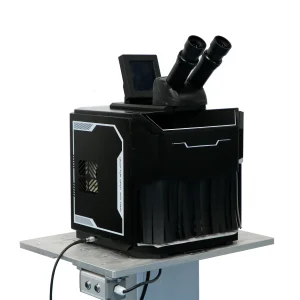



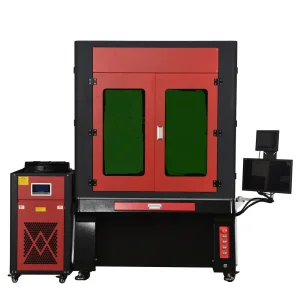



Modern industrial manufacturing requires migrating beyond manual torches toward 6-axis articulated articulated robots, dynamic wobble processing heads, and real-time vision algorithms.
Standard laser keyhole welding demands ultra-tight part tolerances (gap < 0.1 mm). Our proprietary dual-axis galvanometer wobble heads oscillate the beam up to 1500 Hz across programmable patterns (circular, sinusoidal, eight-figure, triangular).
Harmonizing 6-axis industrial robots (Fanuc, ABB, KUKA, or Yaskawa) with synchronous 2-axis positioners and gantry rails. Coordinated motion guarantees the laser beam impinges at normal or optimized drag angles across complex 3D contour lines.
Real-time structured light triangulation corrects thermal distortion and part variances on-the-fly. Closed-loop coaxial pyrometry samples melt-pool radiative emissions at 10 kHz to flag spatter, blowouts, and voids prior to component downstream release.
Different industrial sectors require targeted metallurgical strategies. From zero-porosity copper-to-aluminum joints in EV battery assembly to low-distortion deep penetration welding in structural enclosures.
Joining highly reflective, thermally conductive materials (pure copper C11000 and aluminum 1060/3003) creates brittle intermetallic compounds (IMCs) like CuAl2 if heat input is uncalibrated. Our QCW and green/blue hybrid fiber laser systems provide stable absorption spikes, eliminating spatter onto delicate cell separator membranes.
Modern automotive light-weighting utilizes ultra-high-strength steels (UHSS) and hot-stamped boron steels (22MnB5) paired with aluminum 6000-series. Traditional resistance spot welding creates stress concentration points and micro-cracking in the heat-affected zone (HAZ).
High-value injection molds (P20, H13, NAK80, S136) frequently undergo catastrophic wear or chipping on parting lines. Our cantilever and integrated boom mold welding machines allow precision wire-feed deposition without pre-heating the mold block, preserving bulk core hardness.
Micro-joining of platinum, palladium, 18K/24K gold, and nitinol stents demands minute spot sizes (< 0.15 mm) and pulse energies within millijoule resolutions. Our 60W benchtop and vertical series deliver pulse shaping to manage thermal expansion differences and surface oxidation.
Evaluated under strict metallurgical laboratory conditions using continuous wave (CW) single-mode and multi-mode fiber sources with coaxial argon shielding.
| Material Specification | Laser Source & Power | Wobble Oscillation | Shielding Gas & Flow Rate | Welding Speed | Tensile Strength vs. Base Metal |
|---|---|---|---|---|---|
| AISI 304 / 316L Stainless Steel (3.0 mm) | 1500 W Continuous Fiber | Sinusoidal (1.2 mm @ 200 Hz) | 100% Argon @ 15 L/min | 45 mm/s (2.7 m/min) | ≥ 98% (Ductile fracture in base) |
| Q235 / Carbon Steel (6.0 mm Butt Joint) | 3000 W Continuous Fiber | Circle (2.0 mm @ 180 Hz) | 80% Ar + 20% CO2 @ 18 L/min | 28 mm/s (1.68 m/min) | ≥ 100% (No heat crack in HAZ) |
| 6061-T6 Aluminum Alloy (2.5 mm) | 2000 W with Dual-Wavelength | Figure-8 (1.5 mm @ 300 Hz) | 100% Pure Argon @ 22 L/min | 38 mm/s (2.28 m/min) | ≥ 88% (With ER4043 filler wire) |
| Copper C11000 to 1060 Al (0.5mm to 1.0mm) | 2000 W Quasi-CW (QCW) Fiber | High-Freq Wobble (0.6 mm @ 800 Hz) | Argon Box Flood @ 12 L/min | 60 mm/s (3.6 m/min) | ≥ 92% (IMCs thickness < 2.5 μm) |
| H13 Die Steel (Mold Face Cladding) | 400 W Pulsed YAG / Fiber | Stationary Micro-spot (0.4 mm) | Argon Coaxial @ 10 L/min | Step pitch 0.1 mm/pulse | Hardness 52-56 HRC as-deposited |
Shenzhen Youmir Laser Technology Co., Ltd. leverages the world’s most dense optoelectronic cluster in Guangming District, Shenzhen, merging precision optical coating, proprietary motion software, and heavy structural fabrication.
Rather than serving as a screwdriver assembly shop, our engineering facility formulates proprietary collimating/focusing optical assemblies, anti-back-reflection isolators, and customized HMI software. We modify firmware code to match exact enterprise PLC fieldbus communication protocols without third-party delay.
Our 5,000 m² Shenzhen and Hunan production facilities maintain direct strategic partnerships with leading laser resonator and optics foundries. Complete custom robotic workstations ship within 20 to 30 business days, reducing standard European lead times by half.
Every machine undergoes optical power meter calorimetry testing, thermal drift cycling at 40°C ambient, and continuous 72-hour robotic movement burn-in prior to crating. Vacuum packaging, moisture desiccant, and shock-monitored wooden export crates ensure sea-worthy integrity.
International imports require stringent electrical, optical, and mechanical safety certifications to pass domestic OSHA, CE, and CSA factory audits.
Fully compliant with Machinery Directive 2006/42/EC, EMC Directive 2014/30/EU, and EN 60204-1 safety of electrical equipment. All robotic laser enclosures feature dual-channel safety relays with redundant interlocks, e-stop circuits conforming to ISO 13849-1 Performance Level d/e.
Laser radiation safety is non-negotiable. Our enclosed robotic systems qualify as Class 1 Laser Products during normal operation, featuring OD6+ certified observation windows (1064 nm - 1080 nm protection), interlocked access doors, and exhaust airflow velocity sensors.
Equipped with UL 508A certified industrial control panels, NFPA 79 compliant internal raceway wiring, and voltage adaptability (208V, 220V, 380V, 480V 3-Phase 50/60Hz). No step-up transformer required for regional utility drops.
Supported by bilingual application engineers and regional partners across 50+ countries. We provide remote diagnostics via encrypted VPN gateways, on-site commissioning, programming instruction, and next-day spare optical parts dispatch.
When evaluating an automated laser welding system against legacy MIG/TIG stations, senior production managers evaluate ROI across operating expense, rework labor, and shielding gas economy.
Traditional arc welding requires secondary labor for slag descaling, angle-grinding, pickling, and mechanical cosmetic polishing. A focused robotic fiber laser beam leaves an aesthetically pristine, spatter-free weld profile ready for immediate powder coating or plating, eradicating $40,000-$80,000 in annual labor costs per workstation.
Fiber laser diode modules operate at > 35% wall-plug electrical efficiency compared to 8-12% for traditional arc or CO2 lasers. With no tungsten electrodes to redress, contact tips to replace, or massive gas consumption overheads, direct operating expenses decline by upwards of 70% per meter of joined seam.
Because laser welding exerts zero mechanical tool contact force onto the workpiece, clamping fixtures do not suffer heavy mechanical fatigue. Our machines utilize modular optic cartridges, allowing factory lines to switch between welding, cutting, and laser surface cleaning by simply switching head collimation optics.
Direct technical clarification from Shenzhen Youmir Laser’s application and automation design team.
Explore our full line of industrial fiber laser cutting units, pulsed cleaning tools, and galvanometer systems engineered for high-duty-cycle factory environments.








Submit your engineering drawings (CAD, STP, DXF) and material requirements. Our Shenzhen application laboratory delivers turnkey process feasibility reports, cycle time models, and factory-direct pricing within 24 hours.
