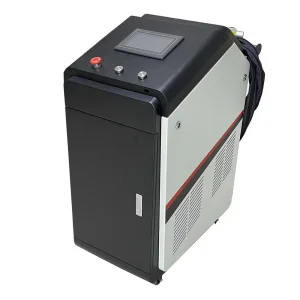
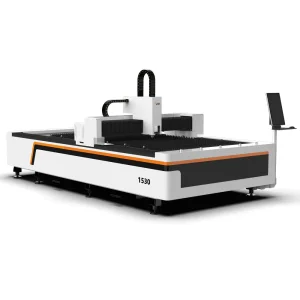
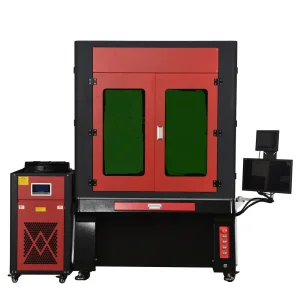
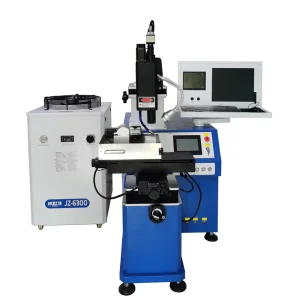
Explore our custom laser equipment line, thoroughly validated for structural integrity, minimal thermo-mechanical distortion, and continuous duty cycles.
Unpacking the fundamental transition from consumable-heavy, abrasive blast cleaning to selective photonic ablation in high-throughput manufacturing.
The industrial rust removal and surface treatment sector is undergoing an unprecedented paradigm shift. Driven by stringent global ESG (Environmental, Social, and Governance) mandates, chemical bath bans (REACH compliance), and skyrocketing hazardous waste disposal fees, industrial manufacturers are actively phasing out traditional sandblasting, chemical pickling, and dry-ice jetting. In their place, fiber laser cleaning technology—anchored by custom rust laser cleaning machine systems—has evolved from an experimental niche into an indispensable industrial standard.
Industrial demand is primarily pivoting toward tailor-made automation and bespoke optical parameters. Off-the-shelf, fixed-parameter equipment regularly fails to satisfy the diverse needs of modern metallurgy, where substrate thickness ranges from ultra-thin battery foil casings to multi-inch naval alloy plates. As custom laser cleaning machine factories integrate digital galvanometer control, beam shaping (top-hat beam profiles), and closed-loop pyrometric thermal sensing, buyers obtain quantifiable operational consistency and complete traceability across safety-critical operations.
System selection hinges upon laser-matter interaction dynamics, substrate ablation threshold differentials, and production throughput constraints.
Enterprise procurement specialists frequently face the decision between Pulsed Fiber Laser Systems and Continuous Wave (CW) Laser Systems. Each architecture possesses distinctive thermodynamic footprints, photonic efficiencies, and initial capital costs. Pulsed laser systems focus short nanosecond bursts of high peak power, heating oxidized layers past their ablation threshold before heat transfers deep into the underlying substrate. Continuous Wave systems, by contrast, deliver uninterrupted high-average-power photon flux, maximizing square meters stripped per hour for non-sensitive heavy structural steelwork.
| Evaluation Metric | Pulsed Laser Cleaning (100W - 1000W) | Continuous Wave Laser (1500W - 3000W) | Traditional Grit Blasting (SA 2.5) |
|---|---|---|---|
| Heat Affected Zone (HAZ) | Near-Zero (< 5 μm) | Controlled Thermal Penetration (15-50 μm) | Mechanical Micro-Peening & Residual Stress |
| Base Substrate Removal | None (Preserves Class A surface polish) | Negligible if linear feed rate is maintained | Continuous base metal erosion (3-15 μm/pass) |
| Target Application | Precision injection molds, aerospace skins, heritage artifacts | Shipbuilding plates, bridge girders, storage tank deoxidation | Heavy unmachined foundry castings, bulk structural scrap |
| Environmental Safety | Cleanroom compatible (Class 1 with HEPA extract) | Standard industrial shop floor with HEPA extract | Requires blast cabins, ear protection, dust respirators |
| Consumable Overhead | Fume extraction filters, protective cover slides | Protective cover slides, gas shroud nozzles | Abrasive garnet/grit replenishment, nozzle erosion |
Harnessing advanced photonic manufacturing clusters to engineer, test, and deliver custom laser equipment across 50+ countries.
Shenzhen Youmir Laser Technology Co., Ltd. has stood at the center of precision laser development since 2010. Spanning more than 5,000 square meters across modern assembly floors and metallurgical testing laboratories in Shenzhen, Zhongshan, and Hunan, our operations represent China's sophisticated Industry 4.0 hardware ecosystem. Rather than functioning as a commercial consolidator of third-party modules, Youmir builds its industrial solutions on in-house research: precision optical design, CNC control firmware, and specialized mechanical housings are designed, assembled, and stress-tested internally.
Proprietary dual-axis galvanometer systems, variable beam-sweep geometries (linear, circular, spiral, and polygon patterns), and high-damage-threshold fused silica telecentric optics protect core laser modules during prolonged reflection cycles.
By producing critical control cards, wire feeder systems, and thermal cooling manifolds directly within the Greater Bay Area tech corridor, our production line avoids single-point supply bottlenecks, speeding machine deliveries and standardizing spare parts availability.
Every custom build undergoes strict metallurgical coupon testing, prolonged heat-load burn-in (48 hours uninterrupted run time), and electrical safety audits conforming to CE, FDA, and ISO 9001 standards before crating.
From heavy North American steel yards to precision European toolrooms, discover real-world deployment cases across target vertical sectors.
Continuous-wave systems ranging from 2kW to 3kW remove heavy Fe2O3 and mill scale from profile beams, plates, and pre-weld bevel joints. Deployments demonstrate a 4x throughput increase over manual angle-grinder brushing while producing superior SA 3.0 white metal surface finishes for primer adhesion.
In high-volume electric vehicle battery manufacturing, custom pulse laser cleaning stations automatically strip insulating coatings, grease, and oxidation from aluminum battery trays and copper busbars prior to fiber laser welding, ensuring zero pore formation and lower electrical contact resistance.
Injection tooling, tire molds, and high-pressure die-casting dies accumulate vulcanized rubber, carbon deposits, and release agents. Short-pulse 200W–500W systems remove baked-on debris directly inside toolrooms without requiring die disassembly, protecting sharp edges and cavity micro-textures.
Direct engineering answers to clarify selection criteria, electrical configurations, and global support capabilities.
Review additional automated, high-output, and specialized laser welding and cutting stations configured for continuous operation.