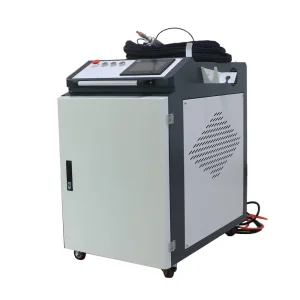
Direct manufacturer deployment of continuous wave (CW) and pulsed fiber laser rust removal stations, integrated with proprietary wobble galvanometer heads and protective optic suites.



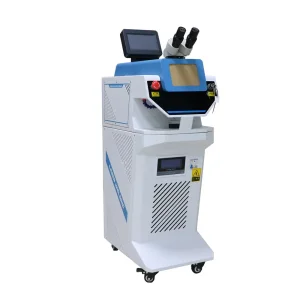


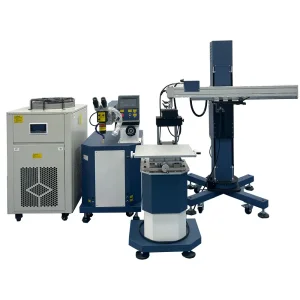
The manufacturing cluster located in Shenzhen, Guangdong, delivers unmatched integration of active gain fiber, resonant cavity components, galvo scanning optics, and embedded real-time microcontrollers.
Within a 50-kilometer radius of our Shenzhen headquarters, our manufacturing base accesses world-class laser pump diodes, precision Q-switches, collimating objective mirrors, and CNC milled enclosures. This zero-lag logistics density eliminates supply chain delays.
Every industrial laser rust remover undergoes 72 hours of continuous thermal stress benchmarking. Beam propagation quality (M² factor < 1.2 for pulsed systems) and power stability within ±1% are verified with calibrated thermopile sensors.
Direct factory engineering teams modify beam delivery cables (up to 15 meters without significant attenuation), integrate custom field-of-view f-theta scanning lenses, and customize PLC automation interfaces for robotic cell integration within 14 days.
By producing optical path delivery heads, chassis sheet metal, and chiller circuits in-house, Chinese facilities yield a 40% to 60% CAPEX saving over European and North American integrators while utilizing equivalent diode and fiber source cores.
Laser rust removal relies on laser-induced ablation, localized plasma ionization, and transient photothermal shockwaves. Understanding the thermodynamic threshold separates clean deoxidation from metallurgical degradation.
When high-intensity laser photons strike an oxidized metal layer, the absorption coefficient of rust (Fe₂O₃ and Fe₃O₄) exceeds that of the parent substrate (such as structural carbon steel or marine aluminum) by an order of magnitude at the standard 1064 nm to 1080 nm fiber wavelength.
This differential absorption allows precise control: as laser fluence reaches between 1.5 J/cm² and 5.0 J/cm², the oxide layer reaches instantaneous vaporization temperatures (>3000°C) within nanoseconds. The metallic substrate beneath, having high thermal conductivity and lower optical absorption, remains beneath its melting point.
Industrial manufacturers must distinguish between short-pulsed systems (100W – 500W MOPA/Q-switched) and continuous wave systems (1000W – 3000W CW). Each satisfies distinctly different production metrics:
Pulsed Fiber Systems: Deliver mega-watt peak powers over 10 to 200 nanosecond pulse widths. Because heat dissipation occurs before thermal conduction into the base metal, there is near-zero thermal heat affected zone (HAZ), making it essential for precision tooling, molds, turbine blades, and automotive sheet metal.
Continuous Wave (CW) Systems: Focus steady-state photon flux. While creating minor localized heating, CW systems offer blistering line speeds (up to 30 m²/hour on heavy corrosion), making them the choice for structural beams, civil infrastructure, and shipbuilding plates.
| Ablation Parameter | Pulsed MOPA Laser Cleaner (100W-500W) | Continuous Wave Laser Cleaner (1000W-3000W) | Sand / Grit Blasting (Dry Media) |
|---|---|---|---|
| Base Substrate Impact | Zero Melt Depth; Zero Mechanical Deformation | Minor Micro-Heat Influx (<20 µm HAZ) | Surface Pitting, Residual Media Imbedding |
| Peak Optical Power | Up to 1.5 Megawatts (per individual pulse) | Equal to Rated Continuous Power (1.0 - 3.0 kW) | Kinetic Impact Mechanical Only |
| Pulse Frequency Range | 1 kHz – 4000 kHz (Continuously Tunable) | Modulated Continuous (0 – 50 kHz wobble) | N/A |
| Corrosion Removal Rate | 0.5 – 4.5 m² / hour (Precision Pass) | 12 – 35 m² / hour (High-Throughput Pass) | 15 – 25 m² / hour (High Waste Output) |
| Operating Consumables | Protective Optical Lens Only (Air Cooled) | Protective Optic & Chiller Deionized Water | Grit Media, Dust Filters, Nozzle Sleeves |
| Target Manufacturing Scope | Injection Molds, Heritage Relics, Aerospace MRO | Structural Steel, Ship Hull Maintenance, Pipe Bridges | Heavy Foundry Descaling Only |
From automated dry-dock shipyards to sub-micron semiconductor assembly lines, laser rust cleaning eliminates toxic chemicals and abrasives.
Naval dry docks utilize 2000W and 3000W continuous wave handheld rust removers with 15-meter fiber leads to strip marine scale, heavy chloride oxides, and aged antifouling paints from ship hulls and structural bulkheads before NDT weld inspection.
High-repetition MOPA pulsed systems strip high-temperature titanium and nickel-alloy oxides without altering critical fatigue life thresholds. Automated gantry interfaces achieve uniform surface tension prior to non-destructive ultrasonic immersion testing.
Automotive gigafactories implement galvo-driven laser cleaning arrays to clean raw aluminum extruded structural battery packs. Removing natural Al₂O₃ oxide layers guarantees electrical contact resistance under 10 micro-ohms for structural adhesive bonding.
Plastic injection tooling and tire mold manufacturers clean baked-on vulcanized rubber residues, carbonization, and flash rust while the mold remains mounted in the press. Eliminates mold cooling cycles, reducing downtime by up to 85%.
A comprehensive procurement guide detailing safety classifications, beam delivery configurations, and international compliance checklists for laser rust removal investments.
Industrial laser rust cleaning requires strict adherence to international Class 4 laser safety protocols (IEC 60825-1 and FDA 21 CFR 1040.10). Reliable factory assemblies integrate dual-channel interlock relays, active protective gas pressure transducers, and zero-latency trigger switches.
Thermal stability directly preserves the lifespan of fiber laser gain modules and galvanometer mirrors. Industrial models include precision compressor-based dual-loop chillers maintaining ±0.5°C tolerance, with separate cooling circuits for the laser source and optical head.
Handheld and automated laser heads integrate dual galvanometer scanning mirrors driven by embedded DSP processors. Operators select from 8 to 12 scanning geometries (linear, spiral, rectangular, circular) with adjustable line widths up to 300 mm.
Technical guidance direct from our chief optical application engineers on machine selection, maintenance routines, and cross-border logistics.
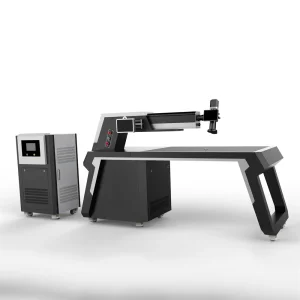
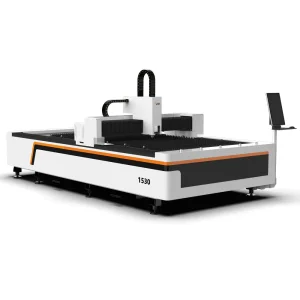
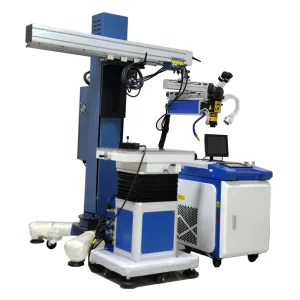
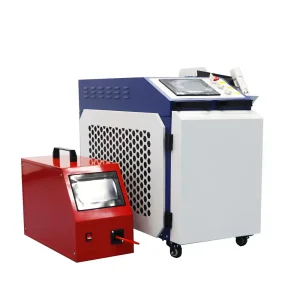
Industrial machinery configurations manufactured in our Shenzhen facility, supporting high-throughput laser cutting, multi-axis robotic welding, and flexible handheld metal fabrications.