Engineered for precise crack recovery, edge build-up, and localized thermal micro-welding across plastic injection, die casting, and stamping dies.
Evaluating flashlamp-pumped Nd:YAG resonators (1064 nm) against conventional TIG surfacing for structural tool steels.
Nd:YAG pulsed lasers deliver concentrated peak pulse powers (up to 12 kW) within millisecond intervals (0.1–20 ms). This ultra-fast thermal cycling restricts the Heat-Affected Zone (HAZ) to fractions of a millimeter, completely eliminating thermal sink sinkage, base-metal micro-annealing, and critical dimensional distortion in hardened cavities.
With variable optical beam spot diameters between 0.2 mm and 2.5 mm coupled with high-magnification stereomicroscopes, operators deposit matching alloy wires (0.15 mm to 0.8 mm) directly onto microscopic parting lines, sheer edges, and intricate texture areas without overlapping adjacent aesthetic geometries.
Unlike electro-spark deposition or thermal spraying, pulsed YAG mold welding forms an authentic metallurgical pool. Repaired zones maintain structural integrity equivalent to parent metal blocks (such as NAK80, 718, H13, and S136) ensuring uncompromised performance under high-pressure plastic injection cycles.
| Evaluation Parameter | Pulsed Nd:YAG Laser Welder | Quasi-Continuous Wave (QCW) Fiber | Micro-TIG Welding System |
|---|---|---|---|
| Nominal Wavelength | 1064 nm (Solid-State Crystal) | 1070 nm (Ytterbium Doped Fiber) | Arc Discharge Mechanism |
| Heat-Affected Zone (HAZ) | Minimal (0.05 mm – 0.25 mm) | Extremely Tight (< 0.1 mm) | Broad (1.5 mm – 4.0 mm) |
| Thermal Deformation Risk | Virtually Zero / Sub-micron scale | Zero Distortion Profile | High Risk (Part Warpage Common) |
| Pre-Heating Prerequisites | Unnecessary for most H13 / S136 | Not Required | Essential (Preheat up to 300°C–400°C) |
| Filler Wire Precision Limit | Ø 0.10 mm – 0.80 mm | Ø 0.10 mm – 0.50 mm | Ø ≥ 0.80 mm |
Shenzhen Youmir Laser consolidates localized optical clusters, high-yield component manufacturing, and vertical hardware integration to supply uncompromised industrial systems.
Concentrated in the Greater Bay Area, our factories secure ultra-pure Nd:YAG rods, high-performance krypton flashlamps, dual-circuit cooling aggregates, and multi-coated quartz optics with instantaneous supply line responsiveness, slashing lead times by over 60% compared to Western counterparts.
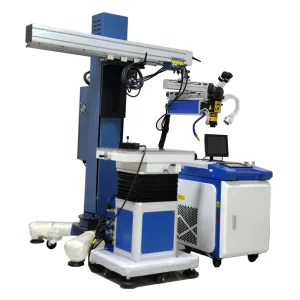
Unlike rigid catalog vendors, Chinese OEM manufacturing allows extreme modular freedom. We build multi-articulated cantilever arms, 360-degree rotating boom systems, and motorized heavy-payload tables specifically calibrated for molds weighing anywhere from 50 kg to exceeding 15 metric tons.
Direct-from-factory pricing bypasses intermediate distributors without cutting corners on core systems. Consumables—such as xenon/krypton flashlamps and protective lenses—cost an average of 70% less, dramatically improving long-term Return on Investment (ROI) for global precision tooling workshops.
From micro-cavity repairs to on-site machine-bed refurbishment, discover how our custom laser configurations reduce production downtime.
Rapid wear and abrasive polymer degradation often compromise shut-off lands, thin core pins, and venting inserts. Our integrated boom YAG welders allow operators to execute precision weld beads along sharp margins without annealing the underlying tempered steel, restoring parting line hermeticity and ending flash flaws in automotive and consumer appliance molds.
Repetitive thermal shock in aluminum die-casting creates severe heat-checking networks and thermal fatigue cracks on high-alloy tool steels like H13 and DIEVAR. Using high-peak-power pulsed Nd:YAG energy with matching superalloy wires, micro-cracks are completely gouged, filled, and unified without dismantling the main die frame from production tie bars.
Chipped cutting blades, sheared draw radii, and localized galling in progressive stamping dies can halt automated assembly lines. Our cantilever and multi-axis automated welding workstations deliver targeted deposition on D2, DC53, and Cr12MoV steels, retaining a post-grind Rockwell hardness of 58–62 HRC without secondary stress relief tempering.
Dismounting an 8-ton tooling unit from an injection molding clamp causes days of lost output. By rolling out our integrated boom welders with extending reach, operators feed the laser optical focal head straight inside the daylight opening, repairing gate erosion or scoring lines while the mold remains fully hooked to cooling lines.
How solid-state crystal resonators and quasi-continuous wave (QCW) lasers continue to develop across international mold remanufacturing sectors.
Despite the emergence of continuous fiber lasers, pulsed Nd:YAG holds clear technical advantages in thick-wire deposition (Ø 0.4–0.8 mm) and high reflective alloy repair. Its broad pulse duration adjustments and gradual cooling profiles help avoid thermal cracking on sensitive air-hardening and hot-work steel alloys.
QCW fiber sources are increasingly deployed for ultra-precise micro-molds, medical tooling, and high-frequency production lines. Boasting electro-optical wall-plug efficiency above 30% and maintenance-free solid-state diodes, QCW lowers electrical overheads while focusing down to exceptionally fine beam spots (Ø < 0.1 mm).
Modern production lines demand automated repair workflows. Machine-vision seam tracking, real-time height profile scanners, and integrated 6-axis robotic arms are gradually replacing purely manual joystick tracking, delivering consistent additive deposit tracks along free-form 3D mold geometries.
Essential technical specifications to verify with Chinese factories prior to issuing purchase orders and shipping validation.
Match your power choice to wire thickness needs. A 200W YAG handles fine mold detailing (Ø 0.2–0.4 mm wire), while 300W–500W configurations are recommended for heavy buildup and deep wear grooves with Ø 0.6–0.8 mm filler wire.
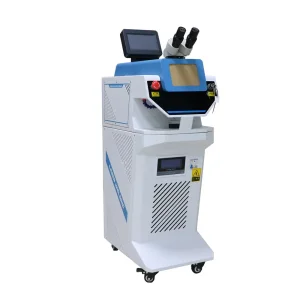
Pick the chassis style that fits your workflow: compact benchtop units for light inserts, integrated desktop stations for small shops, or long articulated boom/cantilever setups to service massive dies right on the plant floor.
Ensure your factory configures appropriate internal power transformers (220V single-phase vs. 380V/480V 3-phase, 50/60 Hz) along with industrial dual-refrigeration chillers rated for continuous duty in high ambient shop temperatures.
Engineering answers regarding equipment operation, metallurgy, maintenance schedules, and global factory ordering.
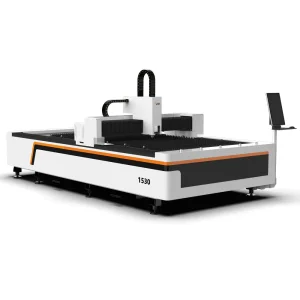
Discover our expanded equipment lines, including multi-axis automated welding cells, high-output sheet cutting tables, and fine benchtop jewelry welders.