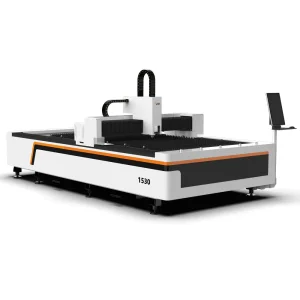
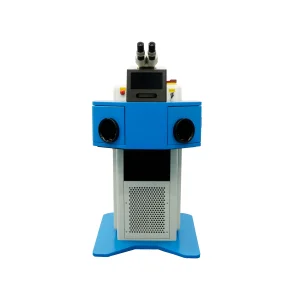
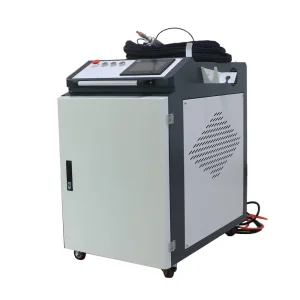
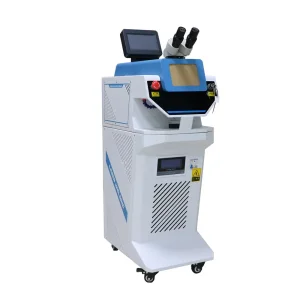
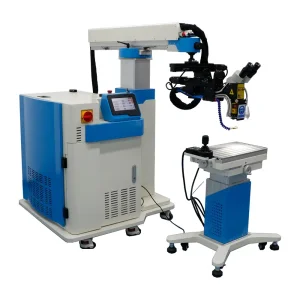
Engineered for minimal thermal heat-affected zones (HAZ), zero substrate sinkage, and micrometric wire deposition on complex tooling cavities.
Despite the proliferation of continuous-wave fiber lasers, pulsed flashlamp-pumped Nd:YAG (1064 nm) technology remains the metallurgical benchmark for precision tool, die, and injection mold restoration.
YAG machines deliver isolated, discrete pulses ranging from 0.1 to 20 ms. This allows precise control over peak power without thermal accumulation, eliminating the warping, micro-cracking, and base metal annealing common in conventional TIG or high-heat CW fiber setups.
Whether addressing pre-hardened P20, high-chromium AISI D2, corrosion-resistant S136, beryllium-copper cores, or aluminum 7075, variable waveform shaping matches the thermal dilation and cooling rates of alloyed tool steels, preserving hardness (up to 58-62 HRC).
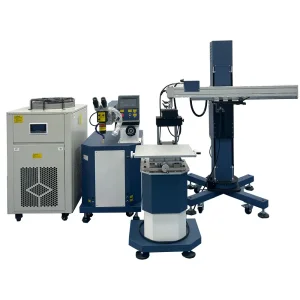
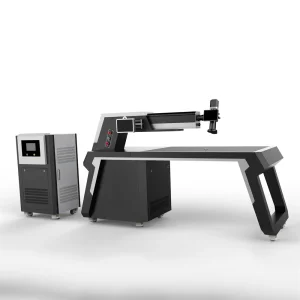
Modern cantilever boom configurations feature 360-degree rotating optical heads, multi-joint articulation, and motorized 3-axis (X-Y-Z) gantries, enabling mold maintenance directly inside the injection molding machine without costly teardowns.
How Shenzhen and the Pearl River Delta industrial clusters yield an unmatched 40%–60% cost-to-performance advantage in precision optical machine assembly.
Chinese factories leverage tightly coupled supply chains: high-purity Nd:YAG rods, high-voltage switching power modules, custom ceramic reflecting cavities, and Schneider/Omron automation are integrated within a 50 km logistics radius.
Prior to export packaging, every mold welder undergoes continuous 200J pulse discharging under load, thermal chiller temperature drift testing (±0.5°C), beam profile analyzer verification, and microscopic seam integrity checks on certified alloy samples.
By eliminating multiple tiers of overseas distribution markups, international mold shops work directly with senior optical engineers, gaining bespoke cantilever arm designs, specialized wire-feeding fixtures, and multilingual CNC firmware.
Factory-direct FOB Shenzhen pricing index. Real system configuration pricing fluctuates based on optical arm span, power tier, automation axes, and stereo microscope brands (Leica/Olympus optional).
| Model Series | Laser Type & Energy | Boom / Gantry Reach | Key Applications | Reference Price (FOB) |
|---|---|---|---|---|
| Standard Manual Desktop 200W | Nd:YAG | 200W / 70J | Bench-top Workstation | Precision inserts, jewelry dies, ejector pin repair | $4,200 – $5,800 |
| Cantilever Boom 300W Series | Nd:YAG | 300W / 90J | 1.2m Articulated Swing Boom | Medium plastic injection molds, stamping tool margins | $6,500 – $8,200 |
| Heavy-Duty Boom 400W Series | Nd:YAG | 400W / 110J | 1.5m Motorized Boom Arm | Automotive bumper dies, die-casting mold cracks | $8,800 – $11,500 |
| 500W High-Energy Multi-Axis | Nd:YAG | 500W / 130J | 1.8m Motorized 4-Axis Gantry | Heavy forging dies, large chassis tooling restoration | $12,000 – $15,800 |
| Hybrid QCW / Fiber Mold Welder | Quasi-CW Fiber | 150W-300W | Universal Cantilever Head | Zero maintenance, high electrical efficiency repairs | $14,500 – $19,000 |
Real-world deployment scenarios where pulse laser deposition preserves critical metallurgical tolerances, saving tens of thousands of dollars in replacement mold tooling.
Repairing wear lines, parting line flashes, and radius chipping on multi-ton body panel stamping dies and interior dashboard injection molds without removing the tooling block from the press.
Re-edging thin-wall smartphone housing dies, connector pins, and micro-switch runners using ultra-fine filler wires (0.15mm – 0.3mm) with 10x-20x microscope crosshair guidance.
Thermal fatigue check repair on aluminum and magnesium alloy die casting cores (H13 steel). The pulsed laser restores sealing edges while retaining resistance to molten metal erosion.
Key architectural upgrades shifting the next generation of laser welding systems from manual deposition to intelligent automated repair.
Integration of 3D profile scanners and coaxial CCD cameras to map cavity wear profiles, automatically planning multi-layer wire deposition trajectories without human hand tremor.
Quasi-Continuous Wave (QCW) fiber lasers are emerging as high-efficiency alternatives, offering peak pulse power up to 10x average power with near-zero lamp degradation and lower wall-plug electricity draws.
Next-gen control panels feature pre-loaded metallurgy programs for over 60 common tool steels, automatically syncing frequency, spot diameter, and pulse ramp-down to eradicate solidification craters.
Authoritative technical clarification on power selection, filler wire selection, preventative maintenance, and shipping logistics.
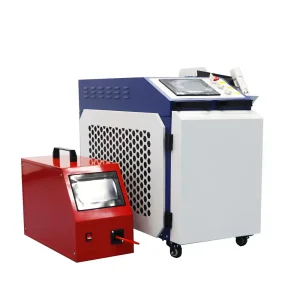
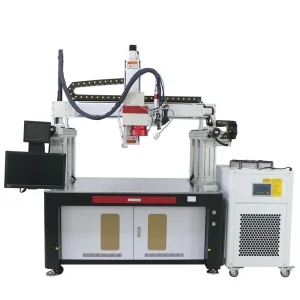
Factory-direct industrial platforms supporting sheet metal processing, automated rotary welding, and continuous fiber fabrication.