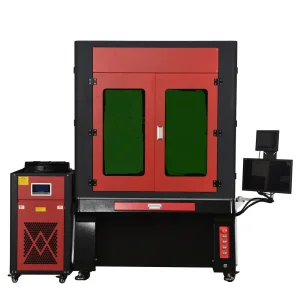
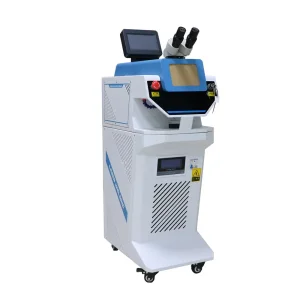
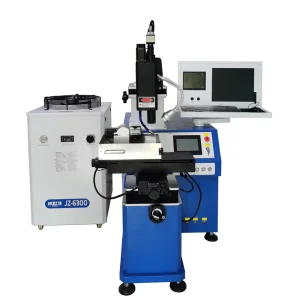
Factory-direct engineered equipment built with in-house optical paths, wobble heads, and proprietary digital wire-feed synchronization.
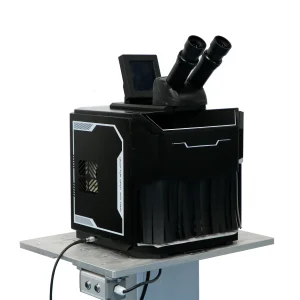

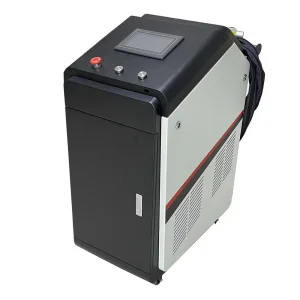





The 1500-watt continuous wave (CW) fiber laser represents the absolute sweet spot balancing keyhole penetration dynamics, capital investment, power grid friendliness, and handheld maneuverability.
At 1500W rated output across a 50-micron delivery fiber, laser power density easily surpasses the critical vaporization threshold of 10^6 W/cm² required to initiate true keyhole mode welding. Unlike conduction mode, this concentrated energy produces an aspect ratio (depth-to-width) exceeding 4:1 on 1.0mm–4.0mm stainless steel and carbon steel. The heat-affected zone (HAZ) is reduced by up to 85% compared to traditional TIG methods, effectively eliminating thermal distortion on polished or precision stamped assemblies.
Modern 1500W fiber laser resonators utilize 976nm high-efficiency pumping technology, achieving electro-optical wall-plug conversion rates between 38% and 42%. A complete system—encompassing the fiber source, closed-loop industrial water chiller, and wire feeder—draws approximately 5.5kW to 6.5kW total electrical power under peak operational load. This allows standard installations on single-phase 220V/230V 32A power lines, bypassing expensive industrial three-phase 380V infrastructure transformations required by 3000W systems.
Historical fiber laser welding required strict joint gap tolerances below 0.1mm. Modern 1500W systems integrate motorized galvanometer wobble optics in the welding head, oscillating the focused beam across transverse paths (line, circle, triangle, figure-8) at frequencies up to 300Hz with beam widths adjustable from 0.5mm to 5.0mm. This dynamic optical oscillation widens the melt pool, enables single-pass gap bridging up to 1.5mm with synchronized wire feed, and drastically reduces susceptibility to porosity in aluminum alloys.
Understand factory-gate FOB pricing tiers, core optical components, and long-term total cost of ownership (TCO) benchmarks.
| Equipment Configuration Tier | Standard Components & Architecture | Typical Penetration Range | Ex-Factory FOB Price (USD) | Primary Industrial Use-Case |
|---|---|---|---|---|
| Economy Workshop Tier (Standard Handheld) | Domestic Fiber Resonator, Single-Wobble Head, Basic 1.5HP Chiller, Manual Wire Feeder | Stainless: 3.0mm Carbon Steel: 2.5mm Alloy: 1.5mm |
$2,800 – $3,600 | Job-shops, HVAC ductwork, light metal railings, custom architectural fabrication. |
| Industrial Heavy-Duty Tier (Dual Wobble 4-in-1) | Tier-1 Resonator (Raycus/Max/IPG), Dual-Wobble Gun, Dual-Temp Chiller, 4-in-1 Weld/Cut/Clean Module | Stainless: 4.5mm Carbon Steel: 4.0mm Aluminum: 2.5mm |
$3,800 – $5,200 | Continuous multi-shift fabrication, commercial kitchenware, sheet metal enclosures. |
| 3-Axis / 4-Axis Automatic CNC Tier | High-Precision Gantry/Bed, Industrial CNC Controller, Vision Seam Tracking, Enclosed Enclosure | Stainless: 4.0mm Brass: 2.0mm Aluminum: 3.0mm |
$8,500 – $14,000 | Automotive fuel rails, lithium battery casing seal welding, hermetic medical parts. |
| Cobot / 6-Axis Robot Integrated Cell | Collaborative Robot Arm, 1500W Laser Integration, Safety Light Curtains, Offline Simulation Software | Full 3D complex contouring | $16,500 – $26,000 | High-mix automotive bracket welding, aerospace ducting, automated assembly lines. |
The fiber laser source makes up 40% to 55% of the total raw machine bill of materials. Leading domestic engines from Raycus and Maxphotonics deliver Mean Time Between Failures (MTBF) exceeding 100,000 operational hours while maintaining pricing roughly 35% lower than European alternatives. This shifts the return on investment (ROI) timeframe to just 4–8 months for typical mid-sized sheet metal manufacturing shops.
Sub-par pricing often conceals inferior cooling components. A quality 1500W setup requires dual-circuit closed-loop water chillers (one circuit keeping the fiber source at ~25°C, and another cooling the laser torch optics at ~30°C to prevent dew condensation). Premium configurations utilize pure titanium heat exchangers and Panasonic/Danfoss compressors to guarantee 24/7 continuous operation in 45°C ambient temperatures.
Operational expenditure is modest compared to traditional TIG/MIG arc welding. Protective quartz focus windows ($2–$4 each) last 80–120 welding hours under normal usage. Copper gas nozzles ($1.50 each) deliver multi-month durability. Argon gas consumption runs at roughly 10–15 L/min, and pure Nitrogen can be substituted for stainless steel butt welds to reduce shielding gas costs by up to 60%.
How localized optoelectronic ecosystems in Shenzhen and Guangdong deliver unmatched technological resilience, rapid lead times, and rigorous quality control.
Within a 50-kilometer radius in the Pearl River Delta, 95% of all components—specialty collimating optics, CNC chassis sheet metal, water cooling units, and digital servo drivers—are manufactured, tested, and supplied. This tight geographic clustering enables prototype iterations in hours and standard volume production within 7 to 10 working days.
Tier-1 manufacturing facilities implement rigid 72-hour continuous laser burn-in cycles, environmental thermal chamber cycling (-10°C to 50°C), and beam-profile power stability validation across every single resonator before final machine crating, ensuring complete zero-defect out-of-box operation upon export delivery.
Leading factories operate modular build platforms accommodating custom branding, bespoke sheet metal enclosures, tailored multi-language touch screen operating systems (supporting 18+ languages), and region-specific CE / FDA / CSA electrical compliance standards seamlessly.
Direct proximity to the deep-water ports of Shenzhen and Hong Kong guarantees swift ocean transport scheduling and express air shipments. Spare lenses, specialized wire-feed wheels, and replacement torches reach any major workshop across Europe or North America within 72 hours via DHL/FedEx.
The worldwide metal joining market is undergoing a structural shift driven by skilled labor shortages, energy costs, and stringent weld cosmetic standards.
According to the American Welding Society (AWS), the manufacturing sector faces a deficit exceeding 360,000 certified welders. Tier-2 and Tier-3 suppliers in states like Ohio, Texas, and Michigan are deploying 1500W handheld systems so entry-level assembly staff can produce structurally certified, leak-tight joints with less than 16 hours of foundational training.
High electricity tariffs in Germany, Italy, and Poland make fiber laser technology an obvious upgrade over 15kW+ legacy MIG welding stations. European fabricators lean heavily into Youmir's CE-certified safety architectures featuring dual-channel interlocks, Class 4 protective laser enclosures, and integrated contact-ground safety circuitry.
In industrial manufacturing clusters across Vietnam, Thailand, Indonesia, and India, fast-growing fabrication facilities are leapfrogging legacy arc processes directly to 1500W laser platforms to build export-grade food machinery, elevator structures, and custom automotive bodies meeting strict Western aesthetic criteria.
From hygienic sanitary food-grade stainless steels to high-volume battery pack assemblies, see where 1500W systems provide quantifiable performance advantages.
Welding 1.2mm 304 and 316 stainless sink basins, countertops, and industrial milk holding tanks. Eliminates pickling paste toxic chemicals and secondary mechanical wire-brushing, yielding crevice-free hygienic joints ready for electropolishing.
Galvanized sheet and mild steel computer control enclosures. The wobble beam vaporizes zinc surface coatings ahead of the keyhole without severe spatter, preserving interior zinc corrosion layers on adjacent plate zones.
Copper-to-aluminum dissimilar joining, prismatic battery top-cover hermetic sealing, and BMS nickel busbar fusion. Fast cycle times prevent heat soak into sensitive electrolyte compositions and lithium-ion pouch cells.
Depositing specialized H13, P20, and S136 tool steel filler wire onto chipped mold cavities, ejector pin pockets, and parting lines. The minimal heat profile prevents substrate annealing or stress-induced cracking common to micro-TIG.
Our engineering validation process ensures your customized 1500W setup performs to your exact metallurgical requirements before leaving our facility.
Our laser metallurgists analyze your technical drawings, joint geometry, material grades (e.g., 304, 6061, Hardox), and production cycle requirements.
You ship coupon samples to our Shenzhen lab. We conduct live welding trials, macro-etch cross-section analysis, and pull-test tensile verification.
We record and deliver unedited high-speed process video along with certified parameter recipes (wobble width, frequency, gas pressure, wire rate).
72-hour machine burn-in, vacuum-sealed packaging, export wooden crating, and direct transit delivery to your port or facility doorstep.
Clear, direct answers regarding optical maintenance, shielding gas chemistry, safety compliance, and operator onboarding.
Advanced CNC automation, boom mold repair arms, and fiber cutting architectures engineered for sustained multi-shift production.