Manufacturer-certified machinery engineered for advanced metallurgical joins, precision stripping, and tooling refurbishment.
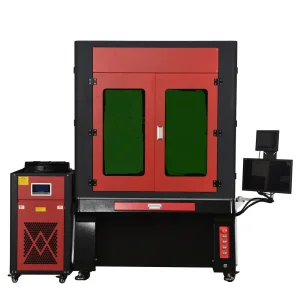
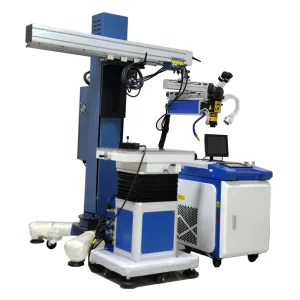
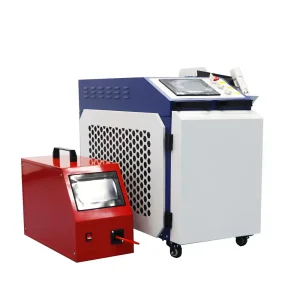
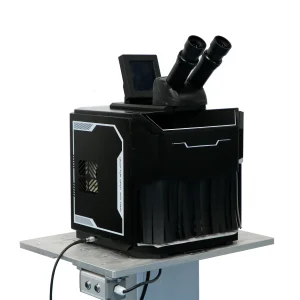
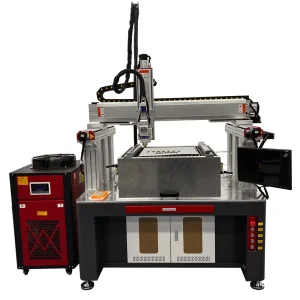
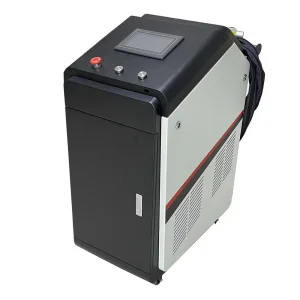
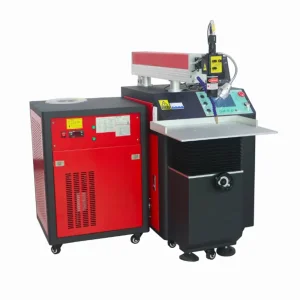
The industrial surface treatment paradigm has shifted irreversibly from chemical pickling and mechanical abrasive blasting to photonic selective ablation.
The 200W pulsed fiber laser operates in nanosecond duration regimes (typically 10–200 ns). Peak power density exceeds the ablation threshold of oxides and coatings without introducing thermodynamic structural changes or micro-cracks into the base metal substrate.
Traditional sandblasting consumes vast volumes of abrasive media and creates hazardous airborne particulate matter. A 200W pulsed laser eliminates chemical waste streams entirely, slashing power expenditure to beneath 1.5 kW total grid consumption.
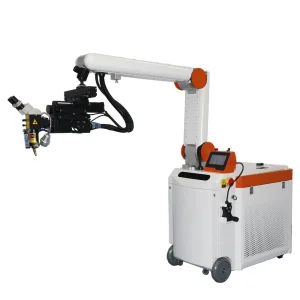
Equipped with dual-axis galvo scanning heads weighing less than 1.2 kg, modern 200W systems seamlessly integrate onto 6-axis robotic arms or CNC linear gantry units, unlocking high-precision, repeatable automated production line stripping.
Procurement economics: capital expenditure (CapEx) against operational depreciation (OpEx). Why 200W MOPA pulse configurations represent the peak return-on-investment sweet spot.
| System Architecture | Laser Source Topology | Average Price Band (USD) | Optimal Surface Metallurgy | Ablation Capability |
|---|---|---|---|---|
| Portable Backpack 200W | Air-Cooled MOPA Fiber | $6,800 – $9,500 | Site maintenance, historical stone, aerospace skins | Rust, carbon deposits, micro-oxides (0.5–2 m²/h) |
| Industrial Cabinet 200W | Water-Cooled Master Oscillator | $8,500 – $13,200 | Tire molds, injection dies, automotive weld preparation | Heavy vulcanized rubber, epoxy, primers (1.5–4 m²/h) |
| Robotic Automation 200W | Integrated Bus Protocol Fiber | $14,500 – $22,000 | EV battery cell terminals, semiconductor trays | Selective micro-layer depainting, precision clearance |
| Continuous Wave (CW) 1500W-3000W | Multi-Mode Continuous Fiber | $5,500 – $10,500 | Thick structural steel, marine plates, heavy rust | Gross rust & mill scale (High throughput, heat-affected) |
Procurement Notice: Pricing variances in 200W systems correspond directly to optical cavity engineering (e.g., JPT M7 or IPG pulsed engines), collimator aperture tolerances, galvo motor dynamic responsiveness, and onboard safety interlocks (PL-d Class 4 laser governance).
Deploying photonic cleaning solutions across the Americas, European Union, and Asia requires rigorous adherence to local occupational safety and environmental mandates.
Youmir Laser machines meet FDA 21 CFR 1040.10 and 1040.11 accession directives. Integrated safety keys, dual-channel emergency stop circuits, and protective optical interlocks ensure effortless OSHA facility certification across the United States and Canada.
Conforms to ISO 11553-1 (Laser Processing Machine Safety), EN 60204-1 (Electrical Safety), and EN 60825-1 (Radiation Safety of Laser Products). Full Technical Construction Files (TCF) accompany export documentation for direct clearance within the EEA.
Backed by field integration partners in Houston, Frankfurt, Bangkok, and Monterrey, our clients receive localized on-site commissioning, operator laser safety training, and guaranteed dispatch of critical optical components within 48 hours.
Where high energy per pulse (1.5 mJ–2 mJ) outclasses mechanical blasting and continuous wave chemical treatments.
Stripping insulating varnish and epoxy coatings from copper busbars prior to laser welding. The 200W pulse precisely removes the polymer coating in micro-seconds without melting or oxidizing the underlying high-conductivity electrolytic copper.
Removing stubborn polyimide release agents, silicone residues, and baked carbon buildup from aluminum and Invar composite autoclave molds. The zero-impact beam prevents dimensional profile shifting, extending mold longevity tenfold.
Restoring delicate marble monuments, bronze sculptures, and historic masonry encrusted with atmospheric pollutants and biological patina. Photonic selectivity strips black sulfur crusts safely without touching original mineral grains.
Continuous evolution toward closed-loop machine vision, hyperspectral plasma feedback, and ultrafast picosecond surface engineering.
Upcoming Youmir laser systems leverage integrated laser-induced breakdown spectroscopy. The system measures optical emissions from the plasma plume in real-time, automatically halting pulse emission the exact microsecond the contaminant layer is breached.
Moving beyond standard Gaussian spatial energy distributions, variable flat-top and annular beam shapes equalize heat dissipation across the working field, increasing effective square-meter coverage rates by up to 35% at identical power levels.
Transitioning from complex DI water-chilled circuits to high-density copper vapor chamber heat sinks will drop overall backpack machine weight under 12 kg, unlocking effortless field operations across telecommunication towers and marine bulkheads.
In-depth responses from our senior application engineers on procurement, integration, safety, and operational longevity.
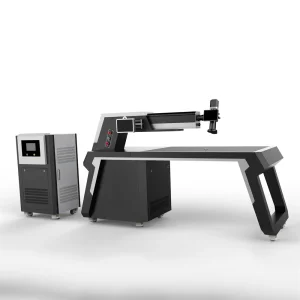
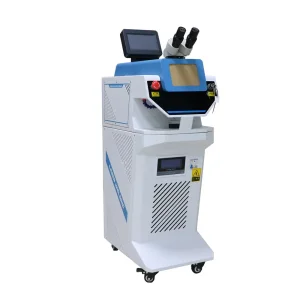
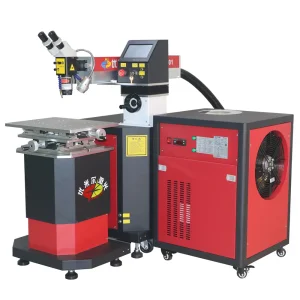
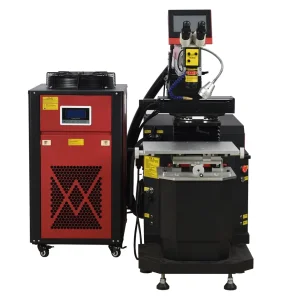
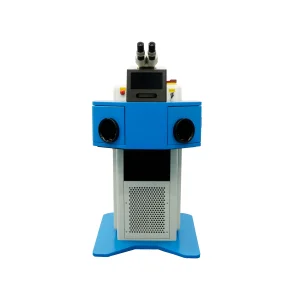
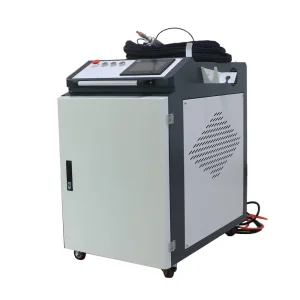
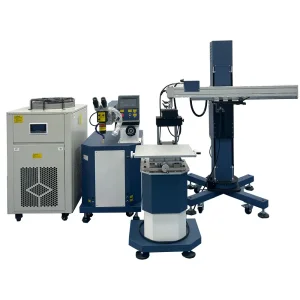
Comprehensive fabrication solutions: tool-room welders, heavy gantry systems, and specialty repair benches.