
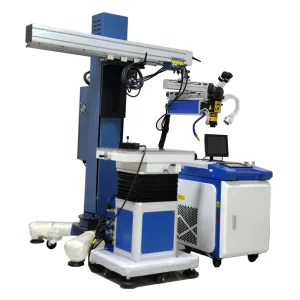
Engineered with in-house proprietary optics, rapid beam oscillation heads, and intelligent thermal dissipation units.
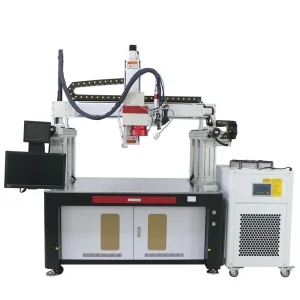
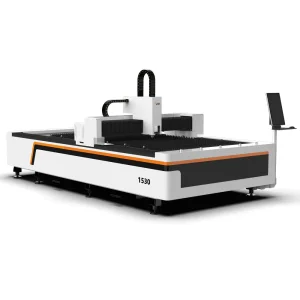


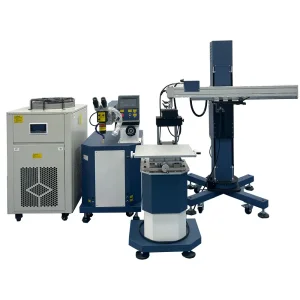

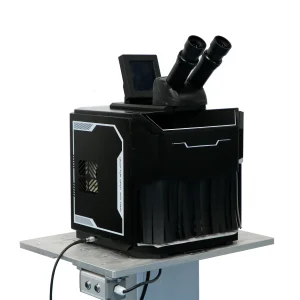
The global joining and sheet metal processing markets are witnessing a definitive transition away from massive, resource-heavy water chillers toward phase-change and forced-air thermodynamic architectures.
Traditional water-cooled systems require complex fluid pumps, DI filters, coolant reservoirs, and recurring anti-freezing maintenance. Air-cooled laser welding machines utilize high-thermal-conductivity heat pipes and variable-frequency pulse-width modulated (PWM) fan arrays, delivering continuous operation up to 45°C ambient temperatures without thermal derating.
By eliminating compressor motors and cooling pumps, electrical-to-optical wall-plug efficiency (WPE) improves from 28% to over 38%. Factories worldwide report direct power savings exceeding 4,200 kWh annually per operational station, drastically shrinking the carbon footprint across heavy production schedules.
Weighing under 45 kg—less than one-third the weight of liquid-cooled counterparts—air-cooled fiber platforms enable agile deployment. Field engineering teams can transport units onto scaffolding, petrochemical pipelines, ship decks, and aerospace maintenance structures effortlessly.
A granular engineering assessment of thermodynamic control, operational downtime, and process repeatability.
| Performance Metrics | Air-Cooled Fiber System (Youmir) | Traditional Water-Chilled System | Legacy GTAW / TIG Architecture |
|---|---|---|---|
| Operating Weight (Gross) | 38 kg – 48 kg (Self-Contained) | 120 kg – 190 kg (With Reservoir) | 25 kg – 45 kg (Excl. Gas/Cylinder) |
| Mean Time to Heat Equilibrium | < 45 Seconds | 5 – 12 Minutes (Chiller Stabilization) | Immediate (High Thermal Runaway) |
| Thermal Interface Mechanism | Phase-Change Micro-Channel Heat Exchanger | Water/Glycol Liquid-to-Refrigerant Loop | Open Convection (Ambient Radiation) |
| Sub-Zero Startup Capability | Instant (-15°C to 45°C without De-icing) | Requires Anti-freeze / Reservoir Heaters | Instant (Susceptible to Base Condensation) |
| Heat-Affected Zone (HAZ) | Minimal (< 0.15 mm on stainless steels) | Minimal (< 0.18 mm) | Broad (> 2.5 mm, Extreme Distortion) |
| System Maintenance Overhead | Zero Chiller Loop Maintenance | Monthly Fluid Flushes & Filter Checks | High (Tungsten Grinding, Collet Wear) |
From high-volume sheet fabrication in North America to mission-critical tool maintenance in Southeast Asia, air-cooled architectures solve harsh real-world constraints.
Precise joining of Inconel, 6000/7000 series aerospace-grade aluminum, and titanium alloys. Integrated dual-wobble galvanometric control delivers controlled keyhole profiles and eliminates internal porosity, meeting rigorous AMS and AWS standards.
Zero-spatter welding of dissimilar metals, including aluminum-to-copper joints on power distribution busbars. Fast cycle times prevent heat build-up near volatile pouch or prismatic cells.
Field installations lack DI water loops and stable ambient climate control. Air-cooled machines run directly off site generators, allowing quick pipe joint welding, ballast repairs, and offshore container structural fixes.
Direct deposition and fusion onto hardened tool steels (P20, H13, NAK80) without pre-heating cycles. Preserves temper while restoring sheared parting lines and complex injection geometries.
Vertical integration across optical beam path assembly, dynamic wobble control software, and rigorous structural stress analysis.
Every collimating optic, focusing group, and protective window array is aligned inside ISO-certified cleanroom conditions to prevent sub-micron contamination and reduce thermal lensing under continuous power loads.
We tailor external housing industrial design, UI software translations, PLC handshakes for automated production lines, and wire-feeder synchronization systems to empower brand distributors and equipment resellers worldwide.
Overseas clients send specific alloys and pre-machined test pieces directly to our Shenzhen testing facility. We run destructive tensile testing, cross-section metallography, and generate tailored parameter profiles before machines ship.
The roadmap toward intelligent edge-computing photonics and multi-kilowatt air-cooled operational stability.
Integrating high-frequency GaN switching stages shrinks the power converter footprint by 40%, generating significantly less residual heat and allowing power density expansion within compact air-cooled chassis designs.
Next-generation air-cooled laser welding heads integrate real-time interferometric tracking. Operators gain instant depth measurements and internal seam defect identification without requiring post-process ultrasonic or X-ray verification.
Advanced vapor chamber plates and micro-finned graphene coatings will push air-cooled power limits into continuous 3000W multi-mode regimes, maintaining full laser output across hot factory environments without needing liquid cooling loops.
Heavy-duty, precision, and mobile laser workstations configured for fast turnaround times, high process stability, and low lifecycle operating costs.
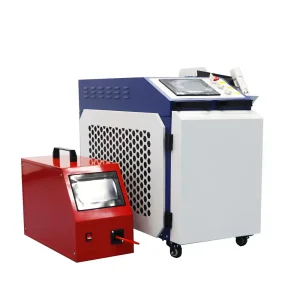



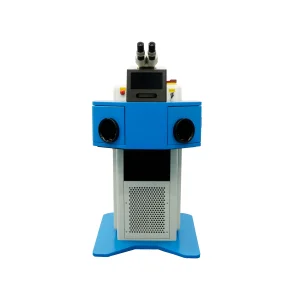
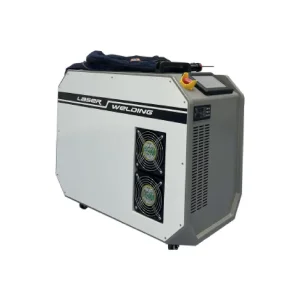
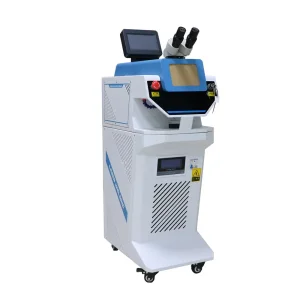
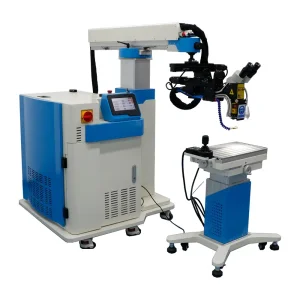
In-depth insights covering thermal control systems, optical durability, shielding gas dynamics, and cross-border installation support.