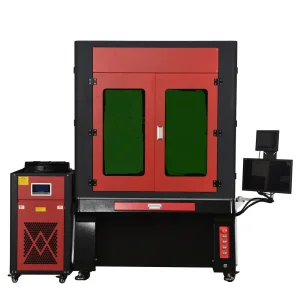
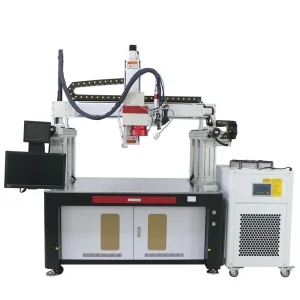
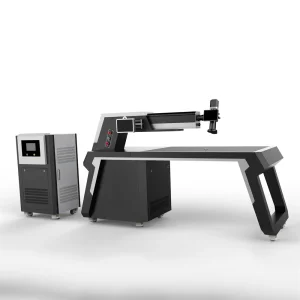
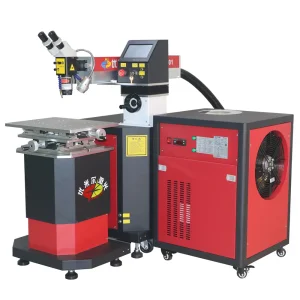
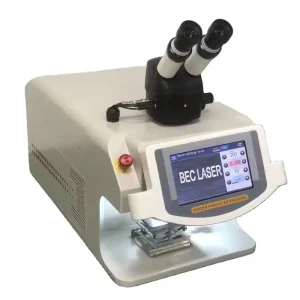
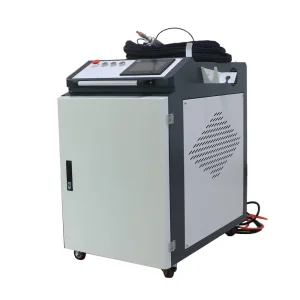
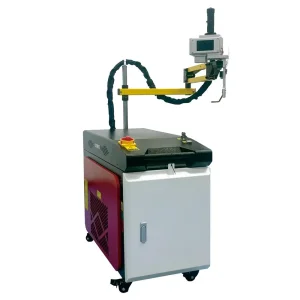
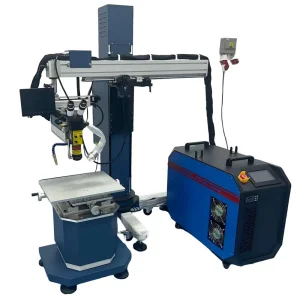
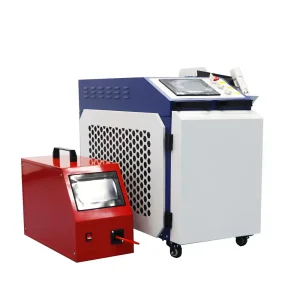
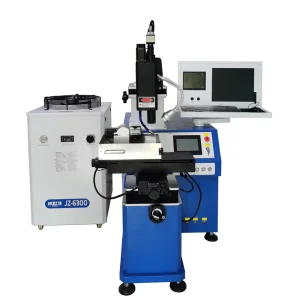
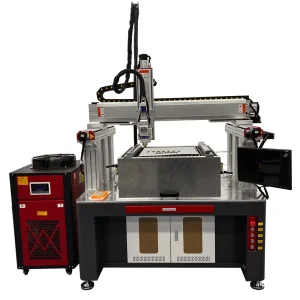
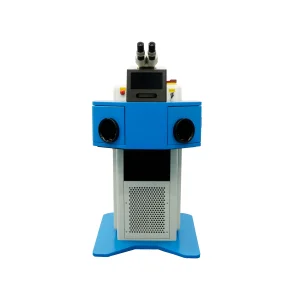
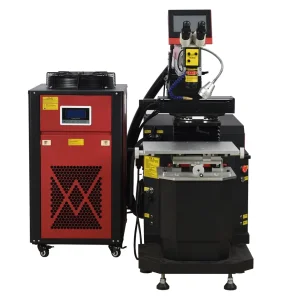
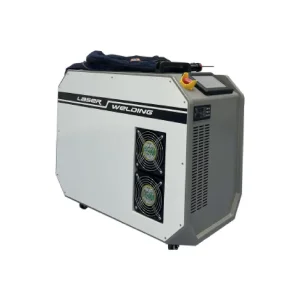
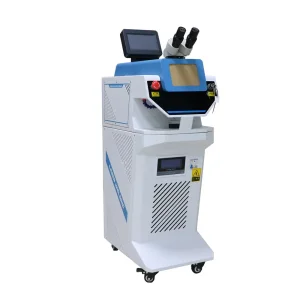
Explore our core industrial architectures engineered in-house at Shenzhen Youmir Laser Technology Co., Ltd., built for micrometer tolerance, thermal mitigation, and continuous duty cycles.
How modular foot-print laser workstations are replacing traditional TIG micro-welding and bulky gantry stations across tier-1 manufacturing hubs globally.
Modern desktop laser welders leverage high-efficiency diode-pumped architectures. By concentrating power densities exceeding 106 W/cm2 into a sub-millimeter spot diameter, operators achieve deep-penetration keyhole or conduction-mode joints with minimal thermal stress.
Traditional multi-kilowatt gantry systems require up to 20 m2 of reinforced floor space. In contrast, modern benchtop enclosures occupy under 1.5 m2 while offering high-speed automated galvanometer scanning and repeatability down to ±0.005 mm.
With entry barriers dropping, small-to-medium enterprises across precision tooling, medical instrumentation, and jewelry fabrication achieve full equipment amortization within 6 to 9 months by eliminating secondary grinding and rework cycles.
Operational data validated across 5,000+ deployments by Shenzhen Youmir Laser Technology Co., Ltd. worldwide.
Selecting between Fiber, Quasi-Continuous Wave (QCW), and Flashlamp-Pumped Nd:YAG resonators for benchtop setups.
| Resonator Architecture | Wavelength & Beam Quality | Thermal Mode Profile | Optimal Material Compatibility | Estimated CAPEX Tier |
|---|---|---|---|---|
| Continuous Wave (CW) Fiber | 1064–1080 nm, Single-mode (M2 < 1.3) | Continuous deep-penetration keyhole | Stainless steels, structural alloys, titanium | Mid to High ($5,500 – $14,000) |
| Quasi-Continuous Wave (QCW) | 1070 nm, High peak power (10× average) | Low average thermal load, high-frequency pulsing | Copper, gold, silver, dissimilar micro-foil joints | High Tier ($9,000 – $22,000) |
| Flashlamp-Pumped Nd:YAG | 1064 nm, Multi-mode pulsed spot | Discrete millisecond thermal conduction pulses | Jewelry prong tipping, small mold cavity build-up | Budget-Friendly ($3,200 – $7,500) |
Transparent reference costing for industrial procurement managers, OEM integrators, and workshop proprietors.
Power Spectrum: 60W – 100W Pulsed
Cooling Mechanism: Internal integrated water/air chiller
Primary Target: Goldsmith counters, optical frame adjustment, boutique dental laboratories requiring manual microscope observation.
Power Spectrum: 150W – 300W Average (1.5kW – 3kW Peak)
Optics: High-speed galvo scanner head with coaxial CCD alignment
Primary Target: High-precision electronics manufacturing, aerospace sensors, and thin-gauge lithium battery pack tabs.
Power Spectrum: 1000W – 2000W Continuous Fiber
Motion Stage: 3-Axis or 4-Axis CNC servo positioning with protective interlock enclosure
Primary Target: Continuous production lines, hermetic medical sensor capsules, automotive solenoids.
Targeted process integrations solving heat-distortion, joint porosity, and non-destructive joining challenges.
Tooling and injection mold repair requires localized weld deposition without annealing adjacent hardened tool steel (HRC 55+). Desktop systems utilize micro-wire feeding under inert argon shielding to repair worn gate edges and parting lines with zero thermal warping.
Endoscopic surgical instruments, pacemaker enclosures, and catheter rings require Class-III cleanroom biocompatibility. Laser micro-welding provides hermetic seals without chemical flux, slag, or spatter, passing rigorous cytotoxicity and helium-leak tests.
Joining dissimilar materials like Copper-to-Aluminum busbars presents significant challenges due to intermetallic brittleness. With programmable wobble beam oscillation, desktop fiber systems achieve metallurgical bonding with uniform intermetallic grain structures.
Handling platinum, yellow gold, palladium, and fine silver demands focused energy to avoid boiling lower-melting-point alloying elements. Desktop pulsed Nd:YAG welders allow stone-adjacent prong reconstruction without unsetting diamonds or emeralds.
Upcoming advancements transforming benchtop manufacturing between 2026 and 2030.
Next-generation desktop workstations integrate embedded machine-vision neural networks that instantly detect seam contours, automatically compensating for work-holding deviations and dynamic wire-feed offsets in real time.
To overcome near-infrared reflectance in pure copper (absorption < 5% at 1064 nm), hybrid systems combining 450 nm blue light with 1070 nm fiber lasers are moving into benchtop form-factors, allowing zero-spatter conductive welds.
Optical Coherence Tomography (OCT) is migrating from industrial gantries into benchtop machines, permitting non-destructive, real-time depth verification to ensure 100% QA compliance for critical aerospace and medical hardware.
Direct technical responses addressing optical configuration, gas shielding, operator safety, and supply chains.
Explore the remainder of our engineered product range, spanning 3-axis CNC systems, heavy-duty boom arms, and portable clean-and-cut solutions.