
Micro Precision
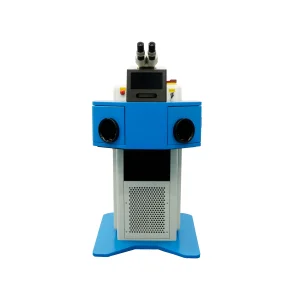
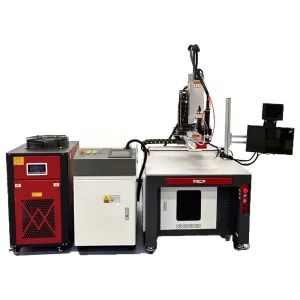
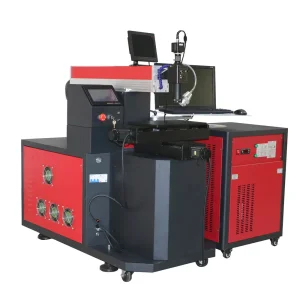
Explore our foundational range of handheld continuous-wave, pulsed jewelry micro-deposition, and articulating cantilever welding systems calibrated for immediate global deployment.
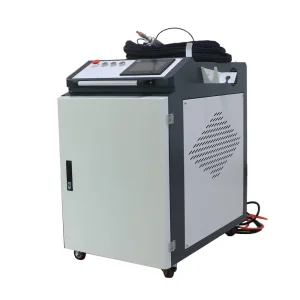
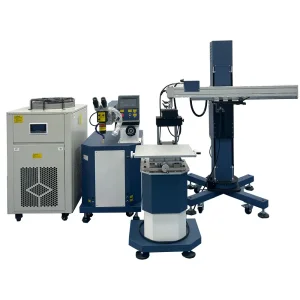
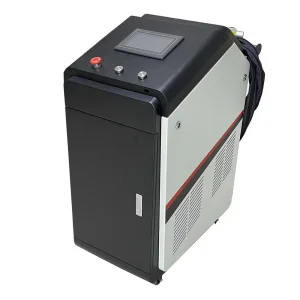


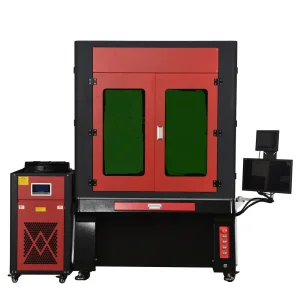

Industrial metal fabrication is undergoing its most profound operational pivot in fifty years. Modern handheld fiber laser welders replace uncontrolled arc heat with tightly collimated photon energy.
Unlike conventional Metal Inert Gas (MIG) and Tungsten Inert Gas (TIG) systems that flood base metals with diffuse thermal input, handheld fiber lasers focus up to 3000 watts into a sub-millimeter concentrated optical spot. This produces keyhole-mode penetration with an aspect ratio often exceeding 5:1.
Early generation single-point handheld laser welders demanded absolute joint tolerances below 0.1mm, severely restricting factory floor adoption. Modern systems incorporate high-speed galvanometer-driven oscillation optics within the handheld gun, sweeping the beam across configurable geometries.
Process cycle speed is the definitive metric driving procurement. Continuous fiber lasers exhibit electro-optical wall-plug conversion efficiencies above 35% (compared to 1-3% for legacy lamp-pumped YAG), channeling pure optical energy directly into the workpiece melt pool without atmospheric waste.
Industrial procurement directors in the USA, Germany, Japan, and developing manufacturing hubs face compounding structural bottlenecks: a critical shortage of certified manual welders, climbing raw material prices, and tight environmental audits.
| Evaluation Parameter | Traditional TIG / GTAW | Standard MIG / GMAW | Youmir Handheld Fiber Laser |
|---|---|---|---|
| Operator Skill Ramp-up | 6–18 Months (Certified Artisan) | 2–4 Months (Intermediate) | 2–4 Hours (Semi-Skilled) |
| Process Speed (1.5mm SS) | 8–15 cm / min | 25–40 cm / min | 60–120 cm / min |
| Post-Weld Abrasive Grinding | Mandatory (High Labor Cost) | Extensive Spatter Cleanup | Zero / Cosmetic Polish Only |
| Heat Distortion Index | Severe (Requires Press Flattening) | Moderate to High | Negligible Sub-Millimeter |
| Electricity & Gas Usage | High Draw (Low Conversion Efficiency) | High Shielding Gas Flow Rates | 80% Energy Savings, Low Flow |
| Amortized 3-Year TCO | Extremely High (Continuous Labor) | Moderate (Consumable & Clean Cost) | Lowest (Payback in 3–6 Months) |
According to the American Welding Society (AWS), the global manufacturing sector confronts a deficit of hundreds of thousands of qualified master welders. Handheld laser welders democratize weld quality: built-in intelligent process databases store optimized parameters for 100+ alloy combinations, enabling entry-level operators to deposit clean, hermetic, X-ray verifiable seams on their first shift.
In architectural metalwork, food-grade machinery, and commercial enclosures, over 40% of shop labor is traditionally dedicated to post-weld angle grinding, flap-wheel blending, and chemical pickling to remove heat tint. A clean laser seam leaves zero spatter and an ultra-narrow bead that can transition directly to powder coating or anodizing, releasing immense workshop throughput capacity.
Modern procurement leans toward modular hardware. Youmir engineering integrates rapid-swap optical nozzle kits that allow the operator to convert a 2000W continuous laser welder into an oxide-ablation cleaning gun or a thin-gauge sheet cutter within 60 seconds. One capital expenditure asset addresses rust removal, joint pre-cleaning, laser welding, and final weld seam cleaning.
From lightweight EV e-mobility components to sterile pharmaceutical grade enclosures, our laser architectures solve specialized metallurgical joining challenges.
Joining high-reflectivity copper, 5000/6000 series aluminum, and brass poses severe back-reflection risks to conventional lasers. Youmir implements active optical isolation coupled with high-peak QCW or modulated fiber generators. Welding battery busbars, liquid cooling plates, and motor stators occurs with zero spatter and ultra-low internal electrical contact resistance.
Titanium alloys (Grade 2, Grade 5 Ti-6Al-4V) and nickel superalloys (Inconel 625/718) demand complete atmospheric shielding to prevent oxygen and nitrogen embrittlement. Our handheld nozzles feature trailing and coaxial laminar shielding gas diffusers, guaranteeing silver/straw-colored ductile welds meeting AWS D17.1 aerospace criteria.
When plastic injection cavities or metal stamping dies incur edge chipping or wear, traditional pre-heating and TIG build-up causes thermal stress cracks and dimensional softening of the hardened core. Our Boom Mold and Cantilever systems use localized deposition down to 0.2mm wire, restoring H13, P20, and S136 tool steels without sink or annealing.
Shenzhen Youmir Laser Technology R&D team continuously pioneers advanced architectural paradigms designed to make handheld laser tools lighter, smarter, and thermally self-sufficient.
Eliminating external water chillers and glycol fluids. High-efficiency micro-channel vapor chamber heat sinks with variable-speed brushless fans deliver stable 1500W operation in extreme ambient temperatures (-15°C to 45°C), reducing overall machine chassis weight to under 40kg for field repair.
Integrating high-speed micro-CMOS sensors directly into the optical handpiece. Real-time edge compute algorithms monitor melt pool temperature distribution, dynamically modulating laser power and feed wire rate to prevent undercut, incomplete penetration, or burn-through automatically.
Combining 450nm visible blue laser (absorbed at >65% by copper at room temperature) with 1080nm near-infrared fiber laser. The blue beam creates a stable, spatter-free liquid conduction pool, while the fiber laser drives deep keyhole penetration without optical reflex shock.
Rapid-docking mechanical quick-disconnect interfaces that transition our handheld welding torches onto 6-axis collaborative robotic arms (Cobots). Operators switch between manual off-line custom repair and automated, repeatable high-volume batch runs in minutes.
Operating high-power 1064/1080nm laser radiation requires uncompromised active safety interlocks and comprehensive international regulatory alignment.
Every Youmir handheld fiber laser incorporates triple physical electrical interlocks: optical emission is strictly impossible unless the gun nozzle maintains direct low-resistance contact with the grounded workpiece clamp, the safety key circuit is closed, and water flow/gas pressure switches confirm adequate chiller and shield environment.
With manufacturing facilities spanning Shenzhen, Zhongshan, and Hunan, we support distributors, OEM brand integrators, and plant engineers across 50+ countries. We maintain strategic hubs providing consumable optics (protective windows, focus lenses, collimators, brass wire nozzles) dispatched within 24 hours.
Technical clarity direct from our applications engineering team regarding power selection, shielding gases, material limitations, and optical maintenance.
Complementing our handheld line with 3-axis CNC automated workstations, sheet cutting gantries, and specialized signage channel-letter welding machines.

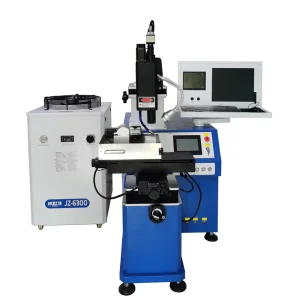
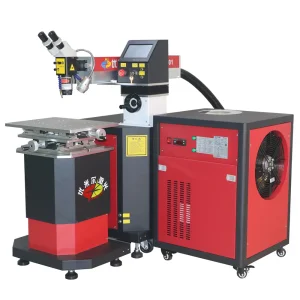
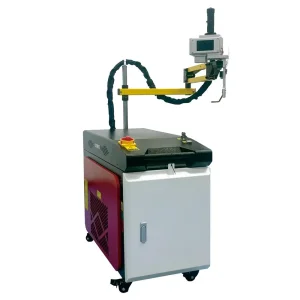


Send your production materials directly to our Shenzhen application laboratory. Our senior laser physicists conduct penetration testing, metallographic sectioning, and high-speed process parameter optimization—returning high-resolution weld seam video and data reports prior to capital commitment.