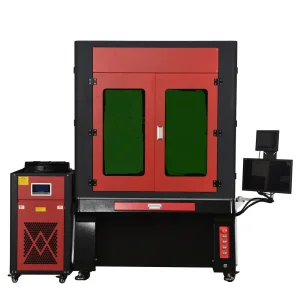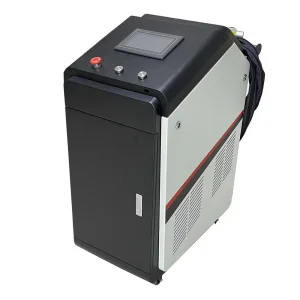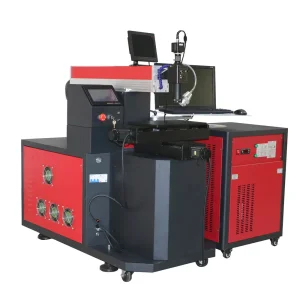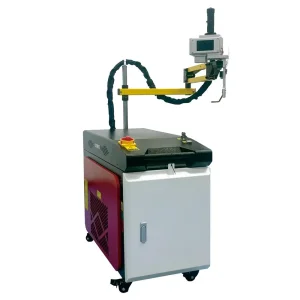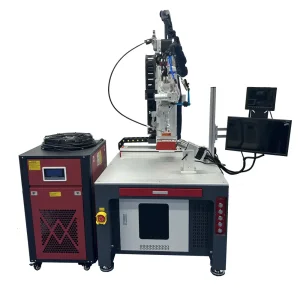
Industrial Precision Engineering White Paper & Direct Factory Sourcing Guide. Explore next-generation multi-functional fiber laser processing systems delivered straight from Shenzhen's Smart Industry 4.0 cluster.
Direct-from-factory continuous laser welders, modular pulsed cleaners, and agile cutting equipment designed for heavy-duty metal fabrication and field manufacturing.
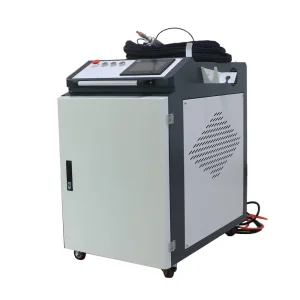
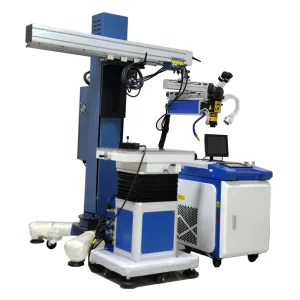
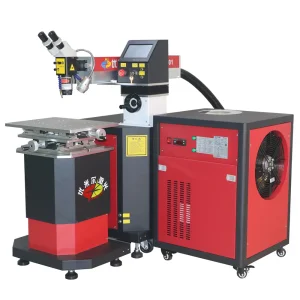
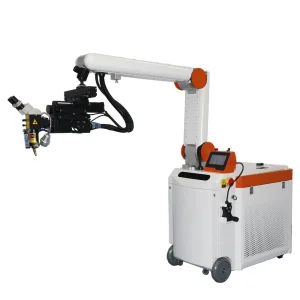
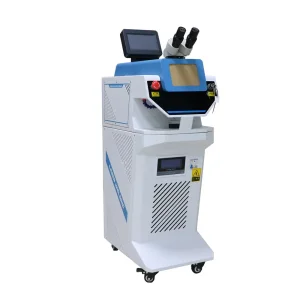
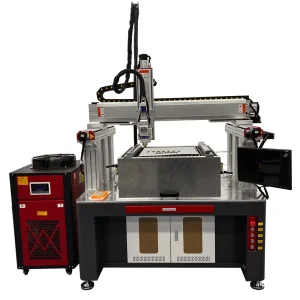
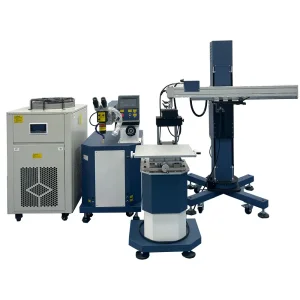
Understanding the technological leap from traditional plasma/oxy-fuel torches and conventional gantry systems to multi-functional handheld fiber laser processing units.
The global metalworking segment is aggressively shifting away from single-purpose tools. Modern handheld laser cutters integrate dynamic wobble galvanometer optics, allowing immediate mode switching between high-precision cutting, deep-penetration welding, rust stripping, and weld seam passivation without replacing the laser head.
Traditional abrasive mechanical cutting and plasma torches generate wide Heat-Affected Zones (HAZ), resulting in micro-cracking and work-hardening. Handheld fiber laser optics concentrate power density exceeding 10^6 W/cm2, enabling rapid vaporization cutting of thin-gauge sheets (0.5mm to 4.0mm) with nearly zero geometric distortion.
Rising labor costs across North America, Europe, and Australasia have magnified the demand for tools with minimal learning curves. Handheld laser systems reduce operator onboarding time from months (required for master TIG/MIG welders and plasma operators) to less than 4 hours, lowering direct operational cost per meter by up to 58%.
How Shenzhen Youmir Laser utilizes localized vertical integration, dual-loop optical engineering, and direct-to-enterprise distribution to deliver uncompromised quality.
Unlike system integrators who assemble third-party kits, Youmir manufactures collimating lenses, dual-axis galvanometer drivers, and ergonomic handheld cutting nozzles in-house, securing extreme beam profile concentricity.
Every handheld machine undergoes 72 hours of uninterrupted continuous oscillation, high-temperature environmental baking (45°C at 85% RH), and optical power drop benchmarking prior to seaworthy packaging.
Eliminate third-party margin inflation. We preserve strategic inventories of fused silica protective windows, specialized cutting nozzles, wire feeding liners, and optical collimators with worldwide dispatch within 24 hours.
Tailor fiber laser output power (1000W to 3000W), chassis footprint, software GUI languages, internal chiller cooling capacity, and private-label branding for regional distribution channels.
Verified operational parameters based on standard industrial fiber laser source modules (1080nm wavelength, continuous wave with modulation capability).
| Laser Source Power | Material Type | Optimal Cutting Thickness | Max Severance Thickness | Assist Gas Type | Typical Linear Speed |
|---|---|---|---|---|---|
| 1000W Fiber | Stainless Steel (304/316) | 1.0 mm – 1.5 mm | 2.5 mm | Nitrogen (N2) / Air | 25 – 45 mm/s |
| 1500W Fiber | Carbon Steel (Q235) | 1.5 mm – 2.5 mm | 3.5 mm | Oxygen (O2) | 30 – 60 mm/s |
| 2000W Fiber | Aluminum Alloy (6061) | 1.5 mm – 3.0 mm | 4.0 mm | Nitrogen (N2) / Argon | 20 – 40 mm/s |
| 3000W Fiber | Stainless / Carbon Steel | 3.0 mm – 5.0 mm | 6.0 mm | N2 / O2 Industrial | 35 – 80 mm/s |
| 3000W Fiber | Brass / Copper (High Refl.) | 1.0 mm – 2.0 mm | 3.0 mm | High-Pressure Nitrogen | 15 – 35 mm/s |
Solving real-world mechanical fabrication bottlenecks where fixed CNC gantries cannot reach or prove economically unviable.
Cutting on-site galvanized sheet metal, stainless steel splashbacks, and custom ventilation transitions. The handheld head allows arbitrary contour cutting directly on assembly jigs without re-clamping or generating secondary burrs.
Trimming hydroformed high-strength steel tubes, modifying roll cages, and removing damaged structural panels. The concentrated laser spot prevents distortion of delicate automotive body lines while preserving parent metal temper.
Performing field maintenance inside tight vessel hulls and complex piping galleries. Equipped with 10m to 15m armored fiber cables, technicians easily access difficult angles to sever oxidized bolts and section corroded process pipe.
Dedicated solely to industrial fiber laser innovation since 2010. Direct factory transparency, international validation, and proven engineering track records.
Direct technical clarifications from Youmir's optical engineers regarding power selection, duty cycles, gas logistics, and after-sales service.
The choice of assist gas dictates cut quality and edge metallurgical condition. For stainless steel, aluminum, and brass, high-pressure Nitrogen (N2 at 10-14 bar) is mandatory to prevent oxide formation and produce a bright, weld-ready edge. For carbon steel, pure Oxygen (O2 at 2-4 bar) creates an exothermic reaction increasing cutting speed, while clean, dry compressed Air can be used for economical cutting on thin sheets below 1.5mm.
Fixed CNC gantry cutters deliver unmatched automated positioning precision (repeatability ±0.03mm) across large sheet batches. In contrast, handheld laser systems prioritize extreme mechanical agility, zero setup fixtures, portability to job sites, and multi-process flexibility (weld, cut, clean). Handheld cutting is an agile fabrication process, ideal for non-standard repairs, site construction, and bevel trims.
Yes. Youmir Laser maintains a dedicated application testing laboratory in Shenzhen. International clients regularly ship complex alloys, coated materials, and stampings to our facility. Our senior application engineers perform speed and gas trials, providing a comprehensive inspection report with high-definition metallurgical cross-sections and parameter recipes at zero charge.
Our industrial fiber laser sources use solid-state diode-pumped architectures boasting an MTBF (Mean Time Between Failures) exceeding 100,000 operational hours under nominal water chiller thermal regulation. The primary wear items are limited to inexpensive protective quartz cover slides and copper cutting tips, which can be swapped by operators in under two minutes.
Systems up to 1500W can be configured for single-phase 220V ±10% 50/60Hz supplies, while 2000W and 3000W continuous wave units typically require three-phase 380V or heavy-duty single-phase 220V lines. The integrated dual-circuit industrial water chiller automatically handles ambient operating ranges from 5°C to 45°C. For sub-zero operations, specialized laser-grade glycol coolants must be used.
We provide comprehensive 2-year core warranty coverage on laser sources and optical assemblies. Overseas buyers receive 24/7 direct remote video support with senior English-fluent optical engineers. Critical replacement components are stored in partner regional hubs across North America, Europe, and Southeast Asia for express air dispatch, minimizing unexpected manufacturing downtime.
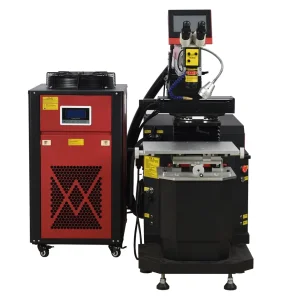
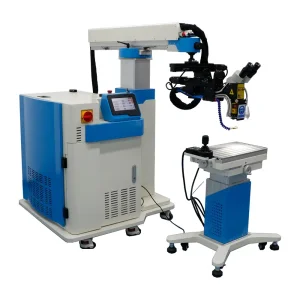
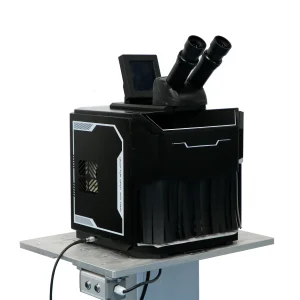
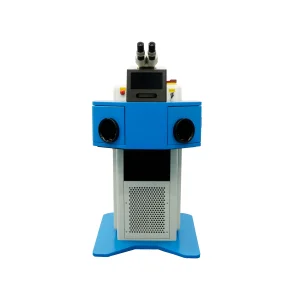
Automated CNC enclosed platforms, precision pulsed surface restoration devices, and compact jewelry laser systems engineered for specialized production lines.