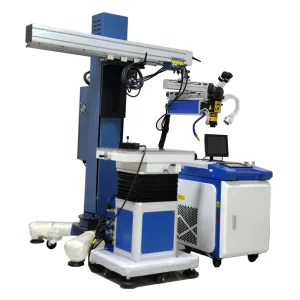
Explore primary CNC workstations, dual-axis handheld processing heads, and multi-functional optical assemblies direct from factory lines.

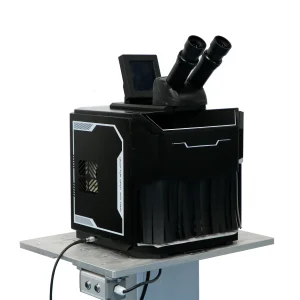




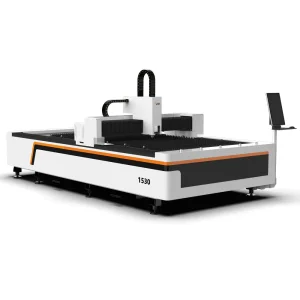
The transition from legacy thermal mechanical cutting methods—such as oxy-fuel torch systems, plasma arc torches, and mechanical shears—to high-brightness continuous-wave (CW) fiber laser modules marks an epochal paradigm shift in structural sheet fabrication and precision field fitting.
Handheld fiber cutting leverages high beam parameter product (BPP) single-mode and small-core multi-mode fiber sources. By focusing 1070nm coherent radiation down to a 0.15mm focal spot, energy density surpasses 10^7 W/cm², producing dross-free kerfs that eliminate post-process secondary milling.
Traditional plasma systems impart a massive heat-affected zone (HAZ) ranging between 1.5mm to 3.0mm, inducing sheet warping and micro-cracking in austenitic stainless steel. Handheld fiber optics constrain the HAZ strictly within 0.1mm–0.25mm, preventing structural parent-metal grain growth.
Modern industrial operations utilize 3-in-1 and 4-in-1 handheld architectures. By switching modular precision focus collimation lenses and specialized tip copper nozzles, a single portable generator transitions between fine sheet cutting, high-speed penetration welding, and oxide laser cleaning within 60 seconds.
Navigating industrial supply lines requires transparent total cost of ownership (TCO) benchmarks. The chart below synthesizes core hardware tiers, typical export factory pricing, and structural sheet capacities across primary manufacturing markets.
| Laser Source Power | Factory FOB Price Window (USD) | Clean Cut Carbon Steel (O2) | High-Speed SS Cut (N2) | Core Industrial Application Domain |
|---|---|---|---|---|
| 1000W CW Fiber | $2,800 – $4,200 | Up to 2.5 mm | Up to 2.0 mm | Precision Sheet / HVAC |
| 1500W CW Fiber | $3,800 – $5,600 | Up to 4.0 mm | Up to 3.0 mm | Standard Fabrication Workbenches |
| 2000W CW Fiber | $4,900 – $7,200 | Up to 6.0 mm | Up to 4.5 mm | Commercial Enclosures / Automotive Body |
| 3000W CW Fiber | $7,500 – $11,500 | Up to 8.0 mm | Up to 6.0 mm | Heavy Machinery Maintenance / Structural Tanks |
Operational costs depend on gas management. High-pressure Nitrogen (N2) ensures mirror-finish edge retention on stainless steel, while Industrial Oxygen (O2) creates exothermic combustion for accelerated carbon steel parting.
Proper inventory planning of copper contact tips, cutting standoff tips, and protective quartz lens windows prevents production downtime, with standard consumable consumption remaining below $0.45 per operating hour.
Industrial systems integrate multi-channel compressor refrigeration circuits, cooling the laser resonator and the QBH delivery head separately to stop thermal lensing and maintain cut focal positions under long duty cycles.
Factory configurations provide a choice of verified laser generators—including Raycus, MAX, IPG, and RECI—enabling international distributors to align with their existing regional repair hubs and client preferences.
Handheld laser cutting and welding units resolve distinct processing challenges across specialized sectors, where static gantry setups cannot reach or are cost-prohibitive.
For custom roll-cage profiling, specialized hydro-formed pillar modifications, and EV battery tray adjustments, handheld cutting tools deliver clean edge geometry inside restricted vehicle interior zones without sparking fires or burning adjacent wiring harnesses.
Stainless steel grades 304 and 316 require zero oxide formation for food-grade and hygienic compliance. Handheld fiber cutting equipped with high-purity nitrogen assist produces mirror-finish edges that pass rigorous sanitary inspections without secondary chemical pickling.
Field maintenance technicians can perform localized weld cut-outs, inspection port additions, and pipe saddle contouring on site. The 10-meter to 15-meter fiber delivery cable gives operators full mobility without moving heavy power sources around scaffolding.
Handheld Class 4 laser installations require complete systemic safety interlocks and clear regulatory adherence to maintain safe shop-floor deployment.
Our hand pieces feature galvanic earth-clamp conductivity circuits; the laser resonator will not fire unless the copper nozzle maintains continuous contact with the target grounded workpiece, eliminating the risk of rogue ambient reflections.
Hardware packages are fully certified according to EN 60825-1 (Laser Radiation Safety), EN ISO 12100, and FDA CDRH accession registration codes, facilitating smooth customs clearance throughout North America, the EU, and Oceanic territories.
Through our dedicated partner hubs and direct factory technical staff, international clients receive complete remote video diagnostics, electrical schematic documentation, and 48-hour express dispatch of critical optical lenses and electronic boards.
Continuous R&D investments are driving key advancements in weight balance, operational software integration, and industrial edge computing.
By moving to aerospace-grade magnesium alloys and integrated compact optical coatings, third-generation cutting head weights have dropped from 1.45kg down to 680g, substantially reducing operator wrist fatigue during long production shifts.
New machine firmware automatically matches cutting gas pressure to real-time torch travel speed measured by onboard accelerometers. This reduces total Nitrogen consumption by up to 34% during uneven manual cutting speeds.
Embedded industrial 4G/Wi-Fi telemetry cards continuously monitor optical power decay, chiller water temperatures, and laser source operational logs, enabling predictive maintenance alerts before optical window failures happen.
Common inquiries from production engineers, facility managers, and international distributors regarding handheld laser systems.
Specialized cantilever, galvanometer, mold-repair, and gantry-integrated laser fabrication equipment ready for worldwide deployment.