Engineered at our Shenzhen headquarters for high thermal conductivity metals, die-repair molds, and continuous mass production lines.
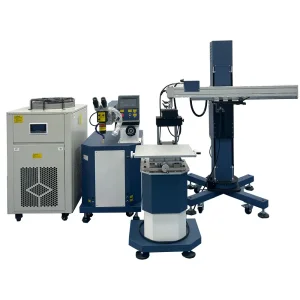
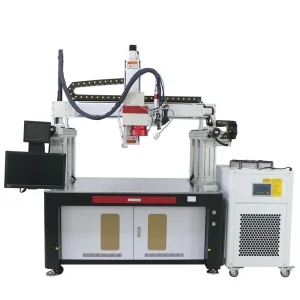
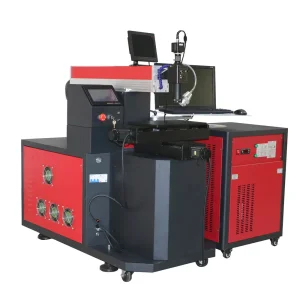
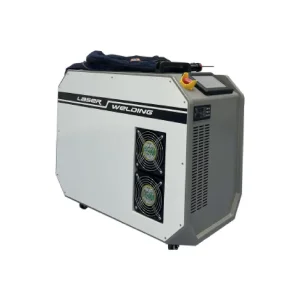

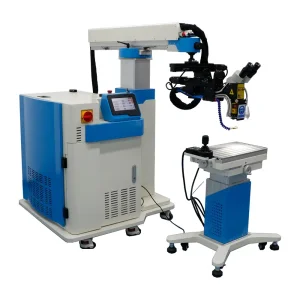
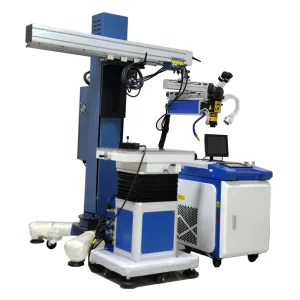

Bridging traditional goldsmithing heritage with high-energy photonic physics: how localized coherent light eliminates thermal distortion, alloy degradation, and consumable solder dependencies.
Traditional torch soldering introduces lower-melting-point brazing alloys containing cadmium, zinc, or lead, which degrade hallmark purity and leave noticeable color discrepancies. Pulsed jewelry laser welders fuse parent metal directly (autogenous welding), ensuring homogenous grain boundaries, zero color shift, and consistent acid-assay compliance across 9K to 24K gold, 925 sterling silver, and 950 platinum.
With pulse durations calibrated between 0.1 and 20 milliseconds, thermal dissipation is constrained strictly within the localized laser plume. Craftsmen can perform prong rebuilding, claw re-tipping, and bezel reinforcement less than 0.2mm away from thermal-sensitive gemstones (including emeralds, opals, tanzanites, and pearls) without unsetting the stones or risking catastrophic thermal shock fractures.
Investment casting shrinkage and gas porosity inherently compromise complex jewelry geometries. Our laser systems allow operators to use matching alloy micro-wire (from Ø 0.15mm to 0.60mm) to fill microscopic voids, pit holes, and seam cracks under 10x-20x binocular stereomicroscope magnification, converting sub-quality castings into flawless luxury pieces without scrap re-melting.
How jewelry production hubs in Europe, the Americas, Asia-Pacific, and the Middle East deploy Youmir Laser's precision micro-joining platforms.
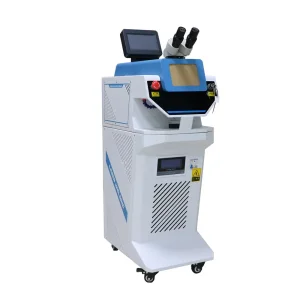
In the United States and Canada, the jewelry sector is characterized by agile retail workshops, antique restoration studios, and independent CAD/CAM custom jewelers. Demand centers heavily on compact desktop jewelry laser welders (60W to 100W) that fit through standard commercial door frames and operate on 110V/220V single-phase power. Essential requirements include whisper-quiet built-in chillers, rapid setup for ring resizing, and CDRH/FDA Class I compliance for public-facing storefront operation.
From the gold manufacturing clusters of Arezzo and Vicenza in Italy to the high-end horological houses of Switzerland and Paris's Place Vendôme, European clients demand metallurgical perfection. Here, Quasi-Continuous Wave (QCW) fiber laser welders and heavy-duty 200W Nd:YAG systems are favored for platinum and titanium micro-welding. Full adherence to CE Machinery Directive 2006/42/EC, EN 60825-1 optical safety, and dual interlock circuitry is non-negotiable.
In hubs like Shenzhen Luohu (China), Surat and Mumbai (India), Bangkok (Thailand), and Dubai's Gold Souk (UAE), machines must withstand relentless 24/7 industrial production cycles. Processing ultra-reflective high-karat gold (22K and 24K) demands high peak pulse energy (up to 80-120 Joules) and continuous liquid deionized cooling systems to avoid beam degradation during multi-shift continuous chain-welding operations.
A technical assessment of photon absorption characteristics, pulse duration shaping, and optical cavity thermodynamics across precious jewelry metals.
Nd:YAG laser systems utilize an optical crystal rod excited by high-energy xenon flashlamps within a gold-plated or ceramic elliptical cavity. Their defining feature is high peak pulse power (5 kW to 8 kW) delivered in microsecond bursts. Because gold and silver reflect over 90% of infrared radiation at room temperature, the initial micro-pulse rapidly elevates the surface temperature past the melting point, instantly shifting the absorption coefficient from ~5% to ~30%, enabling a stable, uniform weld pool without overheating adjacent elements.
QCW fiber lasers replace the flashlamp and crystal rod with ytterbium-doped optical fiber diodes. They achieve exceptional wall-plug efficiency (>30% vs. <3% for YAG) and an ultra-low Beam Parameter Product (BPP). This produces an exceptionally sharp, consistent focal spot (down to 0.05mm) with zero flashlamp degradation over 100,000 diode hours. QCW systems are ideal for high-precision micro-prong repair, platinum watches, and automated CNC rotary multi-spot jewelry assemblies.
| Performance Specification | Desktop Nd:YAG (60W-100W) | Industrial Heavy Nd:YAG (200W) | High-Precision QCW Fiber (150W/1500W) |
|---|---|---|---|
| Primary Application | Retail counter repair, ring sizing, prong re-tipping | Heavy casting void filling, silver hollowware, mold repair | Automated CNC chain welding, platinum, titanium micro-joints |
| Laser Wavelength | 1064 nm | 1064 nm | 1070 nm ± 10 nm |
| Max Single Pulse Energy | 40 J – 60 J | 90 J – 120 J | 15 J – 30 J (High frequency capability) |
| Peak Pulse Power | 4.5 kW – 6.0 kW | 7.5 kW – 9.0 kW | 1.5 kW – 3.0 kW (Ultra-narrow beam) |
| Pulse Width Window | 0.2 ms – 15 ms | 0.1 ms – 20 ms | 0.05 ms – 50 ms (True square pulse) |
| Pulse Repetition Rate | 0.5 Hz – 20 Hz | 0.5 Hz – 50 Hz | 0.1 Hz – 500 Hz (Continuous seam capable) |
| Beam Spot Adjust Range | 0.2 mm – 2.0 mm (Motorized beam expander) | 0.1 mm – 3.0 mm (Multi-position iris) | 0.05 mm – 1.5 mm (Precision galvo/collimator) |
| Consumable Lifecycle | Xenon Lamp: ~3,000,000 to 5,000,000 pulses | Xenon Lamp: ~5,000,000 pulses / Deion filter | Maintenance-Free Fiber Source: >100,000 operating hours |
Discover how master bench jewelers and automated high-throughput production lines utilize Youmir Laser equipment to solve demanding micro-welding challenges.
Traditional torch re-tipping requires unsetting diamonds, rubies, or sapphires to prevent scorch marks or heat fracturing, risking stone breakage during disassembly. With our jewelry laser welder, jewelers introduce matching 14K/18K gold or platinum wire directly onto worn prongs while looking through a 10x-20x microscope. Argon shielding gas eliminates oxidation, completing pristine re-tipping in minutes without unmounting sensitive stones.
Eternity bands, tension settings, and rings featuring inlaid enamel or composite inlays cannot be safely resized using open torches. The localized laser pulse fuses the cut shank seam using identical gold alloy wire. Because heat does not travel beyond a 0.2mm perimeter, heat-sensitive enamel, antiquing patinas, and adjacent pave-set gems remain completely pristine.
925 Sterling Silver has long challenged laser operators due to its extreme thermal conductivity and high optical reflectivity at 1064nm. Youmir's programmable pulse-shaping technology allows jewelers to configure a specialized ramp-up pre-heat pulse that overcomes the reflectivity barrier, followed by a sustained energy burst to achieve smooth, clean joins without melting delicate filigree wire networks.
Vintage watch restoration requires repairing deep gouges, dents, and corrosion pits on 316L/904L stainless steel, titanium, and gold cases without losing factory bevel lines. Our pulsed laser spot welding deposits matching filler wire onto damaged edges. Subsequent CNC lapidary polishing restores sharp chamfers and crisp edges without altering water-resistant case tolerances.
Beyond traditional jewelry, our precision machines are deployed worldwide to weld titanium and memory-alloy eyeglass frames, orthodontic retainers, dental bridge frameworks, and surgical sensor probes. Biocompatible autogenous joins require zero chemical flux, meeting rigorous medical hygiene standards.
Integrated with our 3-axis CNC stages or high-speed galvanometer heads, our jewelry laser sources execute automated spot welds on continuous curb, cable, and rope chain loops at speeds exceeding 200 links per minute, delivering robust mechanical strength and uniform joint aesthetics.
Ensuring operator safety, legal workplace compliance, and uninterrupted uptime across more than 50 export destinations.
Every Youmir jewelry laser welding chamber is engineered in strict accordance with EN 60825-1:2014 and US FDA CDRH 21 CFR 1040.10 standards. The welding chamber is fully interlocked; dual mechanical safety switches automatically deactivate laser excitation if the inspection hatch is opened. Certified optical protective glass (OD 6+ at 1064nm) shields operators from diffuse reflections while preserving visual clarity.
To eliminate eye fatigue during eight-hour shifts, our stereomicroscopes feature a rapid liquid crystal light valve (micro-shutter) that turns completely opaque (<0.5 ms) during laser discharge, eliminating flash dazzle. Integrated crosshair reticles, LED ring illuminators, and optional HD HDMI video outputs allow multiple craftsmen to monitor operations simultaneously.
Youmir machines ship factory-configured for local utility standards (110V 60Hz for North America; 220V/240V 50Hz for Europe, UK, Australia, and Asia). Supported by our regional dealer network and direct Shenzhen video engineering teams, we guarantee 24/7 technical troubleshooting, on-site operator training, and rapid door-to-door dispatch of consumables like xenon lamps, protective lenses, and ceramic cavities.
A preview of Youmir Laser's R&D pipeline in short-wavelength green lasers, AI optical inspection, and IoT telemetry.
While 1064nm infrared remains the gold standard, pure copper and 24K pure gold absorb short-wavelength green (515nm/532nm) and blue (450nm) radiation up to eight times more efficiently. Youmir's optical laboratories are developing hybrid dual-beam delivery systems that combine a 532nm absorption trigger with a 1064nm penetration core, delivering virtually zero-spatter welds on ultra-pure gold and conductive copper alloys.
Integrating high-resolution CMOS cameras with embedded neural inference chips, upcoming Youmir systems will automatically detect joint gaps, track complex ring contours, and dynamically modulate pulse width and focal offset on the fly. This eliminates operator aiming errors and enables completely hands-off batch production of gemstone-set jewelry.
Our upcoming industrial series features secure Wi-Fi and 5G IoT telemetry modules that monitor flashlamp degradation, chiller deionization levels, laser energy decay, and gas flow rates. Automated alerts notify operators when protective windows need cleaning or when lamps near the end of their operational lifecycle, completely eliminating unplanned shop downtime.
Expert answers from Youmir's application engineers covering metallurgical parameters, equipment selection, and daily workshop operations.
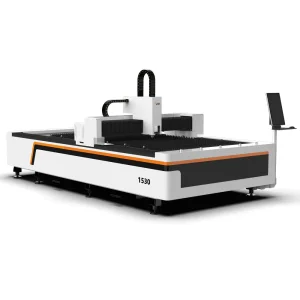
Explore the remainder of our specialized micro-welding, continuous transmission, mold maintenance, and sheet cutting machines.





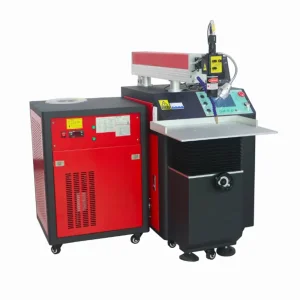
Send your cast pieces, damaged precious alloy components, or custom alloy wire to our Shenzhen application laboratory. Our engineers will perform comprehensive welding trials and return a detailed process parameter dossier complete with cross-sectional micrographs, pull-test data, and high-definition video documentation.
Address: 5th Floor, Building 4, No. 5 Tianyuan Road, Matan Street, Guangming District, Shenzhen, China
Phone / WhatsApp: +86 137 8778 7637
Technical Support: [email protected]
Global Sales: [email protected]
