Explore engineering-grade handheld fiber lasers, automatic multi-axis workstations, and precision maintenance systems manufactured for heavy industrial duty cycles.

High-Quality Integrated Boom Laser Welding Machine Factory, Quotes
Request Engineering Quote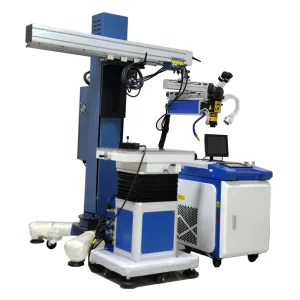
Custom Fiber Mold Laser Welding Machine Pricelist, Quotes
View Configuration & Specs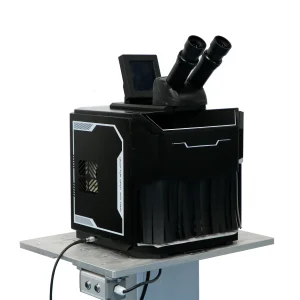
Custom Compact 60W Jewelry Laser Welder for Gold & Silver Crafting Manufacturers, Quotes
Inquire Benchtop Price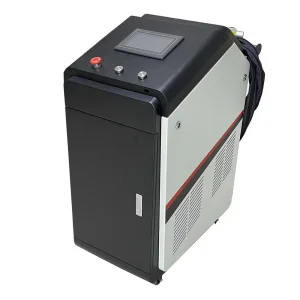
Custom Pulse Laser Cleaning Machine Manufacturer, Pricelist
Request Pulsed Pricelist
Custom Mould Laser Welding Machine Manufacturers, Quotes
Consult Tooling Engineers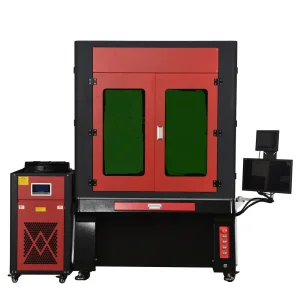
Custom Cnc Enclosed Automatic Fiber Laser Welding Machine Factories, Quotes
Get Enclosed System Quote
High-Quality Automatic Laser Welding Machine Pricelist, Factories
Review Automation Pricing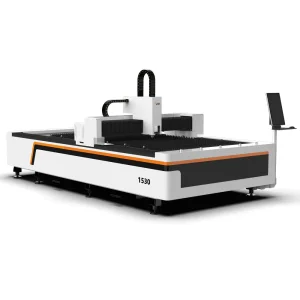
Custom 1530-2000 Watt Cutting Machine Manufacturers, Factory
Examine Cutting ParametersAcross the aerospace, maritime, automotive, and infrastructure sectors, portable laser ablation systems are displacing consumable chemical stripping, grit blasting, and dry-ice operations worldwide.
Regulatory pressures from agencies like the EPA, REACH, and OSHA have made traditional solvent washing, hazardous acid baths, and sandblasting cost-prohibitive. Handheld laser cleaning provides an immediate zero-emission solution that creates no secondary particulate waste streams, directly curbing toxic disposal overhead and hazardous air pollutant fines.
Industrial refinishing plants dedicate up to 70% of process time to tape masking, grit containment, and secondary dust cleanup. Handheld laser ablation uses programmable scan fields (lines, circles, spirals, frames) to eliminate physical masking completely, allowing an operator to treat complex weld seams or mold cavities with pinpoint geometric accuracy.
Unlike mechanical grinding wheels that remove virgin parent metal and induce compressive stress cracking, pulsed laser photon interaction works through threshold-selective ablation. The incident beam strips micro-scale coatings, mill scale, and oxidation without altering core metallographic structure or degrading tight dimensional tolerances.
Understanding the interplay between fluence, pulse duration, and photon absorption is vital to selecting the right optical engine for your fabrication facility.
CW systems emit an uninterrupted, uniform laser beam with nominal powers typically ranging from 1000W to 3000W. They function primarily through photothermal evaporation and thermal shock. As the high-energy photons strike the substrate, heavy oxidation and corrosion are heated to rapid boiling and phase transformation temperatures. While CW provides exceptional square-meter-per-hour clearing rates for thick structural rust, ship hulls, and bridge steel, its sustained heat input can induce thermal deformation on thin metals (<1.5mm) or delicate tool steel molds.
Master Oscillator Power Amplifier (MOPA) systems split laser output into distinct high-energy pulses with durations measured in nanoseconds (10–200 ns) and peak powers exceeding several megawatts. Operating via photomechanical spallation and plasma-mediated ablation, the rapid burst vaporizes contaminants before heat can conduct into the substrate (cold ablation). This makes pulsed cleaning the absolute benchmark for injection mold de-gumming, aerospace composite prep, nuclear de-contamination, and precision restoration.
Modern handheld laser cleaning guns house high-speed dual-axis galvanometer scanning mirrors. Rather than projecting a static spot, the optics wobble the beam at frequencies up to 400 Hz across diverse geometric trajectories (lines, ellipses, circles, and raster grids). Wobble controls eliminate hotspot formation, prevent localized substrate melting, and allow single-pass widths up to 300mm for balanced coverage.
| Engineering Attribute | Continuous Wave (CW) Laser | Pulsed MOPA Laser | Analytical Takeaway |
|---|---|---|---|
| Primary Mechanism | Photothermal Melting & Evaporation | Photomechanical Shockwave & Spallation | Pulsed prevents thermal diffusion into core bulk |
| Peak Power Density | Equivalent to Nominal Power (e.g., 2 kW) | Megawatt-range peaks (> 100 kW to 1 MW) | Pulsed fractures contaminants instantaneously |
| Heat-Affected Zone (HAZ) | Moderate to High (0.10 – 0.50 mm) | Virtually Imperceptible (< 0.01 mm) | Pulsed preserves hardness of polished tool steels |
| Throughput Velocity | Very High (15–40 m²/hr on heavy scale) | Controlled & Moderate (2–10 m²/hr) | CW delivers superior mass-removal ROI |
| Typical Equipment CapEx | $5,000 – $14,000 USD | $12,000 – $48,000 USD | CW lowers barrier to entry for general steelwork |
| Optimal Industrial Domain | Pipelines, Marine Plates, Heavy Fabrication | Aerospace, Injection Molds, Semiconductor | Application criticality determines optical architecture |
A granular pricing benchmark derived from current global procurement data, factoring in optical engine source, chilling architecture, and field deployment requirements.
| System Model & Architecture | Laser Source & Optics | Cooling System | Ablation Bandwidth | Factory FOB Price Bracket |
|---|---|---|---|---|
| 1000W Handheld CW Cleaner Continuous Wave |
Single-Mode Fiber (Raycus / MAX) | Integrated Dual-Circuit Water Chiller | Up to 15 m²/hr light rust | $4,800 – $6,200 USD |
| 1500W Handheld CW Cleaner Continuous Wave |
Multi-Mode Fiber Engine | Internal Industrial Water Chiller | Up to 22 m²/hr rust/paint | $5,800 – $7,500 USD |
| 2000W Handheld CW Cleaner Continuous Wave |
High-Power Industrial Fiber Source | Heavy-Duty Dual Temperature Chiller | Up to 30 m²/hr heavy scale | $7,200 – $9,800 USD |
| 3000W Ultra-Fast CW Cleaner Continuous Wave |
High-Power Continuous Fiber | High-Capacity Refrigerated Chiller | Up to 45 m²/hr ship/bridge paint | $10,500 – $14,200 USD |
| 100W Portable Pulse MOPA Cleaner Pulsed Precision |
Air-Cooled MOPA Source (Backpack/Trolley) | Forced Direct Air Cooling | 2–4 m²/hr non-destructive | $11,500 – $14,500 USD |
| 200W Industrial Pulse MOPA Cleaner Pulsed Precision |
JPT / IPG Pulsed Fiber Architecture | Intelligent Water Chiller | 5–8 m²/hr high precision | $16,800 – $22,000 USD |
| 300W – 500W High-Energy Pulsed Unit Pulsed Precision |
MOPA with Dynamic Pulse Tuning | High-Performance Industrial Chiller | 9–14 m²/hr mold de-coating | $28,000 – $46,000 USD |
Laser power alone does not determine capital cost. A 300W pulsed MOPA system costs significantly more than a 2000W continuous-wave system. The MOPA oscillator uses complex seed-laser modulation, isolators, and pulse amplifiers to maintain peak powers above 500 kW while preventing back-reflection damage from polished copper or brass.
Unlike mechanical blasting, which requires ongoing expendable media (garnet sand at $300–$600/ton, dry ice pellets, protective blast suits), laser cleaning consumes only 1.5–7.5 kW/hr of grid electrical energy. Equipment operators can expect payback horizons between 4 to 9 months on high-volume production lines.
From marine bilges to semiconductor tooling, see how field-tested handheld laser cleaners solve critical manufacturing challenges across disparate global sectors.
Selective removal of polyurethane and epoxy primers from aircraft skins and structural rivets. Pulsed lasers vaporize multiple paint coatings layer-by-layer without etching or inducing stress in lightweight aircraft-grade aluminum (7075, 2024) or delicate carbon-fiber reinforced polymers (CFRP).
Tire vulcanization molds, plastic injection tool steels, and aluminum die-casting chambers suffer severe organic deposit build-up. In-situ handheld laser cleaning strips baked release agents, vulcanized rubber, and polymers directly inside the press while operating at temperatures up to 250°C, drastically cutting mold turnaround downtime.
Inter-pass porosity in aluminum (5083, 6061) and stainless steel pipe welding is predominantly caused by hydrogen entrapment inside surface oxides, hydrocarbons, and drawing lubricants. Pre-treating the bevel with a 200W pulsed laser removes 100% of organic films. Post-weld laser treatment strips heat discoloration and restores the corrosion-resistant chromium-oxide passive film.
Sulfate crusts, soot, and calcified grime on historical limestone, marble, and bronze monuments cannot tolerate mechanical scrubbing or aggressive chemicals. Ultra-short pulse lasers break grime down to sub-micron particulates through self-limiting ablative mechanics, leaving delicate historic stone carvings undamaged.
Offshore drill rigs, ships, and harbor cranes are subject to heavy marine salt-spray corrosion. High-power 2000W and 3000W CW laser cleaning heads strip thick Class D stratified rust down to bare metal (Sa 2.5 / Sa 3 finish standard), producing the ideal surface anchor pattern for heavy protective epoxy recoating.
Electric vehicle manufacturing requires pristine bare metal contacts on copper and aluminum tab foils prior to ultrasonic or laser beam micro-welding. Nanosecond pulsed laser ablation strips polyimide tapes, insulation enamels, and micro-oxides in milliseconds without warping delicate foils or altering underlying battery cell chemistry.
Industrial photonics is advancing rapidly. Here is how intelligent beam shaping, fiber ergonomics, and real-time process monitoring are reshaping the industry.
Next-generation cleaning heads integrate coaxially aligned vision cameras and laser-induced breakdown spectroscopy (LIBS) sensors. The system analyzes reflected optical spectra in real time, determining whether surface oxidation has cleared. When bare metal is reached, the controller automatically scales back beam energy to prevent accidental parent metal burn-in.
Early generation cleaning torches weighed between 2.5 kg and 4.0 kg, leading to operator fatigue during prolonged shifts. The newest optical heads use 3D-printed titanium housings, beryllium mirrors, and miniaturized galvanometer drives, cutting the total torch weight to under 750 grams. This enables nimble manipulation over complex geometries.
Shop floors are rapidly turning to multi-mode 3-in-1 and 4-in-1 hybrid setups. Through fast interchangeable focal lenses and automated parameter sets, a single continuous-wave fiber unit can switch from rust stripping mode directly to wire-fed laser welding and post-weld bead clean-up. This consolidation lowers tooling footprints in light industrial workshops.
Clear, practical guidance on process parameters, power calculations, consumable management, safety regulations, and operational ROI.
Complete your production setup with automated galvanometer laser welders, cantilever arm units, and industrial sheet-metal cutting platforms.

Custom Galvanometer Continuous Laser Welding Machine Manufacturer, Factories
View Galvanometer Specs
High-Quality Fiber Laser Cutting Machines Factories, Quotes
Request Fiber Cutting Quote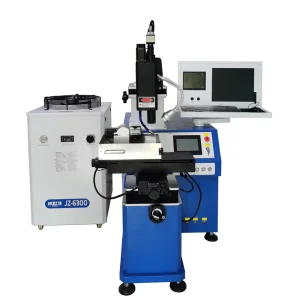
High-Quality 3 Axis Automatic Welding Machine Pricelist, Factory
Explore 3-Axis Pricing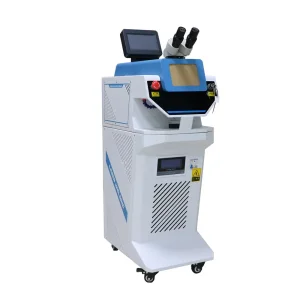
High-Quality YAG-Jewelry Laser Welding Machine Pricelist, Factories
View Jewelry Welder Price
Custom Integrated Boom Mold Welding Machine Manufacturer, Quotes
Request Custom Boom Quote
High-Quality Handheld Galvanometer Laser Welding Machine Manufacturer, Factories
Check Handheld Welder Specs
High-Quality Fiber Transmission Laser Welding Machine Pricelist, Factories
Request Fiber Transmission Quote
Custom Vertical jewelry welding machine Manufacturer, Manufacturers
Inquire Vertical Welder SpecsSend your sample workpieces to our Shenzhen laboratory. Our optical engineers will conduct baseline cleaning experiments, determine optimal laser fluence settings, and return a comprehensive test report with high-speed video verification before you commit to a purchase.
