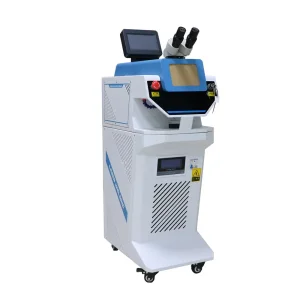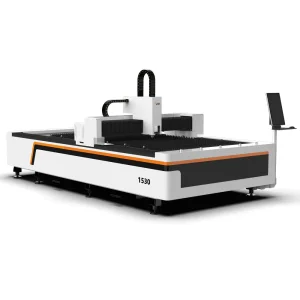
Explore our core industrial solutions engineered for multi-material joining, mold restoration, and rapid prototyping.

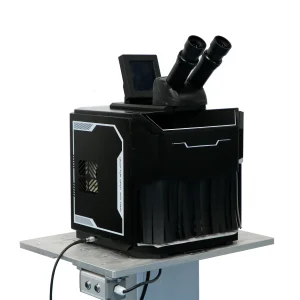




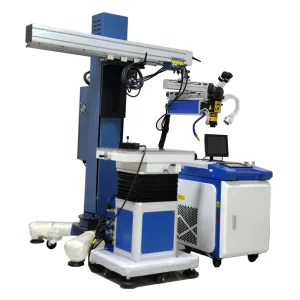
A rigorous examination of optical power density, thermal dissipation profiles, and the transition away from conventional arc processes.
Handheld fiber laser welding operates via concentrated energy density (>106 W/cm2), achieving rapid keyhole melting. This significantly reduces the heat-affected zone (HAZ), eliminating thermal warping and microstructural grain coarsening in sensitive alloys such as 304/316 stainless steel and aerospace aluminum.
Unlike fixed-focus spots, our proprietary dual-axis wobble optical heads oscillate the focused laser beam in programmable geometric patterns (triangle, line, circle, double circle). This accommodates seam gaps up to 2.5 mm with wire feeding, delivering structural integrity comparable to automated submerged arc welding.
Youmir continuous-wave fiber sources achieve continuous wall-plug electrical efficiency above 38%, cutting power draw by up to 75% compared to vintage solid-state YAG equipment. Integrated dual-circuit intelligent chillers guarantee zero optical diode degradation during 24/7 continuous duty cycles.
| Evaluation Parameter | Fiber Laser Handheld (1500W-3000W) | Traditional TIG (GTAW) | Traditional MIG/MAG (GMAW) |
|---|---|---|---|
| Welding Velocity | 3 to 6x faster (up to 120 mm/s) | Baseline standard (operator dependent) | Moderate speed; elevated spatter rate |
| Thermal Distortion | Negligible HAZ; no sheet warping | High heat transfer; widespread warping | Moderate to high warping on thin metal |
| Post-Weld Processing | Zero grinding needed in 90% of joints | Extensive pickling, grinding, and polishing | Heavy deslagging and abrasive grinding |
| Operator Training Requirement | 2 to 4 hours to achieve production welds | 2 to 5 years certified artisan experience | 6 to 12 months technical training |
Scale, vertical engineering integration, and stringent component tracing guarantee competitive global wholesale pricing and delivery reliability.
Our Shenzhen assembly lines combine proprietary optical focus systems with laser modules (Raycus, Maxphotonics, IPG). We eliminate trading-house markups, giving tier-1 contractors factory-gate costs and traceable bill of materials (BOM).
Every handheld system undergoes 72 hours of uninterrupted power loading, dynamic fiber stress oscillation, and optical path leakage assessments in temperature-stabilized testing cells prior to crating and export dispatch.
We provide full hardware and firmware customization for global distributors: custom CNC cabinet geometry, company livery, customized human-machine interfaces (HMI) with 16 languages, and integrated wire feeders.
Safeguarding shop-floor operators and simplifying customs clearance across North America, Europe, Oceania, and Asia-Pacific markets.
Fully compliant with international standard IEC 60825-1:2014 and European EN 207 safety directives. Equipped with redundant safety interlocks, contact-ground loops (laser triggers exclusively on substrate continuity), and emergency circuit cuts.
Engineered for global power networks: single-phase 220V ±10% (50/60Hz) for light fabrication shops, or three-phase 380V/480V for industrial installations across North America, Europe, and Asia. Certified to CE (Machinery & EMC directives) and FDA Accession norms.
We solve overseas spare part delays through established regional hubs. Protective quartz cover slides, copper gas nozzles, and wire liner accessories ship within 24 to 48 hours to minimize production line downtime.
Demonstrated operational reliability across light industry, architectural engineering, and automotive plants.
Eliminates weld discoloration on stainless steel commercial sinks, exhaust hoods, and food-grade cabinets. Reduces post-weld surface treatment and passivates easily for FDA/sanitary compliance.
Delivers reliable penetration across galvanized vehicle panels and aluminum battery busbars. The low thermal footprint protects underlying structural adhesives and lithium-ion cells from thermal spikes.
Welds aluminum window mullions, decorative cladding, electrical enclosures, and stair railings on-site. The 10-meter armored optical delivery cable reaches scaffolding and complex assemblies easily.
Key drivers behind the shift toward multi-process, air-cooled, and automated laser fabrication tools.
Procurement teams increasingly favor multi-functional equipment that minimizes capital outlays. Modern architectures integrate fiber welding, laser cleaning (rust, paint, and scale removal), seam preparation, and thin-sheet laser cutting into a single chassis. Swapping the specialized copper nozzle takes under 60 seconds.
Phase-change heat dissipation and air-cooled fiber laser sources are reshaping field-service deployments. By removing the traditional compressor water chiller, system weight falls below 45 kg, enabling mobile field maintenance in shipbuilding, pipeline repair, and structural steel construction.
Years of Fiber Laser R&D (Since 2010)
Export Nations with Active Units
Installed Systems in Global Factories
Shenzhen Manufacturing & Testing Facility
Direct technical answers to support equipment evaluation, production line integration, and total cost of ownership (TCO) calculations.
For stainless steel and mild steel sheets up to 3.0 mm, a 1000W-1500W system provides clean penetration speeds of 30-60 mm/s. For materials from 4.0 mm to 6.0 mm, or reflective alloys like aluminum and brass up to 4.0 mm, 2000W or 3000W sources are recommended to prevent porosity and ensure full root fusion.
We provide full pre-purchase application reviews. International clients can send raw production samples to our Shenzhen lab. Our laser engineers record weld tests on video, analyze cross-section penetration under microscopes, document shield gas settings, and supply a detailed evaluation report.
Operating costs are minimal compared to traditional welding. Primary consumables include protective quartz focus lenses (typically lasting 100-200 arc hours with proper assist gas), copper nozzles, and wire feed tips. Shielding gases like industrial-grade Nitrogen or Argon are chosen based on the alloy to prevent oxidation.
Yes. Our control systems include standard digital I/O interfaces, allowing quick integration with 6-axis cobots (such as FANUC, UR, and Han's Robot) or multi-axis gantry machines for automated batch production.
Explore specialized industrial equipment, high-speed galvanometer units, and continuous transmission solutions.