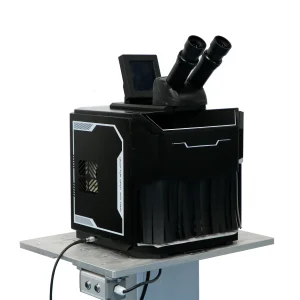
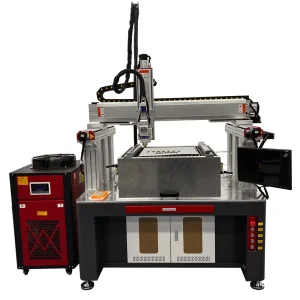
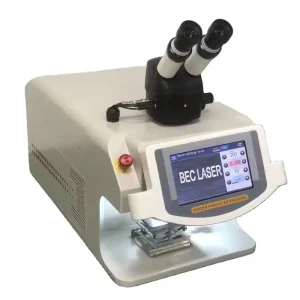
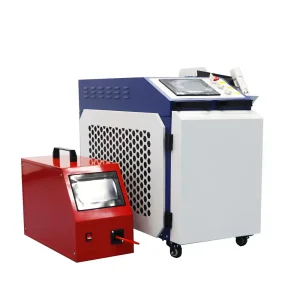
Explore high-performance handheld fiber welders, mold restoration systems, and precision jewelry repair workstations engineered directly by Shenzhen Youmir Laser Technology Co., Ltd.
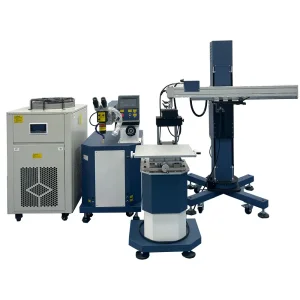
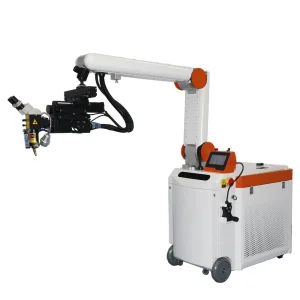
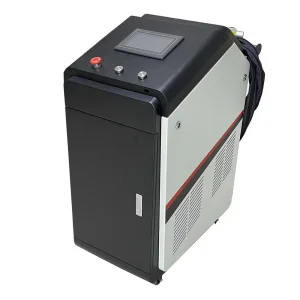
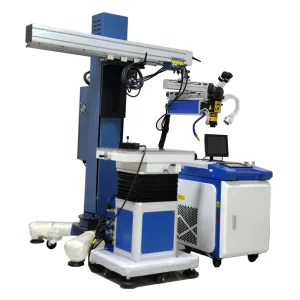
A rigorous examination of optical beam transmission, thermal dissipation gradients, and metallurgical phase transformation in modern continuous-wave (CW) 1500-watt fiber laser systems.
In modern industrial manufacturing, metal fabrication is experiencing a seismic paradigm shift away from legacy electric arc processes (such as manual metal arc, shielded metal arc, tungsten inert gas [TIG], and metal inert gas [MIG]) toward solid-state and continuous-wave (CW) fiber laser joining systems. The 1500W laser welding machine occupies what industrial metallurgists and manufacturing process engineers designate as the "golden power threshold"—the ideal equilibrium between capital expenditure, electrical operating efficiency, and versatile mechanical penetration depth for the vast majority of commercial sheet metal thicknesses (0.5 mm to 4.5 mm).
At its thermodynamic core, the 1500-watt fiber laser operates at an electromagnetic emission wavelength of approximately 1070 nm to 1080 nm. Unlike carbon dioxide (CO₂) laser systems whose 10.6-micrometer emission experiences excessive surface reflection when interacting with highly reflective metals such as aluminum alloys and copper alloys, the 1070 nm near-infrared emission exhibits dramatically superior absorptivity. Powered by high-efficiency gallium arsenide (GaAs) semiconductor pump diodes, modern 1500W ytterbium-doped double-clad active fiber cavities achieve wall-plug electro-optical conversion efficiencies exceeding 40% to 42%, drastically outperforming both legacy Nd:YAG flashlamp systems (~2-3%) and CO₂ lasers (~10%).
The primary engineering achievement of the 1500W fiber laser welder lies in its dynamic beam manipulation. Using dual-axis galvanometer scanning mirrors inside an ultralight (under 0.85 kg) ergonomically balanced handheld torch or high-speed CNC automated welding head, the beam creates programmable wobble waveforms—including line, circle, figure-eight, triangle, and dual-ellipse oscillation. Beam wobbling artificially broadens the concentrated 0.1 mm to 0.2 mm focal spot diameter to adjustable puddle widths ranging from 0.5 mm up to 5.0 mm. This completely resolves the historical limitation of laser welding: strict joint fit-up tolerance requirements. Gaps up to 1.5 mm to 2.0 mm can now be bridged smoothly in a single pass without undercut or porosity, especially when paired with intelligent synchronous dual-drive motorized wire feeders.
Integrated dual-circuit water circulation directly cools both the collimating/focusing optical quartz doublet assemblies and the copper nozzle body, enabling 100% duty cycle continuous operation under 40°C ambient manufacturing floor conditions.
Real-time pulse frequency modulation (1 Hz to 30,000 Hz) allows operators to switch instantly between continuous deep penetration keyhole mode, localized low-heat pulsed tacking, and high-frequency surface cosmetic finishing sweeps.
Features workpiece ground loop capacitive sensing, dual emergency stop circuits, optic cover slide monitoring, laser trigger double-engage safeties, and gas pressure threshold detection to guarantee zero accidental laser discharge.
Quantitative empirical performance testing conducted across identical 2.0 mm AISI 304 stainless steel and 3.0 mm 6061-T6 aluminum test coupons under controlled laboratory standards.
| Evaluation Parameter | 1500W Handheld Fiber Laser | Traditional TIG (GTAW) | MIG / MAG (GMAW) | Legacy Solid-State YAG |
|---|---|---|---|---|
| Welding Speed (2.0mm SS) | 35 – 60 mm/sec (2.1 – 3.6 m/min) | 5 – 10 mm/sec (0.3 – 0.6 m/min) | 12 – 18 mm/sec (0.7 – 1.1 m/min) | 6 – 12 mm/sec (Pulsed spot) |
| Heat Affected Zone (HAZ) | 0.2 – 0.5 mm (Extremely Narrow) | 2.5 – 5.0 mm (Extensive) | 3.0 – 6.5 mm (Very Wide) | 0.8 – 1.8 mm (Moderate) |
| Thermal Part Distortion | Virtually Undetectable (<0.05 mm) | Severe Angular & Longitudinal Buckling | Moderate to High Distortion | Low to Moderate |
| Post-Weld Processing | Zero (Self-passivated, clean bead) | Pickling, grinding & polishing (Labor intensive) | Slag chipping, heavy grinding | Minor cosmetic polishing |
| Operator Skill Requirement | Novice (Proficient within 24–48 hours) | Master Welder (Years of apprenticeship) | Skilled Welder (Months of training) | Specialist Optical Technician |
| Gross Electrical Efficiency | 40% – 44% Overall Efficiency | 25% – 30% Power Factor Efficiency | 30% – 35% Conversion | 2% – 3% (Severe Lamp Heat Loss) |
| Dissimilar Metal Capability | Superior (e.g. Copper to Stainless Steel) | Extremely Poor (Intermetallic cracking) | Infeasible without clad buttering | Good in pulsed micro-spotting |
The metallurgical examination of weld cross-sections reveals why the 1500W laser achieves such remarkable mechanical integrity. In traditional TIG welding, energy transfer relies entirely on electrical arc conduction from a non-consumable tungsten electrode through an ionized shielding gas envelope. Because thermal conduction in metals is isotropic (radiating symmetrically in all three spatial dimensions), huge quantities of heat soak into the base metal bulk. In stainless steels such as AISI 304 or 316L, this prolonged exposure to the sensitizing temperature window of 450°C to 850°C causes chromium carbide precipitation at grain boundaries, stripping the alloy of its corrosion resistance and inducing severe residual tensile stresses that warp sheet metal.
In contrast, the 1500W fiber laser beam provides instantaneous power densities exceeding 10⁶ W/cm² over a localized micro-focus. As the metal surface reaches its boiling point, recoil pressure creates a transient vapor keyhole that captures laser photons via multiple internal reflections. Heat input is directional, focused entirely along the vertical joint vector. Rapid cooling rates (reaching 10⁴ °C/sec) produce refined, fine-grained dendritic microstructure within the fusion zone, retaining the hardness, tensile strength, and impact toughness of the virgin parent alloy. Mechanical tensile testing of laser-welded 304 stainless steel butt joints regularly demonstrates yield failure in the distant base metal rather than within the laser weld seam itself.
How 1500W fiber laser systems are addressing worldwide manufacturing labor shortages, ESG carbon reduction targets, and lean modular production imperatives across major industrialized economies.
Industrial manufacturing centers in North America and Western Europe face a severe deficit of certified GTAW/TIG welders, with the average welder age exceeding 55. The 1500W handheld laser democratizes precision welding, enabling semi-skilled shop floor apprentices to deliver aesthetically flawless, aerospace-grade welds after just two days of onboarding.
By consuming up to 80% less electrical energy per weld meter compared to traditional arc equipment and completely eliminating toxic acid pickling pastes and heavy grinding wheel particulate emissions, the 1500W laser aligns directly with EU CBAM (Carbon Border Adjustment Mechanism) and ESG manufacturing directives.
Eliminating complex, expensive mechanical clamping jigs and pre-weld beveling fixtures allows contract fabricators to switch between disparate part geometries in seconds. High travel speeds unlock true high-mix, low-volume (HMLV) lean cellular production with near-zero queue times.
Across the North American industrial corridor (United States, Canada, Mexico), manufacturers are aggressively retrofitting their welding stations with 1500W laser platforms to modernize commercial kitchen equipment lines, architectural stainless railing production, electrical cabinet assembly, and agricultural machinery enclosures. In Europe, particularly across Germany, Italy, and Poland, the demand is accelerated by strict workplace safety regulations and rising industrial energy costs. The 1500W system provides an immediate energy hedge by drawing only 4.5 kW to 6.0 kW under full optical output, compared to 15 kW to 25 kW for equivalent-duty MIG/TIG welding cells with auxiliary ventilation and grinding systems.
Verified laboratory process parameters: Material grades, maximum penetration limits, shielding gas selection, and filler wire optimization protocols.
| Alloy Classification | Material Grade Examples | Max Single-Pass Penetration | Optimal Shielding Gas | Wobble Oscillation Setting | Recommended Filler Wire |
|---|---|---|---|---|---|
| Austenitic Stainless Steel | AISI 304, 316L, 321, 310S | Up to 4.5 mm (0.177") | Pure Nitrogen (N₂) or Argon (Ar) | Triangle / Line (1.5 – 3.0 mm) | ER308L / ER316L (0.8 – 1.2 mm) |
| Carbon & Mild Steels | ASTM A36, Q235B, 1018, 1045 | Up to 4.0 mm (0.157") | Pure Argon or 80/20 Ar/CO₂ | Circle / Double Helix (2.0 – 4.0 mm) | ER70S-6 (1.0 – 1.2 mm) |
| Galvanized Sheet Metal | DX51D+Z, G90 Hot-Dip | Up to 3.5 mm (0.138") | Nitrogen (Assists zinc outgassing) | Wide Oval / Figure-8 (2.5 – 4.5 mm) | ER70S-6 or CuSi3 Silicon Bronze |
| Aluminum Alloys | 5052, 6061-T6, 3003, 1050 | Up to 3.0 mm (0.118") | 100% High-Purity Argon (≥99.999%) | High Frequency Circle (1.5 – 2.5 mm) | ER4043 / ER5356 (1.0 – 1.2 mm) |
| Brass & Copper Alloys | H62, C11000 ETP, C36000 | Up to 2.0 mm (0.078") | High-Purity Argon or 70/30 Ar/He | High-Speed Line (1.0 – 2.0 mm) | ERCuSi-A / Deoxidized Copper |
| Titanium Alloys | Grade 2 (Commercial), Ti-6Al-4V | Up to 3.5 mm (0.138") | Ultra-Pure Argon with Trailing Shield | Focused Line (1.0 – 2.0 mm) | ERTi-2 / ERTi-5 (0.8 – 1.0 mm) |
Crucial Shielding Gas Thermodynamics: Selecting the correct shielding gas is vital for maximizing weld quality and operational cost efficiency with a 1500W laser. While high-purity Argon (≥99.99%) is universal, industrial-grade Nitrogen (N₂) is the strongly preferred choice when welding austenitic stainless steels and galvanized sheets. Nitrogen not only acts as an austenite stabilizer—preserving parent alloy ductility and corrosion resistance—but it is also significantly cheaper than bottled Argon and can be generated on-site via membrane or PSA gas separators. When welding galvanized sheet metal, zinc boils at 907°C, far below the melting point of steel (1538°C). A tailored wobble frequency combined with coaxial nitrogen pressure ejects volatilized zinc vapors ahead of the molten puddle, completely preventing the micro-explosions and severe porosity that traditionally plague arc welding of galvanized components.
Industrial machinery deployed in international markets must comply strictly with national statutory safety, electrical, and laser radiation standards. Youmir Laser engineers complete compliance protocols directly into every unit.
Fully compliant with EU Machinery Directive 2006/42/EC, Low Voltage Directive 2014/35/EU, and Electromagnetic Compatibility (EMC) 2014/30/EU. Class 4 laser enclosures feature certified interlock safety relays, emergency shutdown loops, and warning illuminators compliant with EN 60825-1 radiation safety regulations.
Every export system carries an official United States FDA Center for Devices and Radiological Health (CDRH) accession number. Hardware integrates key-switch power isolation, remote interlock connectors, manual reset features, and beam attenuator shutters strictly complying with 21 CFR 1040.10 and OSHA 1910.212 machinery safety requirements.
Designed with industrial power fluctuation tolerances of ±10%. Factory-integrated step-up/down isolation transformers and dual-voltage power supplies ensure seamless plug-and-play installation across single-phase 220V (North America/Europe) or 3-phase industrial grids without requiring external phase convertors.
Real-world engineering implementations across manufacturing sectors where precision, thermal control, and cycle-time reduction drive measurable ROI.
Joining battery module busbars (aluminum-to-copper dissimilar alloys), hermetic battery tray liquid cooling plates, exhaust manifolds, and hydroformed chassis structural brackets where zero porosity and high vibration resistance are mandatory.
Stainless steel sinks, commercial refrigeration enclosures, beer fermentation vessels, and pharmaceutical processing tanks. The narrow HAZ guarantees that stainless steel chromium oxide passivity layers remain uncompromised, eliminating rust risk along joints.
High-speed fabrication of spiral galvanized spiral air ducts, aluminum condenser coil connections, and outdoor electrical control cabinets. Galvanized zinc coating vaporization is handled cleanly with zero post-weld spray painting touch-ups.
Repairing chipped edges, thermal parting-line cracking, and EDM pitting on hardened tool steels (P20, H13, 718, S136) without preheating or post-weld annealing, completely avoiding core mold softening or metallurgical sink marks.
Seamless joining of decorative brass, polished mirror stainless steel, and bronze profiles. Because there is virtually no thermal distortion, mirror-finish structural frames remain dead-flat without costly mechanical straightening.
Heavy-duty robotic cells, automation gantries, precision medical cabinets, and electronic test instrumentation chassis requiring rigorous dimensional tolerances and zero weld splatter inside component bays.
A transparent breakdown of direct labor, energy consumption, consumables, and post-weld rectification comparing a 1500W laser against traditional TIG in a 2-shift fabrication shop.
When factory managers evaluate laser welding machine quotes, capital purchase price is only one part of the financial equation. The genuine economic advantage lies in Total Operational Cost per Finished Linear Meter. In a standard mid-sized sheet metal fabrication facility operating two 8-hour shifts (4,000 production hours annually), welding 1.5 mm to 2.5 mm stainless steel cabinetry:
Shenzhen Youmir Laser Technology Co., Ltd. continuously invests in frontline R&D. Here is our engineering trajectory through 2028.
Real-time coaxial machine vision paired with edge AI neural networks that automatically compensate for workpiece thermal expansion, dynamically centering the wobble beam within ±0.02 mm of the joint center.
Multi-spectral infrared pyrometry monitoring molten keyhole temperature 10,000 times per second, dynamically throttling laser wattage to guarantee 100% spatter-free penetration regardless of surface oxide variation.
Combining 450 nm blue diode lasers with 1070 nm near-infrared fiber engines to achieve zero-spatter conduction joining on pure copper, gold, and mirrored battery-grade foils with unprecedented electro-optical absorption.
Industry 4.0 OPC-UA connected architecture delivering predictive optics degradation analytics, remote parameter recipe pushing, automatic consumable re-ordering, and ISO-compliant weld audit logging.
In-depth answers to the most rigorous technical, electrical, and commercial questions asked by international plant managers and procurement directors.
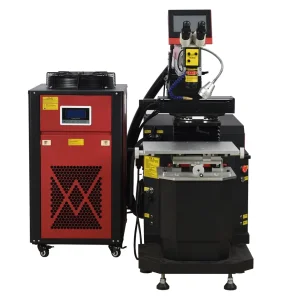
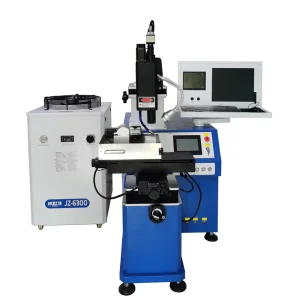
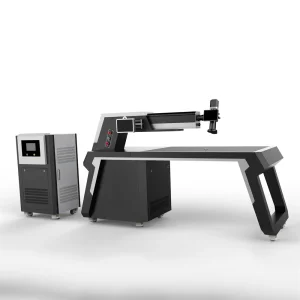
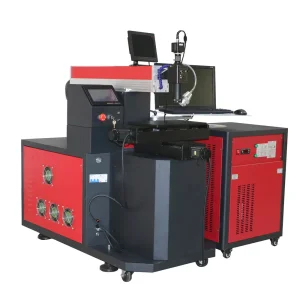
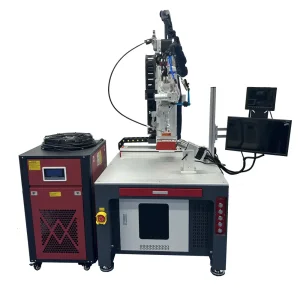
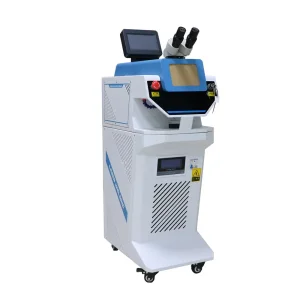
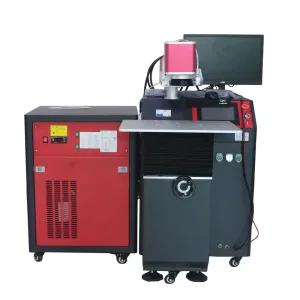
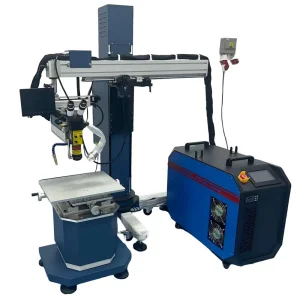
Explore Youmir Laser's comprehensive equipment portfolio, including multi-axis automated CNC gantries, continuous fiber systems, sign advertising welders, and precision YAG/QCW repair units.
Connect directly with Shenzhen Youmir Laser Technology Co., Ltd. senior application engineers. Share your material grade, thickness specifications, and throughput targets to receive an itemized factory direct quote within 24 hours.
