
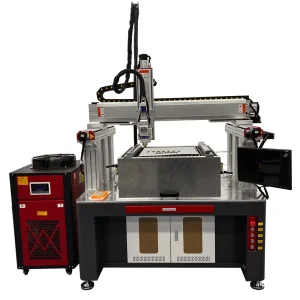
Precision-manufactured laser architectures built to integrate seamlessly with standard beam delivery paths, wobbler collating optics, and high-duty tooling assemblies.

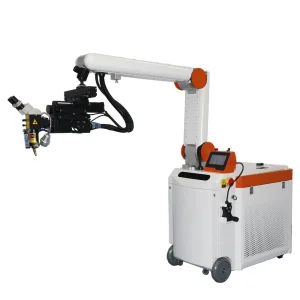
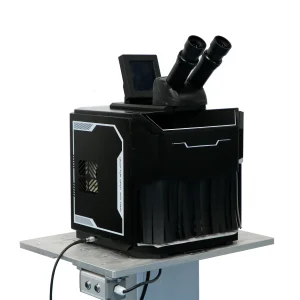
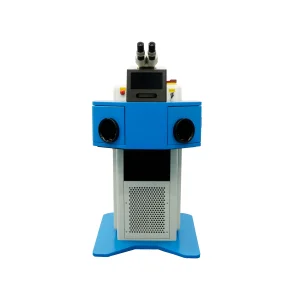
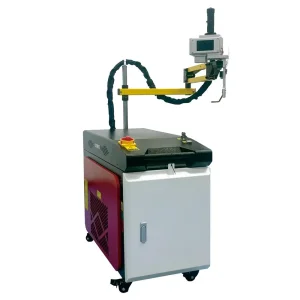
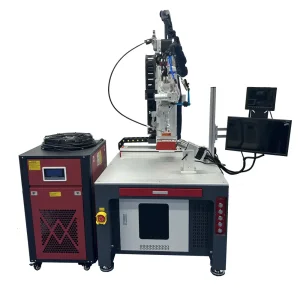
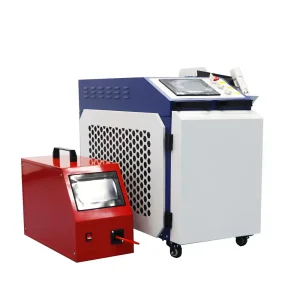
Evaluating component metallurgy, optical damage thresholds, and global supply chain resilience across modern automated manufacturing operations.
Laser welding machine components endure high thermal loading and intense back-reflection. High-grade brass nozzles, fused silica protective windows with anti-reflective dual-band coatings, and precision galvanometric scanning mirrors ensure optical transmission rates exceeding 99.8% at 1064nm–1080nm wavelengths.
Precision laser spare parts require machining under ISO 9001 certified CNC facilities with surface runout held within ±0.005mm. Strict concentricity across gas mixing chambers and laser collimating barrels prevents turbulence-induced plasma blooming and focal point thermal drift.
Sub-par consumables degrade beam quality and trigger expensive solid-state module failures. Standardized replacement cycles for focus lenses, ceramic rings, wire-feeder tip assemblies, and collimators lower unplanned machine downtime by up to 42% over standard operating cycles.
Rigorous empirical comparisons based on laser transmission thresholds, thermal deflection limits, and mean time before failure (MTBF).
| Part Assembly Category | OEM Precision Standard (Youmir) | Generic Market Equivalent | Operational Impact on Weld Seam |
|---|---|---|---|
| Fused Silica Protective Windows | Transmittance ≥ 99.9% (AR coated @ 1064nm, LIDT > 15J/cm²) | Transmittance 98.2% – 99.0% (Single layer) | Prevents lens micro-fracturing and focal shift under high continuous powers. |
| Dual-Wobble Collimating Optics | JGS1 High-Purity Quartz, Wavefront Distortion < λ/10 | Standard K9 / B270 optical glass, Wavefront < λ/4 | Maintains round beam energy density; eliminates keyhole instability and splatter. |
| Coaxial Gas Shielding Nozzles | Oxygen-free copper (OFC) with anti-adhesion nickel plating | Cast recycled brass alloys | Eliminates spatter adherence; guarantees laminar shielding gas flow without air entrainment. |
| Galvo Scan Motors & Drivers | Closed-loop optical encoder, drift < 15μrad/K, 12kHz response | Open-loop or basic capacitive sensing, drift > 40μrad/K | Guarantees exact oscillation frequencies for high-speed oscillating stitch welds. |
| Wire Feed Liners & Drive Rollers | Polytetrafluoroethylene (PTFE) core with U-groove hardened steel | Standard coiled steel or rough nylon | Zero wire shavings, preventing optical chamber contamination and micro-arcing. |
Tailored component configurations optimized for metallurgical constraints, cleanroom protocols, and automated manufacturing lines.
High-speed joining of copper busbars to prismatic lithium cells demands zero thermal degradation. Our parts support custom green/blue hybrid optical paths, specialized dual-wavelength collimators, and high-velocity coaxial nitrogen purge rings to suppress spatter formation on battery caps.
Heavy-duty robotic welding cells demand long-reach cantilever optics and continuous multi-axis wire feed tracking. Our high-durability ceramic retainers, heavy copper contact shoes, and IP65 dust-sealed optical barrels operate reliably through demanding 3-shift automotive production schedules.
Welding surgical instruments and titanium implants requires clean, localized energy delivery. We supply microscopically focused f-theta lenses, high-resolution coaxial CMOS alignment scopes, and miniature gas nozzles designed to eliminate oxidation in controlled cleanroom conditions.
How real-time sensing, closed-loop thermal analytics, and adaptive beam shaping are transforming laser consumables into active process monitoring devices.
Modern laser welding assemblies now incorporate digital temperature sensors adjacent to the focus lens mount and protective window chamber. Early alerts notify operators when back-splatter increases thermal absorption, stopping beam delivery before catastrophic optical breakdown occurs.
Next-generation laser head assemblies support dynamic beam shaping without mechanical movement. Using adjustable ring-mode fiber delivery, the laser head produces a central high-intensity keyhole spot surrounded by a stabilizing ring beam, reducing porosity and eliminating weld spatter in aluminum alloys.
Integrating coaxial high-speed cameras (over 1,000 fps) directly into the mirror housing allows on-the-fly tracking of keyhole dynamics. AI neural network processing compensates for seam deviations in real time by modulating galvanometer wobble width, ensuring consistent penetration.
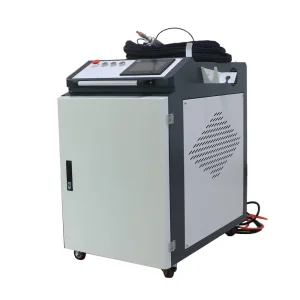
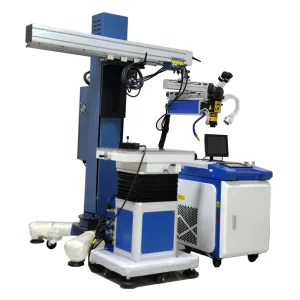
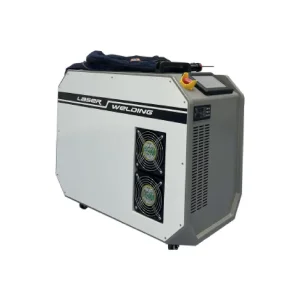
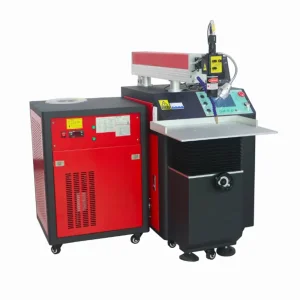
Explore our full line of industrial laser equipment engineered for mold restoration, surface preparation, advertising letters, and versatile precision welding.
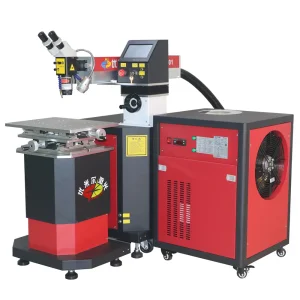
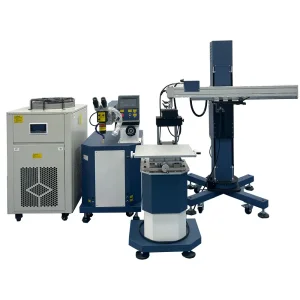
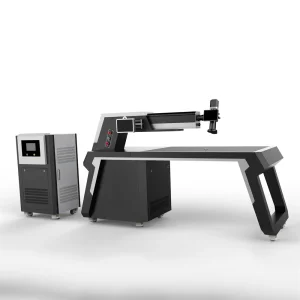
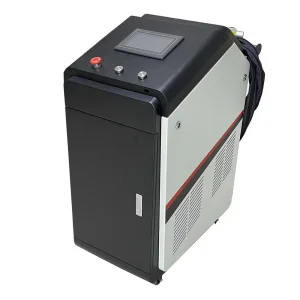
Direct technical guidance from our optical design and process engineering teams.