

Custom Cantilever Laser Welding Machine
Long-stroke cantilever arm designed for oversized precious metal vessels, mold tooling repairs, and unconstrained dimensional axis positioning.
View Product SpecsDiscover verified multi-axis, cantilever, pulsed cleaning, and precision mold laser systems engineered for high-throughput jewelry metallurgy, tool-room repair, and micromachining environments.
Long-stroke cantilever arm designed for oversized precious metal vessels, mold tooling repairs, and unconstrained dimensional axis positioning.
View Product Specs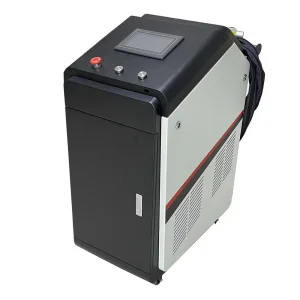
Non-destructive pulsed thermal cleaning source targeting investment casting oxidation, heat-scale, and particulate contaminants on luxury alloys.
View Product Specs
Ergonomic open-chassis configuration granting unobstructed three-dimensional manipulation for custom goldsmithing and restorative fabrication.
View Product Specs
Articulating swing-arm optical delivery offering 360-degree radial articulation for deep-cavity jewelry master dies and injection molds.
View Product Specs
Quasi-Continuous Wave fiber generator maintaining extreme electro-optical efficiency, pristine beam divergence, and virtually zero maintenance.
View Product Specs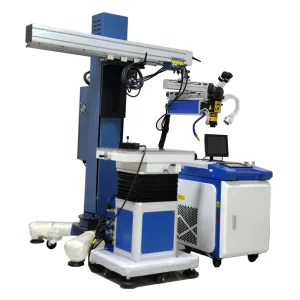
Fiber-coupled optical beam engine delivering consistent pulse-to-pulse energy stability across reflective alloys including brass, copper, and silver.
View Product Specs
Ultra-fast high-speed scanner mirrors driving continuous seam sweeps for automated precious-metal chain sealing and watch component hermetics.
View Product Specs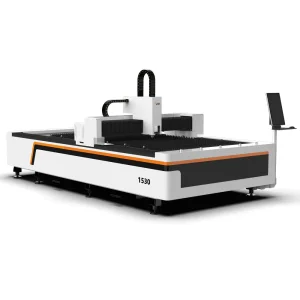
Industrial gantry platform suited for sheet metal cutting, tooling blank preparation, and heavy structural jewelry manufacturing jigs.
View Product SpecsMiniature jewelry laser welding transcends conventional torch brazing by deploying concentrated photon bursts directly into the sub-millimeter joint, constraining the Heat-Affected Zone (HAZ) and preserving precious metallurgical integrity.
Precious metals present extreme variations in physical properties. For example, fine silver (Ag) exhibits thermal conductivity of 429 W/(m·K) and optical reflectivity exceeding 96% at the fundamental 1064nm Nd:YAG wavelength, whereas platinum (Pt) possesses a much lower thermal conductivity of 71.6 W/(m·K).
Advanced miniature laser welders employ programmable pulse shaping. By deploying a high-intensity "spike" leading edge (up to 6.5 kW peak power), the laser instantly breaches the reflectivity threshold, transitioning into a lower plateau that controls fluid convection within the molten pool.
Achieving sub-0.2mm positional accuracy mandates premium stereoscopic optical engineering. Industrial jewelry systems integrate high-performance binocular microscope optics (such as Leica or customized Olympus optical assemblies) paired with high-eyepoint 10x or 16x reticles.
Coaxial crosshairs, paired with integrated high-speed liquid crystal optical shutters (response time <1.2 ms), ensure absolute ocular protection (OD7+ at 1064nm) while maintaining an unobstructed, non-fatiguing view of the micro-weld interface during continuous 8-hour production cycles.
Porous defects undermine tensile strength in luxury jewelry repairs. Miniature welders utilize localized coaxial argon (Ar) shielding delivered via micro-nozzles directly concentric with the laser beam focus.
By flooding the molten pool with 99.999% high-purity argon at calibrated laminar rates (3 to 6 L/min), atmospheric oxygen and nitrogen are completely displaced. This inhibits the formation of black copper oxides on 14K/18K rose gold and prevents embrittling hydride formations in medical-grade titanium jewelry pieces.
Traditional jewelry soldering relies on lower-melting-temperature brazing alloys (e.g., using 10K or 12K cadmium/zinc-bearing solders on an 18K piece). This technique introduces visible seam lines, weakens corrosion resistance, and legally degrades the assay karat purity of the jewelry item. In contrast, miniature laser welding utilizes parent-metal filler wire (e.g., genuine 18K alloy wire drawn down to 0.20mm), achieving 100% homogeneous molecular bonding without solder contamination, fire-scale, or acid-pickling requirements.
The international jewelry manufacturing sector is undergoing an accelerated technological transition from legacy open-flame torch workstations to desktop pulsed laser systems across leading fine jewelry export epicenters.
High-fashion, hollow-chain, and high-karat gold production in northern Italy demands micro-weld precision. Machine standards require integration with automated rotary chucks for continuous snake and curb chain welding.
The world's largest diamond processing and setting ecosystem. Workstations focus on prong retipping, diamond pavé under-gallery reinforcement, and porosity repair in massive cast gold and platinum rings.
Global manufacturing capital for high-volume 18K and 24K "hard gold" creations. Facilities operate high-speed miniature benchtop Nd:YAG units across automated multi-shift operations with centralized water chilling.
Rapid-turnaround retail trade repair, bespoke jewelry design, and horological case restorations. Retail shop footprints prioritize compact 110V desktop units with low noise, zero external chillers, and sleek ergonomics.
Evaluating machine procurement requires reviewing equipment acquisition costs against ongoing operational expenses, consumable life cycles, electrical efficiency, and return on investment (ROI) timeframes.
| Equipment Category | Average Power | Peak Pulse Power | Cooling Architecture | FOB Factory Price Range (USD) | Target Production Workflow |
|---|---|---|---|---|---|
| Desktop Mini Nd:YAG (Compact) | 60 Watts | 3.5 kW (35 Joules) | Integrated Air/Liquid Heat Exchanger | $2,800 – $4,200 | Retail repair counters, small goldsmith workshops, prong retipping |
| Standard Benchtop Nd:YAG | 100 Watts | 5.0 kW (50 Joules) | Dual-Fan Internal Liquid Chiller | $4,500 – $6,200 | Full-service jewelry studios, medium batch assembly, silver filigree |
| Heavy-Duty Benchtop Nd:YAG | 150–200 Watts | 7.5 kW (80 Joules) | High-Capacity Internal Water Chiller | $6,800 – $9,400 | Continuous multi-shift casting porosity filling, watch case re-edging |
| Next-Gen Quasi-Continuous (QCW) Fiber | 150W / 1500W Peak | 1.5 kW (Continuous/Pulsed) | Direct Air-Cooled System | $8,900 – $13,500 | High-throughput industrial chains, titanium frames, automated cells |
| Multi-Axis Automated Laser Welder | 200–300 Watts | 9.0 kW (100 Joules) | External Industrial Refrigerated Chiller | $14,000 – $22,500 | Rotary jewelry tubing, medical implants, dental laboratory prosthetics |
Conventional flashlamp-pumped Nd:YAG systems require periodic xenon flashlamp replacement every 3.5 to 5 million pulses (typically every 12 to 18 months in active workshops), with consumable costs averaging $90–$160 per replacement lamp.
In contrast, solid-state QCW fiber laser sources operate with telecom-grade diode arrays engineered for an MTTF (Mean Time To Failure) exceeding 100,000 hours, eliminating ongoing lamp swap maintenance and optical cavity realignment downtime.
Operational costs are modest. Electricity consumption for desktop 60W–100W units ranges from 0.8 kW to 1.5 kW under full firing cycles, compatible with standard 110V/220V residential or commercial wall outlets.
Argon shielding gas consumption averages 0.25 m³ per 8-hour shift under active triggering. At standard industrial gas distribution rates, shielding gas overhead accounts for approximately $0.45 to $1.20 per active operating bench-hour.
For a standard retail jewelry store or custom atelier performing 15 customer repairs per week (average $40 per repair ticket for re-tipping, sizing, or chain splicing):
Gross monthly revenue generated: $2,400. Subtracting amortized machine payment, consumables, and gas ($150/month), monthly net profit is $2,250. A capital investment of $4,800 for a 100W Nd:YAG desktop welder is fully amortized within 2.1 to 3.5 months of commissioning.
How master goldsmiths, horologists, and dental technicians utilize miniature laser welders across demanding micro-joining and restoration tasks.
Torch re-tipping requires unsetting heat-sensitive stones (emeralds, opals, pearls, tanzanites) to prevent thermal fracture, followed by labor-intensive resetting.
Miniature laser welding confines the thermal spike to a 0.3mm spot for 2 to 6 milliseconds. Heat dissipates into the metal substrate before reaching the stone pavilion, allowing direct re-tipping with zero gem unmounting.
Investment casting defects frequently yield sub-surface gas bubbles that appear during final surface lapidary polishing.
Technicians use a pulsed laser at low voltage and extended pulse durations (8–12ms) to deeply stir the molten void, followed by adding a matching 0.25mm alloy wire to feed the depression, eliminating porosity with no visible color variations.
Ultra-light hollow rope, Byzantine, and herringbone gold chains feature wall thicknesses below 0.15mm (0.006"). Open flames instantly burn through or melt the inner core.
Micro-spot laser pulses (0.15mm diameter, 1.2ms pulse width) weld broken seam junctions instantly without core melting, preserving chain flexibility, drape, and structural spring memory.
Vintage luxury timepieces (Rolex 904L steel, 18K yellow gold, or titanium Grade 5) suffer corner dings, lug wear, and case pitting.
Laser additive micro-deposition deposits micro-layers of matching alloy wire onto chipped lug chamfers and bezel bezels. The watch case can then be hand-lapped and re-brushed back to factory factory geometry.
Laser micro-welding is evolving rapidly through breakthroughs in photonics, computer vision, and closed-loop feedback systems.
While 1064nm infrared light experiences high reflectivity on pure gold and copper (absorbing only 3–5% of incident energy at room temperature), shorter wavelengths—such as 450nm (Blue) and 515nm (Green)—exhibit absorption rates exceeding 55% to 65% on polished yellow gold.
Direct blue diode integration allows spatter-free, conduction-mode micro-welds on yellow gold, rose gold, and silver using up to 80% lower total optical wattage, reducing thermal stress on surrounding components.
Next-generation benchtop systems incorporate neural-network-driven edge detection cameras within the binocular optical path.
The software identifies gap widths, recognizes stone proximity, and automatically adjusts pulse duration, spot diameter, and shielding gas bursts. This assists newer operators in achieving clean, consistent joins while preventing accidental beam strikes on precious stones.
Real-time optical pyrometry samples radiation emissions directly from the center of the molten spot at rates exceeding 20 kHz.
By modulating flashlamp or diode drive currents during the pulse cycle, the machine actively compensates for thermal buildup during multi-pulse sequences, ensuring consistent weld penetration across complex assemblies.
Operating Class 4 laser sources inside compact benchtop footprints requires reliable electro-optical interlocks, active fume evacuation, and international standards compliance.
All professional miniature jewelry laser systems adhere to international standards:
Vaporized precious metals and binder fluxes generate micro-particulates during operation. Integrated air extraction conduits connect directly to HEPA and activated carbon filtration modules.
This setup captures sub-micron metal particles, maintaining clean air for the operator while gathering recoverable gold and platinum dust over time, which can be sent directly to assay refiners.
Direct manufacturer partnerships give international clients reliable support:
Compare our specialized jewelry spot welders, compact 60W goldsmith systems, 3-axis automated CNC welders, and heavy-duty mold maintenance workstations.

Specialized fiber-delivered jewelry system engineered for zero-maintenance performance and clean micro-welding on silver and gold.
View Product Specs
Portable galvanometer-driven welding torch with variable wobble patterns for wide seam bridging, hardware tools, and structural repairs.
View Product Specs
Heavy-duty tooling bed designed for precision deposit welding, crack repairs, and edge reconstruction on stamping dies and jewelry master molds.
View Product Specs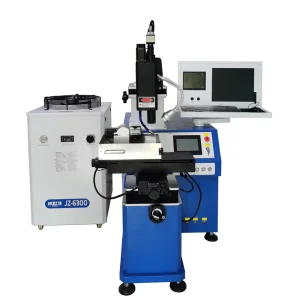
CNC-interpolated XYZ platform delivering automated seam runs, jewelry findings production, and batch precision micro-assembly.
View Product Specs
Continuous-wave (CW) fiber laser system optimized for deep-penetration seam welding on stainless steel, titanium cases, and dense metals.
View Product Specs
Splits energy through flexible optical fibers to support simultaneous multi-station welding and complex robotic cell integration.
View Product Specs
All-in-one console featuring an integrated high-capacity chiller, heavy counterbalanced boom, and hydraulic elevation adjustments.
View Product Specs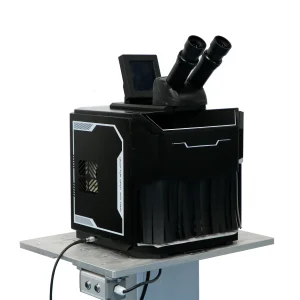
Benchtop system engineered specifically for retail jewelers. Features quiet operation, low power draw, and precision settings for silver and gold.
View Product SpecsCommon technical, optical, and metallurgical questions from jewelry workshop managers, goldsmiths, and procurement engineers.