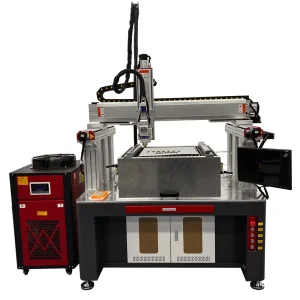
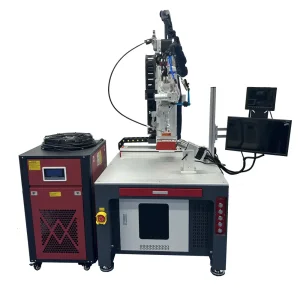
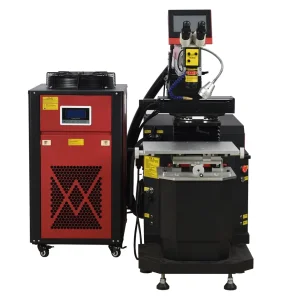
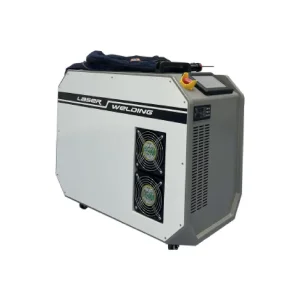
Explore our industrial-grade sheet metal and alloy processing units engineered for minimum heat distortion, maximum penetration velocity, and low maintenance cycles.
Examining how high-brightness continuous-wave (CW) fiber sources, oscillation wobble mechanics, and multi-sensor closed-loop feedback are replacing conventional TIG and MIG processes across global manufacturing lines.
Traditional arc welding relies on heat conduction, creating massive heat-affected zones (HAZ) and significant thermal warpage. Contemporary sheet metal laser welders utilize adjustable ring-mode (ARM) beam profiles and galvanometer-driven wobble heads. This generates controllable vapor capillaries, mitigating porosity in galvanized coatings and preventing spatter on mirror-finish stainless steel.
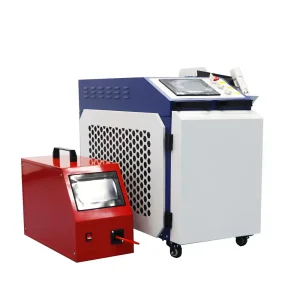
The global metal fabrication sector is facing a severe shortage of ASW/ISO-certified welders. High-efficiency 4-in-1 handheld laser welding systems allow operators to achieve class-A certified joints within hours of onboarding. Furthermore, standard zero-backlash robotic arms and cobot interfaces now allow dynamic path tracking on 3D irregular sheet enclosures.
Modern smart factory procurement demands direct industrial Ethernet/IP and Modbus protocols. Sensors embedded in the focusing optics track thermal accumulation, gas flow pressure, and reflection back-scatter in real-time, instantly shutting off output if an optical fiber protective window cracks or when shield gas degrades.
Transparent factory-direct cost baselines, typical laser power configurations, wall-plug efficiency metrics, and material thickness capability matrix for tier-1 sheet metal contractors.
| System Architecture | Typical Laser Power | Material Penetration (Single Pass) | Gas Consumption & Duty | Estimated Factory Price (FOB) | Target ROI Period |
|---|---|---|---|---|---|
| Handheld Light-Duty Welder | 1000W – 1200W CW | SS: ≤ 3.0mm | CS: ≤ 2.5mm | AL: ≤ 1.5mm | N2 / Ar (12–18 L/min) @ 100% duty | $3,200 – $4,800 | 2.5 – 4 Months |
| All-Round Fabrication Welder | 1500W CW Single-Mode | SS: ≤ 4.0mm | CS: ≤ 3.5mm | AL: ≤ 2.5mm | N2 / Ar (15–20 L/min) @ 100% duty | $4,200 – $6,200 | 3 – 5 Months |
| Heavy Sheet Metal Welder | 2000W – 3000W CW | SS: ≤ 8.0mm | CS: ≤ 6.0mm | AL: ≤ 5.0mm | N2 / Ar (18–25 L/min) @ dual-chiller | $6,500 – $10,800 | 4 – 7 Months |
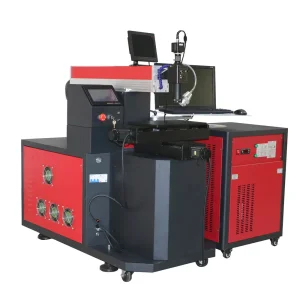
| 3-Axis / 4-Axis Automatic CNC | 2000W – 4000W Integrated | SS/CS: Up to 10.0mm (V-groove wire) | Automatic pneumatic metering | $12,000 – $24,500 | 6 – 9 Months |
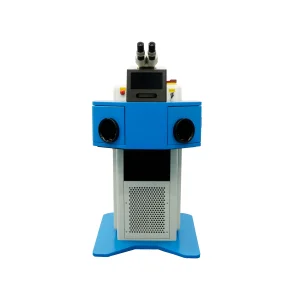
| High-Precision QCW / YAG Station | 150W – 300W Peak (Jewelry/Mold) | Micro-spot: 0.1mm – 1.8mm bead | Shielded coaxial nozzle (8 L/min) | $2,800 – $5,400 | 2 – 4 Months |
*Note: Quoted price bands reflect baseline FOB Shenzhen configurations equipped with high-durability optical cables, dual-temperature chillers, and wire feeding units. Custom automation lines, specialized tooling fixtures, and localized CE/UL validation will vary final project costs.
How customized laser welding architectures eliminate secondary grinding, reduce consumable costs, and elevate shear strength across demanding industry verticals.
Fabrication of thin 0.6mm–1.5mm 304/316 stainless steel enclosures requires zero heat discoloration and zero post-weld rework. Our handheld continuous-wave systems provide hermetically sealed, aesthetic joints at speeds 4× higher than TIG, completely eliminating wire-brushing and chemical pickling stages.
Galvanized steel and mild steel server cabinets often suffer from zinc vapor entrapment during traditional welding, leading to blowholes. By utilizing our proprietary wobble parameter profiles and nitrogen assist, zinc vapor is channeled away prior to keyhole collapse, yielding flawless structural shear integrity.
Aluminum alloys (5000 and 6000 series) exhibit high thermal conductivity and reflective properties. Our 2000W–3000W high-beam-quality laser sources break through the surface oxide layer effortlessly, creating leak-tight liquid-cooling plate channels without hot cracking.
Shenzhen Youmir Laser Technology Co., Ltd. operates an integrated research, optical development, and CNC machine building ecosystem serving global distributors and Tier-1 subcontractors.
Global procurement requires strict compliance with electrical standards, laser safety classifications, and zero-downtime maintenance structures across North America, Europe, and Asia-Pacific.
Every industrial laser welder leaving our facility conforms to ISO 11553-2 laser safety standards, EN 60204-1 electrical safety protocols, CE Directives, and CDRH/FDA registration. Machines feature interlocked trigger sensors, earth-clamp continuity loops, and fail-safe optical beam shutters.
To support deployment in 110V/220V/380V/480V environments, our electrical control racks integrate wide-band industrial isolation transformers and heavy-duty contactors, ensuring operational stability even in industrial zones with volatile power fluctuations.
We provide localized technical training, on-site commissioning, and rapid dispatch of consumables (protective focus windows, brass welding tips, wire feed rollers). Remote IoT connectivity enables our senior optical engineers in Shenzhen to calibrate beam focal curves directly online.
Youmir Laser continues to invest over 12% of annual revenue into fundamental laser optical design, AI vision trajectory recognition, and ultra-high-efficiency semiconductor pumping architectures.
Integration of ultra-compact coaxial machine vision lenses directly into the handheld welding torch. Real-time edge detection algorithms automatically adjust wobble width (0.2mm to 5.0mm) to compensate for uneven sheet metal gaps and cutting tolerances.
Combining high-absorption 450nm blue diode lasers with 1070nm infrared fiber lasers to establish zero-spatter copper-to-copper and gold/copper welding for EV electrical busbars and high-frequency power electronics.
Cloud-managed welding cell clusters with centralized parameter synchronization. Real-time metallurgical acoustic sensor arrays listen to keyhole bubbling resonance, auto-correcting shielding gas delivery and thermal delivery microseconds before defects form.
Clear, uncompromised answers from our chief engineers on power ratings, shielding gases, joint fit-ups, and commercial terms.
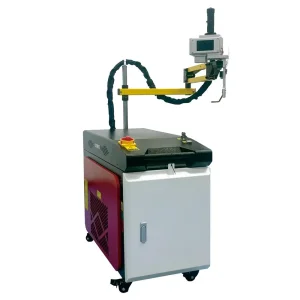
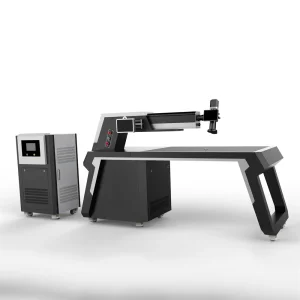
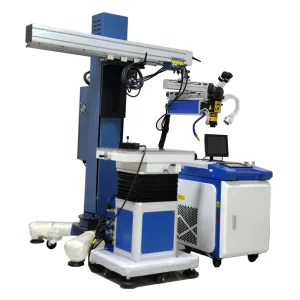
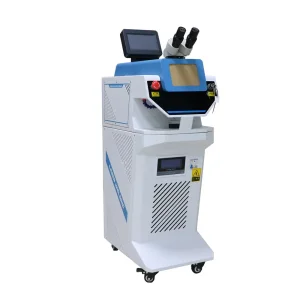
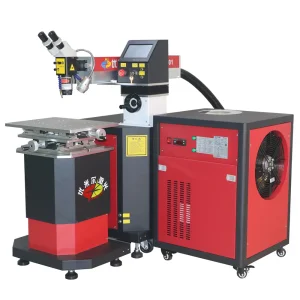
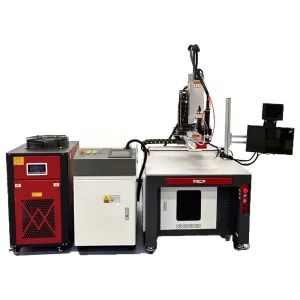
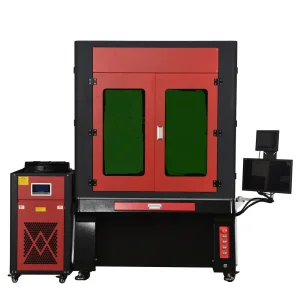
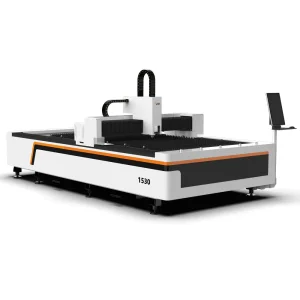
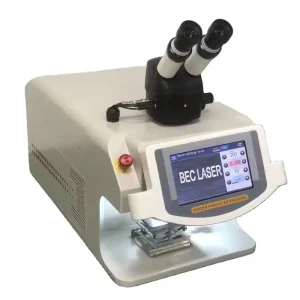
Specialized tooling machines engineered for heavy-mold repair, vertical bench top operations, high-speed cutting, and closed CNC cabinet mass production.