
Fiber Mold
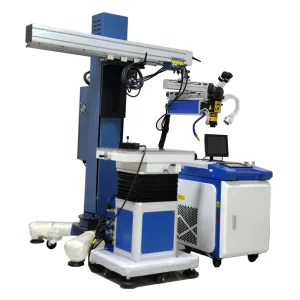
Engineered for high-integrity micro-joining, die restoration, and continuous metal fabrication with sub-millimeter thermal dissipation.

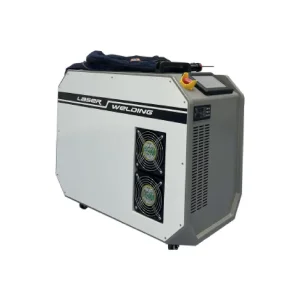


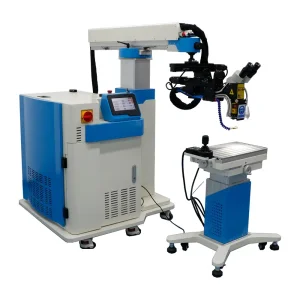

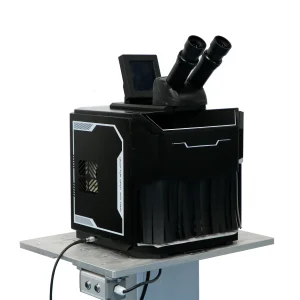
A rigorous examination of optical beam physics, power density thresholds, and thermal shockwave management in modern micro-joining production lines.
Historically dominant in precision mold repair and jewelry studios, flashlamp-pumped Nd:YAG resonators deliver high peak powers (up to 6kW) within millisecond durations. However, electro-optical conversion efficiency remains below 3-5%.
Operating in both pulsed and continuous modes, QCW fiber lasers achieve wall-plug efficiencies exceeding 30%. In pulse mode, a 150W average power fiber unit produces up to 1.5kW peak power with maintenance-free diode life over 100,000 hours.
By oscillating the beam spot at speeds up to 1,000 Hz using high-speed dual-axis galvanometer mirrors, continuous fiber lasers bridge the gap between spot welding and deep penetration seams without gap intolerance.
| Evaluation Metric | Legacy Flashlamp Nd:YAG | Quasi-Continuous Wave (QCW) Fiber | CW Fiber with Wobble Optics |
|---|---|---|---|
| Wall-Plug Efficiency (WPE) | 2.5% – 4.0% | 30.0% – 35.0% | 32.0% – 38.0% |
| Beam Quality Metric (M²) | 8.0 – 15.0 (Broad Divergence) | 1.1 – 1.8 (Diffraction-Limited) | 1.3 – 2.5 (Configurable) |
| Pump Diode / Emitter Lifespan | 500 – 1,000 Operating Hours | > 100,000 Hours MTTF | > 100,000 Hours MTTF |
| Minimum Spot Focus Diameter | 0.20 mm – 0.50 mm | 0.025 mm – 0.10 mm | 0.08 mm – 0.30 mm |
| Heat-Affected Zone (HAZ) Breadth | 0.30 mm – 0.80 mm | < 0.05 mm | 0.10 mm – 0.25 mm |
| Consumable Overhead / Cost of Ownership | High (Lamps, Deionizing Resins, Cavity Polish) | Extremely Low (Protective Window Only) | Low (Cover Glass & Brass Nozzles) |
How global tier-one manufacturers assess spot laser welder factory capabilities, life-cycle costs, and optical path engineering standards.
Procuring industrial laser machinery requires scrutinizing long-term CAPEX vs. OPEX dynamics. While an unbranded desktop spot welder may offer a 25% lower upfront price tag, its ongoing electrical demand, component wear, and downtime quickly invert the financial equation:
Global procurement teams must establish a verified protocol when vetting spot laser welding machine manufacturers in China. Key technical verifications include:
Maintenance-free fiber pump life cycle
Servo-driven CNC multi-axis accuracy
Compared to micro-TIG bead profiles
Global logistics and field service coverage
Why the Greater Bay Area photonics cluster has become the undisputed epicenter for agile industrial spot laser welder fabrication and direct-factory value.
Unlike regional assemblers reliant on third-party integration kits, leading Shenzhen laser factories maintain in-house CNC machining centers for structural booms, proprietary galvanometer drive boards, and custom optical collimation modules. This complete vertical integration allows rapid hardware revisions in days rather than quarters.
Within a 50-kilometer radius across Shenzhen, Dongguan, and Zhongshan, all essential sub-components—precision optics, linear guide rails, digital PID chillers, high-frequency shielding gas solenoids, and DSP controllers—are sourced from specialized local partners, insulating overseas buyers against macro supply chain disruptions.
Global brands and regional machine distributors leverage direct access to factory R&D engineering teams. From localized CNC user interfaces, dual-language safety interlocks, and custom boom reaches for oversized injection dies to automated rotary chuck attachments, custom prototypes ship in as little as 2 to 3 weeks.
Demonstrated performance across microelectronics, high-pressure die maintenance, fine jewelry goldsmithing, and battery busbar manufacturing.
Repairing chipped parting lines, gate erosion, and deep cavity cracks on hardened tool steels (NAK80, P20, H13, S136) without preheating. The ultra-narrow spot restricts heat to within 0.1mm of the repair seam, eliminating base metal annealing and sink marks.
Re-tipping fragile prongs directly adjacent to heat-sensitive emeralds and diamonds. Pulse-width modulation (0.1ms to 20ms) allows pinpoint fusion on 18K/24K gold, 925 sterling silver, and titanium without stone thermal shock or oxidation discolouration.
Overcoming the severe optical reflectivity of pure copper (C1100) and aluminum (1060/3003) tabs. QCW lasers with high peak-to-average power ratios penetrate the surface oxide film instantaneously, yielding zero-spatter hermetic weld nuggets.
Hermetic micro-sealing of 316LVM stainless steel and Nitinol implants. Under pressurized argon coaxial shielding, the spot laser joint produces smooth, biocompatible metallurgical transitions free of micro-cracking, porosity, or heavy carbide precipitation.
Authoritative insights addressing common engineering questions from factory managers, metallurgical specialists, and procurement directors.
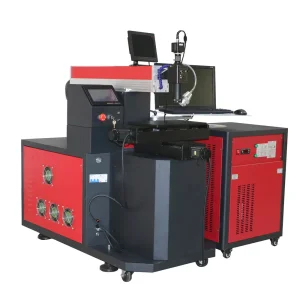
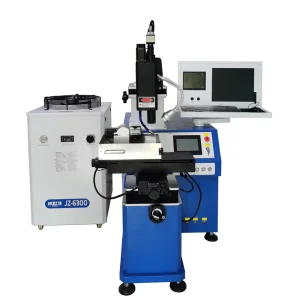
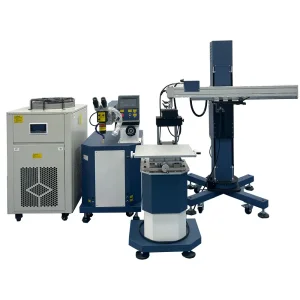
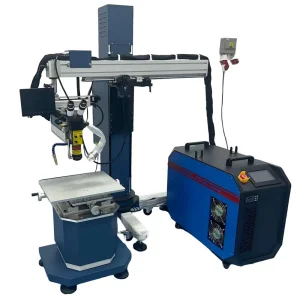
Explore high-volume automated motion platforms, QCW systems, high-speed cleaning units, and specialized jewelry work centers.
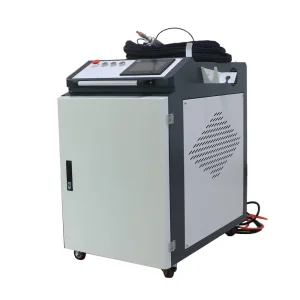

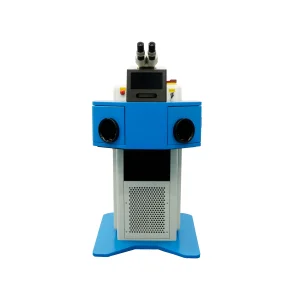

Send your part drawings or physical metal samples directly to our Shenzhen R&D application laboratory. Our laser physicists will analyze your alloy characteristics, run penetration tests, and return an unedited metallographic report with exact parameter recommendations.