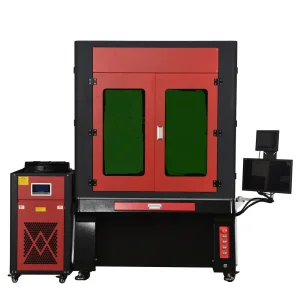
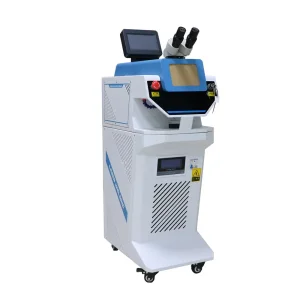
Direct factory configurations manufactured in Shenzhen, verified under ISO9001 and CE directives for continuous tooling operations.

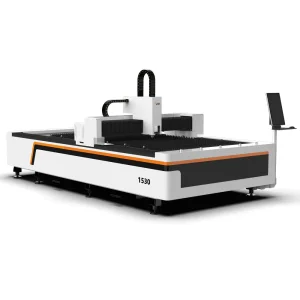


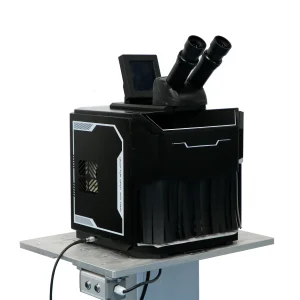


How mechanical boom-arm YAG architecture solves the multi-ton tooling paradox across automotive, aerospace, and injection molding sectors.
In modern industrial fabrication, polymer injection molds, high-pressure die casting dies, and metal stamping tools represent capital allocations frequently exceeding several hundred thousand dollars per unit. When parting lines fatigue, core pins shear, or abrasive gate wash occurs, the macro-industrial cost is not simply the repair wire—it is unallocated factory overhead, production stoppage penalties, and lost supply-chain throughput. Traditional repair paradigms such as TIG (Tungsten Inert Gas) welding deposit excessive thermal energy, leading to significant Heat-Affected Zones (HAZ), base metal deformation, metallurgical sink-marks, and subsequent internal micro-cracks during quenching.
The YAG Boom Mold Laser Welding Machine directly resolves this challenge. Operating at an infrared wavelength of 1064 nm via a pulsed Neodymium-doped Yttrium Aluminum Garnet (Nd:YAG) crystal or Quasi-Continuous Wave (QCW) fiber delivery, the system focuses energy down to a 0.2 mm – 2.0 mm spot. High peak pulse powers (reaching up to 9 kW – 12 kW intermittently) melt specialized filler wires and base alloys in sub-millisecond durations, achieving instantaneous fusion before heat can conduct into the bulk tooling substrate. Through its telescoping boom arm, 360-degree articulating optics, and heavy-duty counterbalanced cantilever, engineers can repair multi-ton molds directly within stamping presses or tool-room staging tables without crane transport, secondary machining, or stress-relief annealing.
Evaluating optical coupling efficiency, pulse modulation characteristics, and thermal dissipation dynamics.
| Evaluation Parameter | Pulsed Nd:YAG Boom System | Quasi-Continuous Wave (QCW) | Continuous Wave (CW) Fiber | Micro-TIG / Plasma Arc |
|---|---|---|---|---|
| Operating Wavelength | 1064 nm (Crystal Rod) | 1070 nm (Ytterbium Fiber) | 1070 nm (Monolithic Fiber) | Non-optical (Plasma Arc) |
| Peak Pulse Power Capability | 9.0 kW – 15.0 kW (Ultra-High) | 1.5 kW – 6.0 kW (High) | Equal to Rated Power (1.5–3kW) | Low instantaneous energy density |
| Heat-Affected Zone (HAZ) | < 0.10 mm (Virtually Zero) | < 0.08 mm (Minimal) | 0.30 – 0.80 mm (Moderate) | 1.50 – 4.50 mm (Extremely Severe) |
| Tooling Steel Compatibility | P20, NAK80, H13, S136, SKD61, 718 | S136, H13, Beryllium-Copper | Carbon Steels, Structural Stainless | Restricted to ductile mild steels |
| Geometric Reach (Manipulator) | 360° Cantilever Boom + Articulated Swivel | Articulated Arm / Fiber Cable | Manual Handheld Torch Only | Manual Torch (Line of sight only) |
| Substrate Distortion Risk | Zero warping, micro-retained geometry | Zero warping, ultra-precise seams | Noticeable heat build-up on thin edges | Extreme sink marks, dimensional twist |
Configured with xenon-pumped Nd:YAG cavity or fiber coupling, achieving pulse durations between 0.1 ms and 20.0 ms. This enables precise control of the peak energy necessary to melt carbide-rich tool steels (like AISI H13) without cracking the surrounding quenched parent material.
Heavy industrial gantry and boom mechanisms feature motorized multi-axis movement (X, Y, Z, plus universal angular swivel). Operators manipulate the focused laser nozzle inside deep deep-draw cavities, automotive bumper injection molds, and stamping die corners up to 1.5 meters away from the console.
Integrated LEICA or MOTIC 10x–20x stereo microscope system equipped with crosshair reticles, high-speed electronic liquid crystal light valves, and coaxial LED illumination protects the specialist operator's eyes while maintaining sub-micron focus precision.
Evaluating CapEx ROI, regional tooling centers, and supply chain reshoring demands across North America, Europe, and Asia-Pacific.
The industrial tooling ecosystem is undergoing a generational shift driven by high-strength automotive structural stamping (Gigacasting and mega-cast aluminum dies) and medical consumable micro-molding. In the United States, Germany, Japan, and Mexico, tooling managers no longer tolerate sending heavy molds out to regional subcontract welding job shops due to insurance overheads, logistical transport risks, and production delays. An internal boom-type mold repair station converts tool-room downtime from days to minutes.
Furthermore, the economics of rare alloying elements (Vanadium, Cobalt, Nickel, and Molybdenum) have substantially increased the replacement cost of premium mold steels. Refurbishing parting lines and repairing micro-pitting on mirror-polished S136 or NAK80 plastics tooling using laser wire deposition preserves 99.8% of the tool's original mass, extending the operational lifecycle through millions of injection cycles without recutting on 5-axis CNC machining centers.
Proven manufacturing applications across demanding tooling segments.
Material: 1.2738, P20+Ni pre-hardened steel.
Challenge: Gate wear, texture damage, and flash leakage on Class-A surface headlamp lenses.
Result: Micro-deposition using 0.3mm wire restored sealing surfaces without requiring mold disassembly or subsequent polishing benchwork distortion.
Material: Premium Premium H13 / 1.2344 tool steel.
Challenge: Thermal fatigue heat-checking (crazing) and molten aluminum erosion around deep sprue cores.
Result: Pulsed YAG welding with cobalt-base satellite wire rebuilt worn profiles, resisting molten metal attack for over 120,000 additional shots.
Material: Martensitic stainless steel AISI 420 / Stavax ESR.
Challenge: Chipped shut-off corners in multi-cavity syringe barrel molds requiring optical clarity.
Result: Laser beam spot dialed to 0.15 mm under high-purity Argon atmosphere; zero gas porosity or carbide segregation observed under scanning electron microscopy.
Turnkey commissioning adhering to worldwide industrial electrical, optical, and occupational health regulations.
Fully compliant with EN 60825-1 optical safety guidelines. Incorporates dual-channel interlock shutters, optical safety enclosures, and emergency stop circuits.
Standardized multi-tap power regulation modules. Ready for 380V/400V 50Hz (Europe), 208V/240V/480V 60Hz (North America), ensuring factory grid stability without external transformers.
Equipped with IoT cloud telemetry modules for real-time laser flashlamp diagnostics, water chiller pressure monitoring, and remote optical system calibration.
Anticipating the convergence of industrial machine vision, additive wire feeding, and collaborative robotic automation.
Integration of 3D structured-light cameras onto the boom head to automatically detect cracked die margins and generate toolpath profiles without manual operator guiding.
Full implementation of high-efficiency diode-pumped QCW fiber laser engines, cutting operating electricity draw by 60% and eliminating routine xenon lamp replacements.
Replacing standard counterbalanced booms with 7-axis collaborative robotic arms (Cobots) featuring force-feedback safety and millimeter path-accuracy inside deep dies.
Closed-loop pyrometric thermal imaging actively regulating single-pulse cooling gradients to produce graded nanostructured alloy coatings resistant to wear.
Direct engineering clarity regarding mold repair machines, wire chemistry, and process validation.
Explore our complete lineup of laser processing equipment, including automatic CNC systems, mobile cleaning modules, and jewelry welders.