Explore high-performance handheld, continuous galvanometer, mold repair, and multi-axis automated fiber laser systems engineered in-house by Shenzhen Youmir Laser Technology Co., Ltd.


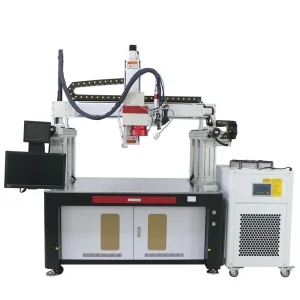


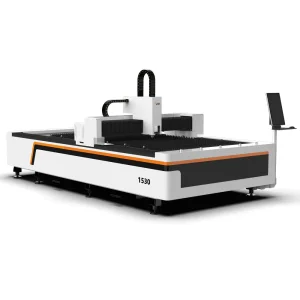
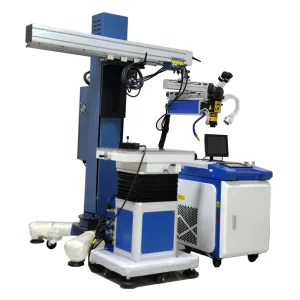

Analyzing why multinational manufacturers, precision Tier-1 automotive suppliers, and structural metal fabricators are transitioning their primary joining capacity to 2000 W continuous fiber platforms.
Traditional TIG/MIG arcs deposit excessive joules per linear millimeter, inducing mechanical warping and degrading grain boundary structures. A 2000 W fiber laser concentrates a power density exceeding 10⁶ W/cm², forming high aspect-ratio keyholes with an extraordinarily narrow Heat-Affected Zone (HAZ) and virtually zero micro-cracking.
Industrial buyers historically faced severe optical back-reflection barriers when welding pure aluminum alloys (5000/6000 series) and copper alloys. Modern 2000 W optical engines incorporate multi-stage optical isolators and specialized beam shaping, sustaining continuous metallurgical fusion without damaging laser pumping diodes.
The acute global shortage of certified manual arc welders directly inflates factory overhead. A 2000 W handheld or automatic laser welding system shortens operator qualification from 18 months to less than 48 hours, while delivering 4× to 6× throughput increases with near-zero secondary post-weld grinding.
Engineered to bridge structural integrity gaps across mission-critical aerospace, e-mobility battery packs, high-pressure HVAC systems, and sanitary food-grade stainless manufacturing.
Deploying 2000 W laser energy with tailored dual-wobble oscillation prevents intermetallic brittleness when fusing thick copper terminal tabs to aluminum busbars. The precise keyhole maintains high electrical conductivity and gas-tight joint hermeticity under dynamic vibration loads.
Meeting ASME BPE and 3-A Sanitary Standards requires completely crevice-free internal weld roots. Our 2000 W fiber laser welding systems utilize coaxial laminar argon shielding to yield mirror-smooth, oxidation-free inside diameters on 316L tubes without chemical pickling or manual passivating.
When manufacturing high-end decorative architectural stainless panels and elevator cars, thermal warping rejects the work entirely. With single-pass 2kW parameters, linear energy is maintained at under 120 J/mm, eliminating face oil-canning and preserving factory-applied brushing or mirror finishes.
Standardized engineering metrics derived from Youmir factory laboratory test benchmarks across butt, lap, and fillet geometries under certified industrial shielding atmospheres.
| Laser Source Output | Max Penetration (SS 304/316) | Max Penetration (Carbon Steel) | Max Penetration (Al Alloy) | Typical Linear Travel Speed | Wobble Oscillation Width | Recommended Chiller Load |
|---|---|---|---|---|---|---|
| 1000 W Continuous | ≤ 3.0 mm | ≤ 2.5 mm | ≤ 1.5 mm | 15 – 35 mm/s | 0.2 – 3.0 mm | 1.5 kW Dual-Circuit |
| 1500 W Continuous | ≤ 4.5 mm | ≤ 3.8 mm | ≤ 2.5 mm | 25 – 50 mm/s | 0.2 – 4.0 mm | 2.2 kW Dual-Circuit |
| 2000 W (Optimal Production) | ≤ 6.0 mm | ≤ 5.0 mm | ≤ 4.0 mm | 35 – 80 mm/s | 0.2 – 5.0 mm | 3.2 kW Dual-Circuit |
| 3000 W Heavy Gauge | ≤ 8.5 mm | ≤ 7.5 mm | ≤ 6.0 mm | 50 – 120 mm/s | 0.2 – 6.0 mm | 4.5 kW Dual-Circuit |
The 2000 W Youmir welding head integrates dual high-speed galvanometric scan mirrors driven by digital encoders. Unlike static focus spots that require sub-0.05 mm part gap tolerances, the dynamic wobble spreads the energy across adjustable sinusoidal, circular, triangular, and figure-eight trajectories up to 5.0 mm wide. This bridges wide joint gaps reliably while maintaining full molten puddle agitation for superior degassing.
Stable photon emission demands thermal tolerance under ± 0.5 °C. The 2000 W platform incorporates a customized closed-loop refrigeration unit that splits cooling channels: Channel 1 stabilizes the 1080 nm fiber laser resonator cavity, while Channel 2 cools the QBH collimation block and internal focusing optics. This prevents optical thermal lensing that causes focal drift during uninterrupted 24/7 manufacturing shifts.
From closed-loop machine vision seam tracking to multi-wavelength hybrid beams, explore how Shenzhen Youmir Laser is advancing optical efficiency and automated process stability.
Integration of coaxial high-speed cameras coupled with neural network algorithms capable of detecting seam trajectories at 500 FPS. The system dynamically compensates for thermal part expansion and tooling tolerances in real-time without operator intervention.
Developing hybrid combining units where a 450 nm blue diode laser produces an initial molten pool with 65% copper absorption, followed immediately by the 2000 W 1080 nm infrared fiber laser for spatter-free, keyhole-stable copper and gold welding.
Direct embedding of Industry 4.0 bus architectures (OPC-UA, Profinet, EtherCAT). Plasma spectrometers analyze back-emitted light spectrums, recording per-millimeter weld quality logs and flagging porosity or gas-shield disruptions instantly.
From our centralized precision manufacturing hub in Guangming District, Shenzhen, Youmir supports continuous manufacturing operations across 50+ countries with verified hardware reliability.
Unlike trading houses, Shenzhen Youmir Laser Technology Co., Ltd. controls optics, control boards, mechanics, and software in-house. Operating continuous laser R&D since 2010 and incorporated in 2012, our facilities cover over 5,000 m² of precision assembly lines, optical cleanrooms, and testing bays.
We maintain standardized inventories of critical consumables—including anti-reflective protective windows, copper wire-feed nozzles, ceramic centering rings, and QBH fiber cables—shipped via rapid air couriers across North America, Europe, Southeast Asia, and Latin America.
Multilingual application engineers support factory clients via live remote telemetry, diagnostic video portals, and on-site factory commissioning. Every machine ships with comprehensive metallurgical libraries calibrated for standard alloy compositions.
Laser safety is paramount when working with high-intensity 2000 W 1080 nm Class 4 optical power. Youmir laser systems strictly comply with global industrial safety directives.
Compliant with European Low Voltage Directive (2014/35/EU) and Electromagnetic Compatibility Directive (2014/30/EU). Isolated high-voltage conduits, heavy industrial filtration, and shielded cables protect factory automation PLCs from RF interference.
Equipped with redundant hardware-level loop interlocks. The laser output trigger requires both mechanical gun contact grounding and optical workpiece capacitance verification before high-power light emission is unlocked, ensuring absolute safety.
Real-time pressure sensors shut down the laser beam in under 5 milliseconds if shielding gas (Argon or Nitrogen) flow falls below minimum thresholds, eliminating surface oxidation and guarding expensive focusing lenses from spatter blowout.
Comparing the genuine shop-floor balance sheet: 2000 W Fiber Laser vs. Traditional TIG / MIG Arc Systems across 4,000 operational hours.
Because a 2000 W laser achieves travel speeds up to 4× faster than manual TIG welding, one technician with a Youmir laser matches the daily square-meter output of 3 to 4 certified arc welders, amortizing equipment investment within 4.5 to 7 months.
Eliminate flap discs, grinding belts, acid pickling pastes, and rework polishing. The smooth, spatter-free crown produced by oscillating 2000 W optics passes sanitary inspection straight off the welding jig, reducing abrasive expenditures to near zero.
Legacy YAG or arc power sources operate at miserable 3% to 15% electrical-to-optical conversion. Our modern 2000 W continuous fiber modules exceed 35% electro-optical efficiency, slashing utility kVA demands and generating far less ambient shop heat.
Every Youmir 2000 W laser system passes a documented 72-hour continuous stress and power-stability testing regime before international export palletization.
We benchmark power drift across 8-hour continuous discharge using Ophir calorimetric power meters. Beam quality parameter M² is strictly documented to ensure consistent focus spot irradiance and zero power drop at full 2000 W load.
Send your metal samples directly to our Shenzhen factory. Our laser engineers cut, polish, and etch cross-sections under metallurgical microscopes to prove weld penetration depth, void absence, and grain structure before you finalize your purchase order.
Custom sheet-metal cabinet aesthetics, custom CNC software interfaces, tailored multi-axis gantries, dual-wire automatic feeders, and integrated exhaust fume extractors configured to exact factory line specifications.
Exhaustive technical answers straight from Youmir senior laser application specialists for plant managers, sourcing directors, and welding engineers.
Under optimal butt-joint fit-up with zero gap and high-purity argon shielding, a 2000 W fiber laser achieves up to 5.0 mm single-pass penetration in austenitic stainless steel (304/316), up to 4.5 mm in structural carbon steel, and up to 3.5 mm in 5000/6000 series aluminum alloys. When equipped with our automatic wire-feeding unit, gap bridging up to 1.5 mm is easily accommodated on heavier material gauges.
While a 1500 W machine handles light sheet metal (1.0 mm to 3.0 mm) comfortably, a 2000 W source provides vital headroom. It welds 2.0 mm to 3.0 mm steel at double the linear travel speed, while unlocking the capability to weld 4.0 mm to 5.0 mm structural thicknesses and highly reflective alloys like aluminum and brass without pushing the laser diodes to their 100% duty threshold, thereby extending component lifespan.
For stainless steel and titanium, 99.999% pure Argon produces the cleanest, silver-bright surface by eliminating nitrogen-induced discoloration. However, for structural carbon steel and galvanized steel, dry Nitrogen is often preferred because it improves arc pool fluidity, boosts travel speed, and lowers operational gas costs by up to 40%.
Yes. Every Youmir 2000 W system can be supplied with standardized industrial communication interfaces (Profinet, EtherCAT, DeviceNet, or digital 24V I/O). The welding head can be adapted with a robot mounting bracket, integrated anti-collision clutch, and coaxial seam tracking sensors for seamless deployment on Fanuc, KUKA, ABB, or Yaskawa robotic arms.
Under clean shop air conditions with properly regulated shielding gas, an optical protective window lasts between 120 and 240 continuous working hours. The copper nozzle tip lasts roughly 300 to 500 hours depending on wire feeding frequency. We supply each export shipment with a standardized 1-year consumables pack to prevent unplanned operational downtime.
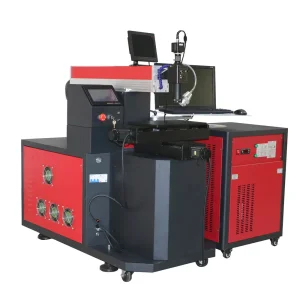
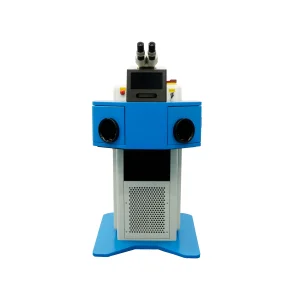
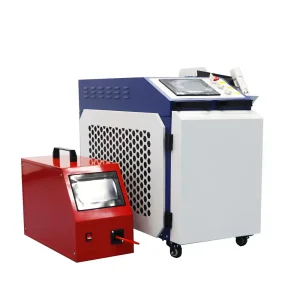
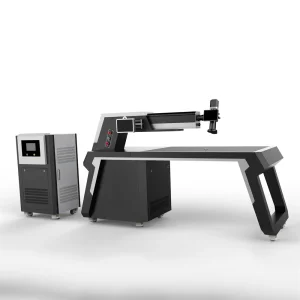
Discover high-output surface preparation laser cleaning equipment, precision jewelry workstations, enclosed automatic CNC welders, and specialized signage fabrication tools.
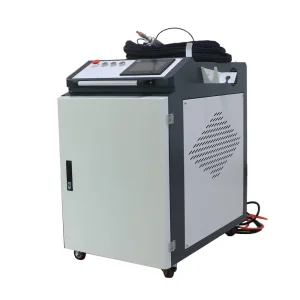



Connect directly with our application engineers in Shenzhen. We provide comprehensive cycle-time simulations, parameter window optimization, custom jig consultation, and FOB/CIF worldwide export quotations within 12 business hours.
