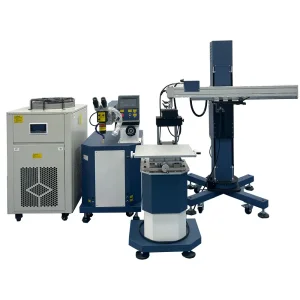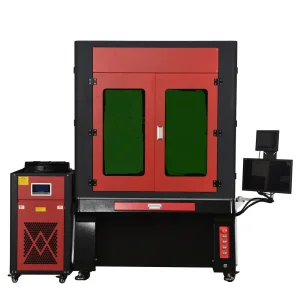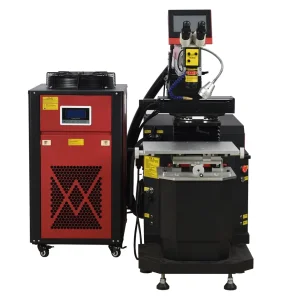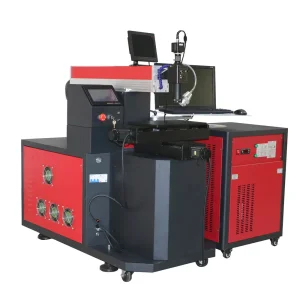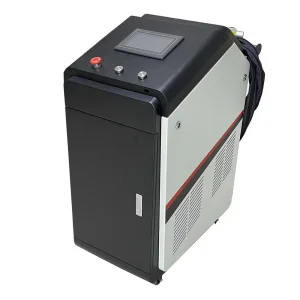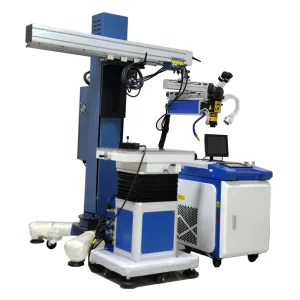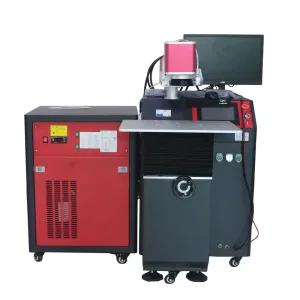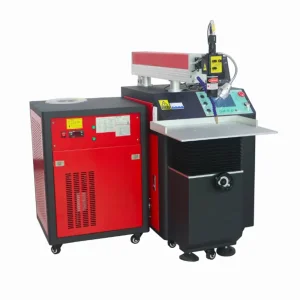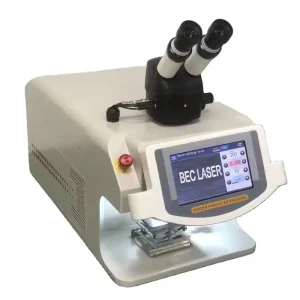
Direct factory selection of continuous, QCW, and heavy cantilever tooling repair configurations
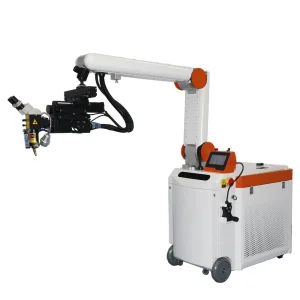
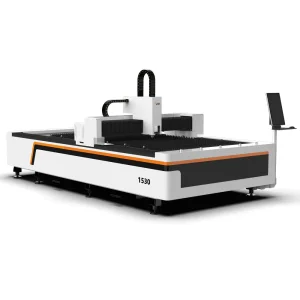
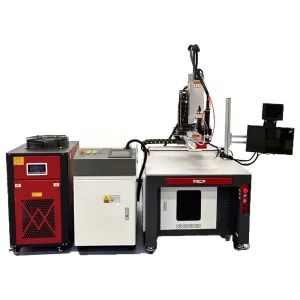
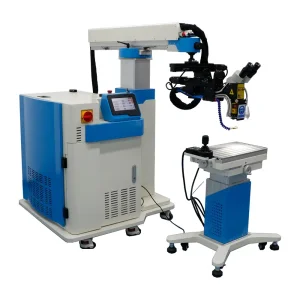

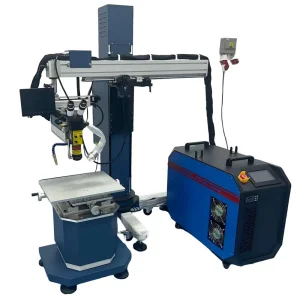
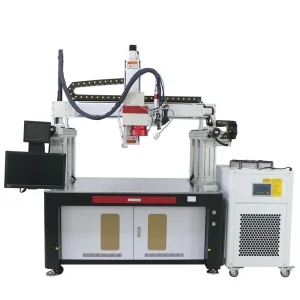
Addressing the critical multi-ton tooling bottleneck across the Americas, Europe, and Asia-Pacific manufacturing hubs
In contemporary precision manufacturing, tooling and dies routinely weigh between 5 to 45 metric tons. Conventional repair methodologies—such as Micro-TIG or stationary laser beds—suffer from catastrophic structural limitations: excessive localized heat input causing micro-cracking, geometric warpage, and the enormous mechanical friction of dismounting, crating, and re-machining massive components.
The transition from legacy lamp-pumped Nd:YAG resonators to modern continuous-wave (CW) and Quasi-Continuous Wave (QCW) fiber engines has permanently transformed the economics of tool repair. Delivering electro-optical conversion efficiencies surpassing 38% (vs. ~3% for YAG), solid-state fiber delivers ultra-low beam parameter products (BPP) and pinpoint heat-affected zones (HAZ).
By decoupling the laser delivery optics from rigid mechanical beds, the 360-degree rotating boom allows the welding beam to approach stationary molds directly on injection machine platens or floor pads. This cantilever engineering reduces tool turnaround schedules from 5 business days to mere hours, preserving factory profitability.
Quantitative performance indices comparing mold maintenance methodologies across critical manufacturing parameters
| Performance Metrics | Articulated Boom Fiber Laser | Lamp-Pumped YAG Laser | Micro-TIG / Arc Welding |
|---|---|---|---|
| Heat-Affected Zone (HAZ) | Minimal (0.05 mm – 0.15 mm) | Moderate (0.30 mm – 0.60 mm) | Extensive (> 1.50 mm, High Risk of Sink) |
| Reach & Multi-Ton Usability | Omnidirectional Cantilever (Up to 1.8m radius) | Restricted (Gantry / Enclosed Bench) | High Manual Flexibility, Poor Repeatability |
| Post-Weld Machining Requirement | Near-Net Shape (Minor EDM / Diamond Polish) | Substantial Grinding / Re-Milling | Extensive CNC Re-milling & Stress Relief |
| Consumable / Operating Cost | Negligible (Solid-state, No Xenon lamps) | High (Lamps replaced every 800-1200 hrs) | Low Hardware Cost, Extreme Labor Expense |
| Substrate Metallurgical Bond | True Fusion, 100% Pore-Free & Dense | High Quality, Susceptible to Optical Decay | High Porosity, Slag Inclusions Possible |
Deploying targeted thermal precision across specialized industrial ecosystems worldwide
Automotive body panel stamping dies and class-A bumper injection molds experience extreme friction wear. Custom boom welders deposit specialized H13, P20, and Maraging tooling steels directly onto split lines, parting beads, and deep ribs without annealing surrounding steel.
Thermal fatigue and aluminum erosion regularly produce heat checks and edge washouts on aluminum alloy engine block dies. The dynamic cantilever reaches deep into casting inserts to restore worn shut-off surfaces using high-temperature, cobalt-base filler alloys.
Multi-cavity medical molds for syringes, luer locks, and optical lenses demand mirror-finish surfaces. Boom fiber welding with inert argon shielding produces pore-free welds ready for sub-micron optical diamond polishing with zero sink marks or micro-porosity.
Forging dies subjected to cyclic impact and extreme compressive loads require uncompromising metallurgical integrity. Boom fiber welders reconstitute edge geometries with identical tensile properties to the base metal, eliminating costly tooling discards.
The progression of intelligent optics, real-time sensing, and automated additive deposition
Future iterations integrate real-time structured light or stereoscopic laser profilometry directly onto the boom head. This captures sub-millimeter die wear, generates adaptive toolpaths, and deposits precise filler wire autonomously to match native CAD surfaces.
Integration of high-frequency dual-axis galvanometer wobble optical heads enables dynamic beam oscillation. This optimizes melt pool hydrodynamics, unlocks adjustable spot geometry up to 5mm, and establishes on-the-fly Directed Energy Deposition (DED) capabilities.
Next-gen systems are equipped with pyrometric melt-pool temperature monitors and cloud diagnostics. Real-time metallurgical data ensures identical cooling curves across varying tool room ambients, guaranteeing uncompromised hardness and microstructure.
Complete lifecycle manufacturing, from customized kinematics to turnkey overseas deployment
Factory engineers tailor horizontal arm extensions (from 1200mm to 2000mm+), hydraulic or motorized vertical column elevation, and multi-axis articulating heads to fit specific shop layouts, overhead crane clearances, and injection press platen geometry.
Comprehensive OEM/ODM support for brand owners, international distributors, and plant operators. Custom industrial enclosures, proprietary CNC UI branding, localized languages, and electrical compliance covering 220V/380V/480V CE and UL industrial standards.
Before committing to capital investment, global clients send damaged mold samples or tooling cross-sections directly to our Shenzhen laboratories. We formulate metallurgical reports, specify wire alloys, and deliver real-time welding parameter matrices at zero charge.
Authoritative technical guidance for tooling managers, procurement specialists, and process engineers
Explore our complete industrial series for automated manufacturing and tool maintenance