Engineered for repeatable high-yield production, extreme seam density, and minimal heat-affected zones across industrial metallurgical applications.
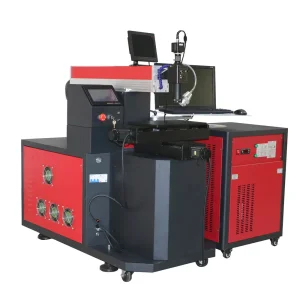
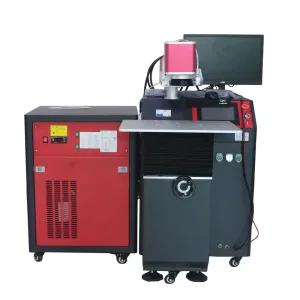
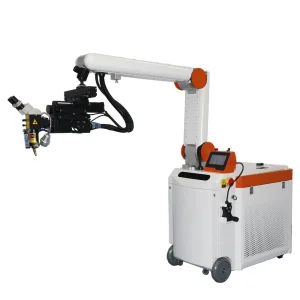
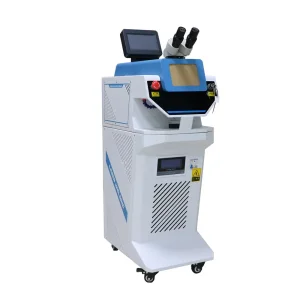
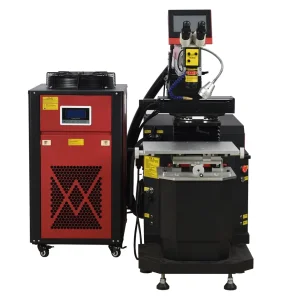

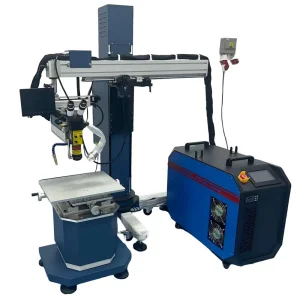
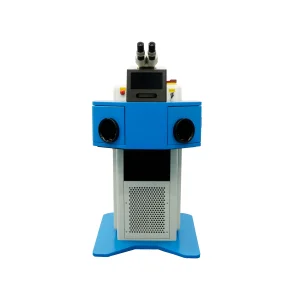
Why Tier-1 automotive, e-mobility, aerospace, and precision tooling manufacturers are actively decommissioning legacy resistance spot welding and manual arc systems in favor of closed-loop CNC fiber laser work cells.
Traditional fusion techniques transfer excessive heat, causing microstructural warping in thin sheet metals (0.5mm - 4.0mm). CNC laser welding focuses an energy density upwards of 10⁶ W/cm², producing deep keyhole penetration with an ultra-narrow Heat Affected Zone (HAZ), eliminating costly downstream secondary rectification, cosmetic buffing, or straightening processes.
Deploying servo-driven 3-axis to 6-axis gantries or dual-axis galvanometer scanner heads enables intricate non-linear joining: circular micro-welds, zigzag wobbling, and hermetic perimeter seams on 3D curvilinear topologies. Integrated vision positioning systems correct for component dimensional variance dynamically in real time.
High-reflectivity and metallurgically incompatible metals—such as Copper (Cu) to Aluminum (Al) busbars in battery packs or titanium to stainless steel alloys—cannot be stably joined via legacy arc. High-peak pulsed QCW and dual-beam fiber laser sources overcome back-reflection barriers while suppressing fragile intermetallic phase compounds.
Capital expenditure (CAPEX) for industrial CNC laser systems is determined by motion envelope, beam delivery architecture, laser power, and closed-loop process monitoring. Review standard baseline factory quote brackets below.
| System Classification | Laser Source & Power | Motion Architecture | Key Applications | Est. Factory Quote (USD) |
|---|---|---|---|---|
| Benchtop Precision CNC | 1000W – 1500W Continuous Fiber | 3-Axis Cartesian (X/Y/Z) | Sensors, electronic enclosures, micro-fittings | $12,500 – $18,900 |
| Galvanometer High-Speed CNC | 2000W – 3000W Quasi-CW / CW | XY Scan Head + Rotary Axis | EV battery tabs, hairpins, solar interconnections | $22,000 – $36,500 |
| Heavy Gantry Enclosed CNC | 3000W – 6000W High-Power Fiber | 4/5-Axis Interpolated Heavy Frame | Automotive BIW, aerospace ducting, pressure valves | $45,000 – $78,000 |
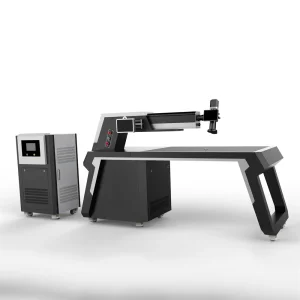
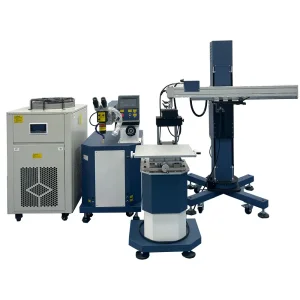
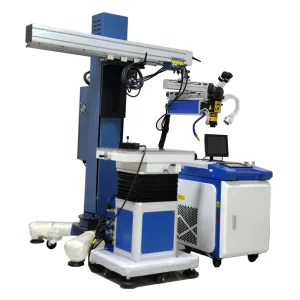
| Integrated Boom / Cantilever | 1500W – 3000W Fiber / YAG | Hydraulic Swing Arm + Laser Head | Injection mold cavity maintenance, large die repair | $16,800 – $29,000 |
1. Fiber Engine Selection: Tier-1 European/US resonators (IPG Photonics, nLIGHT) carry a 35-50% price premium over top-tier Chinese engines (Raycus, MAX Photonics) which have achieved identical optical stability at lower operating costs.
2. CNC Controller & Motion Drive: Stepper motors with open-loop setups reduce cost but limit speed to 50mm/s. High-performance EtherCAT closed-loop absolute Panasonic or Yaskawa servos paired with specialized laser software (e.g., CypCut, Friendess, or Beckhoff TwinCAT) represent high-precision capital deployment.
Operational Payback Cycle: A typical 2000W CNC laser system running an 8-hour production shift uses less than $1.20/hour in electricity and shielding gas (Argon/Nitrogen), compared to $6.50/hour in consumables, electrodes, and wire fillers for arc welding.
Downtime Mitigation: Fiber delivery utilizes solid-state optical cabling with zero mirror degradation, achieving lower maintenance schedules with optical protection glass life cycles exceeding 1,200 continuous hours.
Shenzhen Youmir Laser Technology integrates laser optics, motion software, and mechanical fixturing into application-specific manufacturing ecosystems.
Zero-spatter welding of prismatic battery cell caps, busbar-to-cell interconnections (Cu to Al), and aluminum battery tray liquid-cooling plates using adjustable ring-mode fiber laser beams.
Hermetic micro-welding of implantable titanium enclosures, endoscope stainless steel tube assemblies, and surgical instruments demanding sterile, pore-free, mirror-smooth weld pool solidification.
In-situ repair of hardened SKD11, NAK80, and P20 injection molds. Integrated boom and cantilever systems reach inside massive presses without dismantling, saving days of plant downtime.
Joining exotic Inconel 718, Hastelloy, and thin-walled titanium alloys for thermal bypass exchangers and telemetry enclosures adhering strictly to ISO 15614-11 laser qualification protocols.
How Shenzhen Youmir Laser is driving future-ready hardware architecture to bridge the gap between autonomous manufacturing and zero-defect quality thresholds.
Dual-axis galvanometer wobble optics creating circular, triangle, and figure-8 beam oscillates up to 1000Hz, bridging physical joint fit-up gaps up to 1.2mm without requiring wire feeds.
High-resolution CMOS image sensors combined with auxiliary structured laser illumination automatically track weld seams in 3D space, compensating for thermal workpiece drift on the fly.
Optical Coherence Tomography (OCT) sensors measuring the exact depth of the laser keyhole at 200kHz sample rates, certifying full penetration without destructive metallographic sectioning.
Deep-learning edge neural chips analyzing plasma emission spectra and melt pool thermal signatures to instantly modulate laser pulse shapes, eliminating spatter and porosities dynamically.
Founded in Shenzhen in 2012 with core engineering roots dating back to 2010, Shenzhen Youmir Laser Technology Co., Ltd. operates state-of-the-art facilities across Shenzhen, Zhongshan, and Hunan spanning over 5,000 m² of specialized production floor space.
Unlike assemblers who outsource critical components, Youmir maintains dedicated internal development teams for optical delivery design, motion CNC interpolation firmware, and rigid stress-relieved gantry structures. Every machine undergoes 72 hours of uninterrupted full-load burn-in testing and optical power telemetry verification prior to crating.
Ship sample alloys to our Shenzhen lab for cross-section metallographic analysis, tensile testing, and high-speed video recording.
Tailored chassis branding, specialized PLC interfaces, custom rotary chucks, and factory automation integrations for brand distributors.
Operating class 4 laser engines necessitates strict mechanical safeguards, CE safety interlocks, and rapid-response technical field coverage.
Fully enclosed CNC workstations feature dual-channel safety door switches, OD6+ laser safety protective observation windows (DIN EN 207 certified), and emergency stop circuit integration meeting ISO 13849-1 Performance Level d (PL d).
Proprietary fiber isolator circuits protect laser diodes against high-intensity backwards reflection when processing raw pure copper (C1100), brass, and high-purity aluminum alloys, preventing resonator burnout and extending machine longevity.
Built-in IoT modules allow Youmir application engineers to remotely diagnose optic path errors, check chiller temperature stability, update CNC motion parameters, and dispatch regional field technicians across our global partner hubs.
Engineered to excel in demanding workshop environments—from heavy tooling reclamation to high-precision signage and sealed cleanroom fabrication.
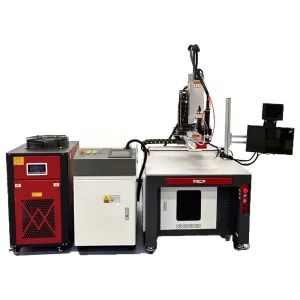
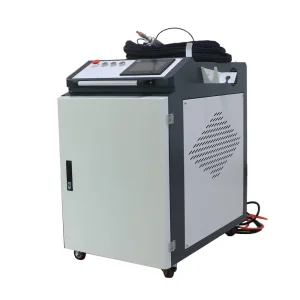
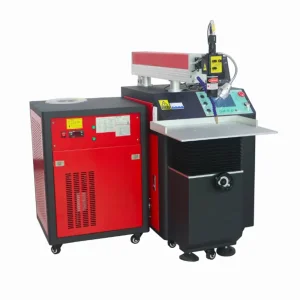
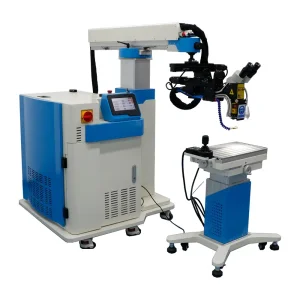
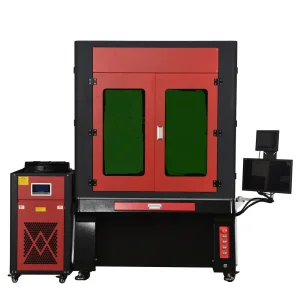
Direct insights from our chief laser process engineers addressing joint tolerance, shielding gases, power specifications, and factory direct customization.
Send our Shenzhen engineering team your workpiece drawings (CAD/DXF/STEP) and material specifications. We will perform real-world weld sample trials, verify penetration depth, and furnish a comprehensive engineering report alongside an itemized factory direct quote within 24 hours.
