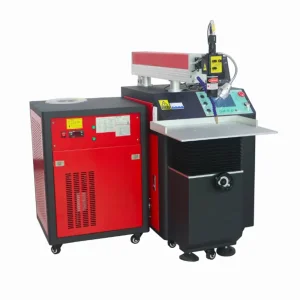
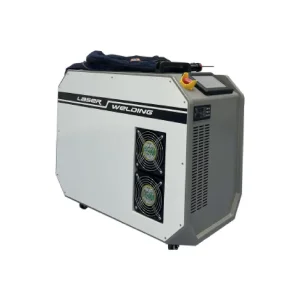
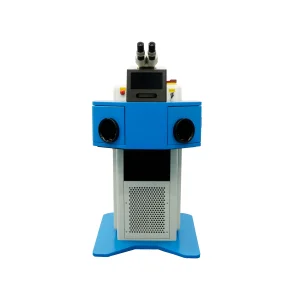
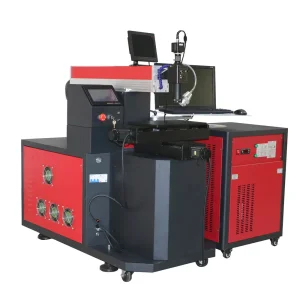
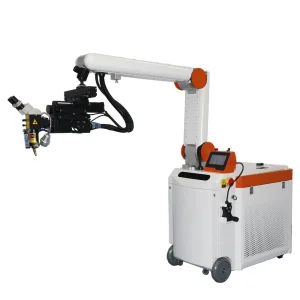
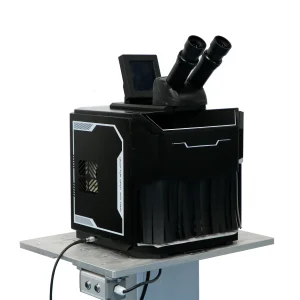
Explore our core series of continuous wave, QCW, pulsed cleaning, and automated 3-axis CNC systems designed for zero-defect metallurgical bonding.
The global metal fabrication industry is experiencing a generational shift from legacy GTAW/GMAW arc systems to high-energy-density portable fiber laser welding.
Traditional manual TIG torches deliver diffuse heat profiles resulting in wide Heat-Affected Zones (HAZ), severe angular distortion, and extensive metallurgical embrittlement. Continuous fiber laser welding focuses concentrated beam diameters (100–300 μm), slashing net thermal input by up to 80% while retaining base metal crystalline properties.
Modern manufacturing plants face a global shortage of certified Class-A welding technicians. Handheld fiber laser tools reduce operator training curves from several months down to 48 hours. By achieving travel speeds 4 to 10 times faster than manual arc welding, processing cycles and labor overhead collapse simultaneously.
Secondary grinding, acid pickling, polishing, and spatters-removal routines routinely consume up to 35% of total fabrication shop floor hours. Precision optical wobble scanning delivers uniform bead geometry, mirror-smooth seam topologies, and virtually spatter-free joints straight off the assembly bench.
Direct factory engineering benchmarks: match your plant electrical specifications, alloy types, and duty cycles to exact laser power output thresholds.
| Laser Source Power | Stainless Steel (304/316) | Carbon Steel (Q235/Mild) | Aluminum Alloys (6061/5052) | Brass & Copper | Typical Industrial Target |
|---|---|---|---|---|---|
| 1000 Watt | Up to 3.0 mm | Up to 2.5 mm | Up to 1.5 mm | Up to 1.0 mm | HVAC ducting, electronic enclosures, decorative trim |
| 1500 Watt | Up to 4.5 mm | Up to 4.0 mm | Up to 3.0 mm | Up to 2.0 mm | Commercial kitchenware, metal furniture, job shops |
| 2000 Watt | Up to 6.0 mm | Up to 5.5 mm | Up to 4.5 mm | Up to 3.0 mm | Pressure vessels, structural frames, aerospace brackets |
| 3000 Watt | Up to 8.5 mm | Up to 8.0 mm | Up to 6.5 mm | Up to 4.5 mm | Heavy shipbuilding, mining equipment, thick pipe manifolds |
Deploying high-power Class 4 coherent radiation systems demands uncompromised safety engineering and reliable regional lifecycle support.
Every handheld system features dual-channel hardware interlocks, grounding loops, zero-voltage start logic, and dynamic work clamp sensing. Laser emission is strictly inhibited unless the torch tip completes an active optical-electrical circuit with the grounded workpiece.
Our machinery strictly adheres to EN 60825-1:2014 laser safety standards, ISO 11553-2 machinery safety, and US FDA Accession requirements. Complete technical construction files (TCF), optical wavelength calibration charts, and safety data sheets ship alongside every unit.
Factory-integrated industrial IoT modules offer round-the-clock remote monitoring, live optical telemetry analysis, and firmware upgrades. Our overseas consignment hubs provide rapid replacement dispatch for protective windows, collimating lenses, and wire-feed nozzles within 24–48 hours.
Engineered flexibility enables seamless operation across production-line cells, mobile shipyard maintenance units, and micro-precision repair laboratories.
Hermetic battery pack lid sealing, copper-to-aluminum busbar joining, exhaust manifold repairs, and hydroformed chassis seam welds with zero spatter damage to internal electronic sensors.
Cleanroom stainless steel sanitary pipework, dairy fermentation storage vessels, and medical clean-cabinet fabrication. Completely pore-free beads eliminate bacterial aggregation vectors.
Sub-millimeter weld wire deposition for injection mold edge wear, plastic tooling voids, stamping die fractures, and casting defect repairs without base-metal softening or temper degradation.
Localized micro-joining of titanium alloy ducts, Inconel thermal shields, thin-wall corrugated tubing, and delicate fine jewelry metals where microscopic heat dissipation is strictly required.
Continuous investment in photonics, machine intelligence, and power miniaturization defines our forward product engineering cycle.
Real-time optical seam recognition modules integrated within the handheld welding torch. Sub-millimeter visual servoing algorithms dynamically steer the wobble galvo mirrors, correcting operator hand jitter and maintaining central seam alignment automatically.
Coupling 450nm direct diode blue wavelengths with 1080nm near-infrared fiber lasers. Blue light absorption on pure copper jumps to over 60% at ambient temperature, enabling spatter-free, keyhole-stable welding of battery terminals without high-voltage thermal spikes.
Coaxial fast-response infrared pyrometry monitors molten pool temperature at 10 kHz refresh rates. Optical output power modulates on-the-fly to prevent thermal runaways, blowout defects on sheet edges, and porosity formation in high-reflection metals.
Comprehensive engineering insights for machine shop owners, manufacturing engineers, and procurement directors.
Explore heavy-duty cantilever systems, high-speed galvanometer welders, and precision jewelry repair units configured for batch production lines.