Explore our core industrial laser processing portfolio, integrating proprietary opto-electronics, CNC servo automation, and high-peak micro-welding power supplies.

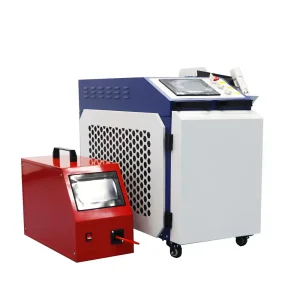
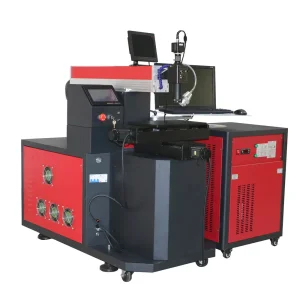



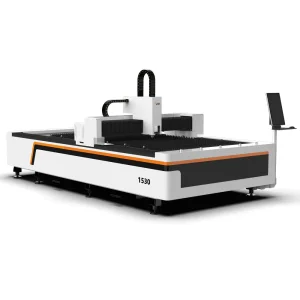
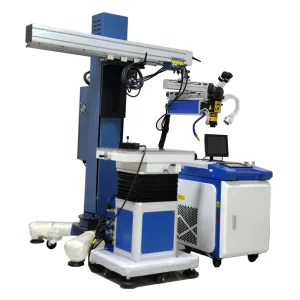
Examining how high spot prices in precious metals, stone heat-sensitivity constraints, and artisan labor shortages are driving the worldwide adoption of customized micro-laser welding.
With gold surging past historic highs and platinum alloy costs remaining volatile, conventional open-flame torch soldering causes up to 4.5% material loss via oxide fire-scale, pickle evaporation, and aggressive post-brazing polishing. A custom jewelry laser welder achieves keyhole joining with zero filler waste and microscopic spot targeting (0.1 mm to 3.0 mm), curbing metal vapor loss and delivering an average CapEx payback in under 6.2 months for active jewelry manufacturers.
Traditional torch soldering dissipates indiscriminate thermal energy across the workpiece, risking heat damage to organic and porous gemstones such as emeralds, opals, pearls, and tanzanites. Pulsed Nd:YAG (1064 nm) and QCW fiber lasers restrict energy release to millisecond burst windows (0.1–20 ms). Heat is concentrated entirely within the molten spot, allowing goldsmiths to securely re-tip prongs directly adjacent to fragile diamonds and precious gems without unsetting.
Industrial demand for jewelry laser systems has transitioned from simple countertop repair tools to fully customized, CNC-integrated mass production units. Major jewelry manufacturing clusters—including Vicenza and Arezzo in Italy, Surat and Mumbai in India, Panyu and Shenzhen in China, and Bangkok in Thailand—rely on Youmir Laser’s custom-engineered high-frequency resonators to weld hollow chains, join casting sprues, and seamlessly fill cast porosity.
A rigorous metallurgical comparison designed for engineering leads, workshop owners, and procurement specialists evaluating optical delivery methods for delicate jewelry alloys.
Pulsed Neodymium-doped Yttrium Aluminum Garnet (Nd:YAG) operating at 1064 nm remains the traditional workhorse of bespoke jewelry repair. Utilizing a xenon flashlamp enclosed within an elliptical diffuse-reflectance ceramic or gold-plated chamber, Nd:YAG systems deliver massive single-pulse peak powers (up to 8 kW) with pulse durations of 0.2 to 20 ms. This high instantaneous peak power is crucial for breaking through the high surface reflectivity of polished silver and yellow gold alloys.
Quasi-Continuous Wave (QCW) fiber lasers represent the cutting edge of industrial micro-joining. Powered by solid-state semiconductor diode banks, QCW lasers produce peak pulse powers 10 times higher than their continuous-wave nominal rating (e.g., a 150W QCW laser delivers 1.5 kW peak power; a 300W delivers 3.0 kW peak). The fundamental TEM00 beam quality ($M^2 < 1.15$) produces an ultra-concentrated focal spot down to 0.05 mm, completely devoid of thermal lensing effects.
| Performance Parameter | Pulsed Nd:YAG Benchtop Series | Industrial QCW Fiber System | Standard Continuous Fiber |
|---|---|---|---|
| Operating Wavelength | 1064 nm | 1070 nm ± 5 nm | 1080 nm |
| Peak Pulse Power | Up to 6.0 kW – 8.0 kW | 1.5 kW – 3.0 kW (Customizable) | Identical to Nominal Power |
| Beam Quality ($M^2$) | Multi-mode ($M^2 \approx 8–15$) | Single-mode ($M^2 \le 1.15$) | Multi-mode / Single-mode |
| Heat Affected Zone (HAZ) | < 0.15 mm (Localized) | < 0.04 mm (Ultra-Crisp) | > 0.40 mm (High Thermal Spread) |
| Best Suited Applications | Prong re-tipping, bezel joints, ring sizing | Automated chains, ultra-fine filigree, micro-pins | Sheet metal cutting, structural fabrication |
| Cooling Topology | Integrated Closed-Loop Deionized Water | Air-Cooled or Compact Chiller | Dual-Circuit Chiller |
| Procurement Suitability | Most Economical CapEx | Lowest OpEx / Highest ROI | Specialized Applications Only |
Mastering pulse shaping, shielding gas aerodynamics, and optical absorptivity across noble, reactive, and refractory jewelry metals.
Sterling silver reflects over 95% of 1064 nm laser radiation at ambient temperatures, and possesses high thermal conductivity. Overcoming this requires Youmir's proprietary pulse-spiking profile: an aggressive, high-amplitude initial pulse burst (0.5 ms @ 5.5 kW) that breaches optical reflectivity, instantly transitioning into a lower-energy plateau to feed the melt pool without spatter or burn-through.
Different karat grades behave distinctly under laser energy. 18k and 14k White Gold containing nickel or palladium often experience micro-fissuring if cooled too rapidly. Our custom digital waveforms introduce down-ramp slope annealing, gradually cooling the molten nugget over 3 to 8 ms. Rose gold, high in copper content, requires continuous Argon shielding to eliminate ruby-colored copper oxides.
Platinum melts at an elevated 1768 °C with low thermal conductivity. It absorbs laser energy with near 100% stability, yielding pristine, porosity-free joints without heat dissipation to surrounding structures. Titanium and tantalum, popular in contemporary wedding bands and luxury watches, demand high-purity Grade 5.0 Argon (99.999%) shielding to prevent brittle interstitial nitrogen embrittlement.
From high-volume investment casting foundries to bespoke diamond counter ateliers, see where custom-tailored laser machines outperform conventional tools.
Investment casting shrinkage cavities and gas porosity ruin polished surfaces. Utilizing matched-alloy wire feeds (0.2–0.4 mm diameter), operators fill subsurface voids without re-melting adjacent walls, saving hours of costly scrap-melting cycles.
Rebuilding worn claw prongs around heat-vulnerable gemstones (emerald, turquoise, pearls) without unsetting. The focused laser delivers zero collateral radiant heat, preserving stone luster while laying down durable 18k or platinum deposits.
Integrated with rotary axes and synchronized galvo scanners, our systems weld over 2,500 links per minute on micro-curb and cable chains down to 0.15 mm wire thickness, leaving seams that require no acid pickling.
Laser micro-deposition for luxury stainless steel, gold, and grade-5 titanium watch cases. Dent, nick, and bevel laser filling restores crisp chamfers and waterproof seal seatings back to original tolerances without warping the chassis.
Medical-grade joining of ASTM F136 titanium and niobium body jewelry. Hermetically sealed laser welds eliminate corrosive fluxes and lead-bearing solders, satisfying strict biocompatibility and nickel-directive certifications.
Understanding optical core components, power outputs, and optional engineering configurations that shape your commercial quotations.
Output power tiers directly determine quotation pricing. Entry-level 60W–80W Nd:YAG desktop units (30–60 Joules) are optimized for repair counters and retail workshops. Heavy-duty 200W–300W cabinet machines (100–150 Joules) engineered for 3-shift industrial cast houses require oversized deionized chillers and military-grade Nd:YAG crystal rods, reflecting a proportionally higher capital investment.
The vision and eye-safety stack forms a vital component of the quote. Youmir machines integrate genuine Leica® or Olympus® stereomicroscopes with high-speed liquid crystal optical shutters that switch in under 1.5 milliseconds to guarantee operator retinal safety. Optional 4K industrial HDMI CCD monitoring arrays with digital reticle overlays add inspection capabilities for quality auditing.
Customizations such as software-controlled coaxial inert gas jet manifolds, automatic motorized wire feeders (0.1–0.8 mm wire gauges), motorized Z-axis stages, and internal micro-rotary chucks for seamless internal ring engraving and perimeter joining customize baseline hardware into high-throughput production cells.
| Evaluation Parameter | Traditional Torch Soldering | Youmir Custom Laser Welder | Operational Net Savings |
|---|---|---|---|
| Precious Metal Evaporation & Fire Scale | 2.5% – 5.0% Loss per Cycle | < 0.1% Loss (Laser Keyhole) | Over $1,800/mo in gold reclaim savings |
| Stone Unsetting & Resetting Labor | Required for all heat-vulnerable gems | Not required (Localized spot) | 45 minutes saved per ring prong repair |
| Chemical Pickling & Flux Neutralization | Hazardous acid bath dipping needed | Zero flux or borax required | Eliminates corrosive hazardous waste disposal |
| Average Processing Cycle Time | 12 – 25 Minutes per complex repair | 1.5 – 3 Minutes per joint | Up to 400% throughput expansion |
A technical preview of how AI-guided vision, green wavelengths, and femtosecond micro-welding will shape the next era of luxury manufacturing.
Integrating green and blue diode absorption boosters with 1064 nm sources. Pure copper and 24k gold exhibit an 800% higher absorption efficiency at 532 nm, virtually eliminating initial reflectivity barriers and enabling spatter-free microwelding on high-purity gold.
Real-time neural network detection of microscopic ring cracks and casting crevices. The machine identifies joint topology, automatically computes the optimal pulse energy profile, and auto-focuses the beam along complex curves with sub-micron accuracy.
Industrial deployment of ultra-short pulse picosecond and femtosecond lasers for cold nano-welding. By delivering energy faster than electron-phonon relaxation times, jewelry makers can weld delicate metal components directly onto diamonds and sapphires without thermal stress.
Hermetic micro-packaging for luxury biometric wearables, joining embedded antennae, optical sensors, and micro-batteries into gold, platinum, and ceramic ring housings without thermal damage to micro-electronics.
In-depth responses from Youmir Laser's optical engineering and overseas application team.
Laser welding concentrates energy within an ultra-short burst (typically 1 to 10 milliseconds) directly onto a tiny focal spot (0.2–1.5 mm). Because the thermal input is so instantaneous and localized, heat does not conduct through the metal into adjacent stone seats. Jewelers can comfortably hold the ring with their bare fingers just millimeters away from the weld zone while working adjacent to heat-sensitive stones.
Precious jewelry alloys (such as rose gold and titanium) oxidize aggressively at molten temperatures. Ambient air causes carbonization, dark porosity, and brittle joints. Nitrogen can form brittle metal nitrides in reactive metals like titanium. Pure 99.999% (Grade 5.0) Argon provides a heavy, completely inert blanket over the melt pool, preventing discoloration and producing a bright, shiny, ductile weld bead.
Under recommended operational conditions with deionized water cooling maintained between 18 °C and 24 °C, a premier-grade xenon lamp delivers approximately 4 to 8 million pulses. For an active, high-volume goldsmith workshop, this translates to roughly 12 to 24 months of continuous operation. Replacing the lamp takes only 15 minutes, and replacement modules are kept in stock globally.
Yes. The high energy density of pulsed laser welding enables the joining of dissimilar metals that cannot be brazed traditionally. Jewelers regularly join platinum to 18k yellow gold, or weld gold jump rings onto stainless steel or titanium watch bodies. Selecting proper pulse durations and matched filler wires avoids the formation of brittle intermetallic phases.
Standard square laser pulses cut off instantly, causing the liquid metal melt pool to freeze rapidly. In alloys prone to hot-cracking (such as nickel-bearing white gold or silver with high eutectic content), this thermal shock causes microscopic fissures. Youmir’s digital pulse shaping allows operators to program an annealing "down-ramp" tail, extending cooling by several milliseconds to release internal crystalline stresses.
Our desktop jewelry laser welders operate on single-phase 110V or 220V AC (±10%, 50/60 Hz) and draw under 1.5 kW to 2.5 kW of power—comparable to a standard household appliance. All machines comply with international CE, FDA CFR 1040.10, and ISO9001 standards, featuring Class 1 laser enclosures, certified interlocks, and liquid-crystal optical shutters for safe workshop installation.
Explore the complete industrial spectrum from Youmir Laser, featuring advanced QCW jewelry resonators, heavy mold repair booms, and precision cutting tools.



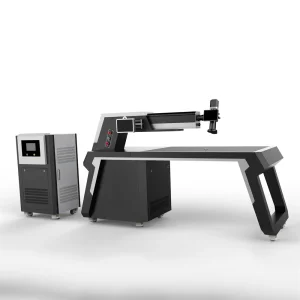


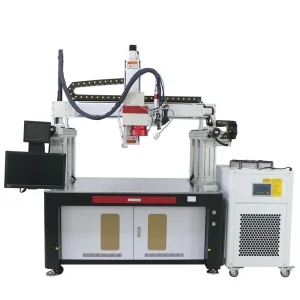
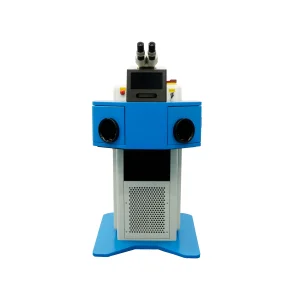
Send your workpieces and alloy specifications to our Shenzhen engineering center for free metallographic sample evaluation, parameter mapping, and a factory-direct quotation.
