Explore our compact, high-precision industrial systems engineered for low thermal distortion, superior metallurgical bonding, and continuous factory operations.

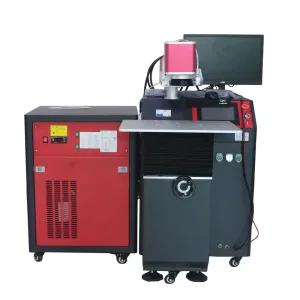
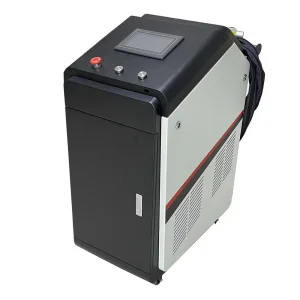

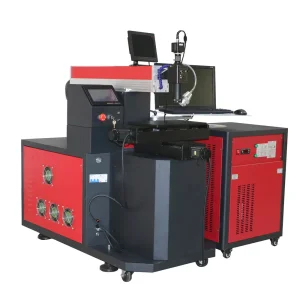
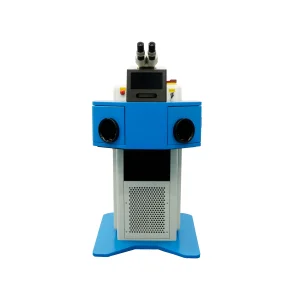
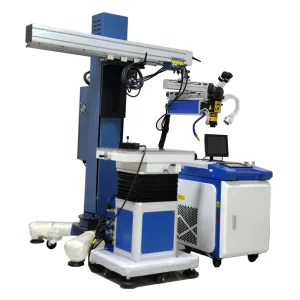
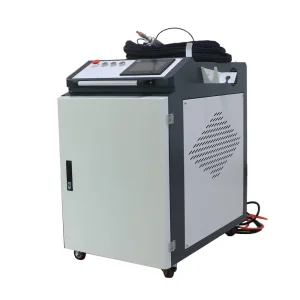
The manufacturing sector is witnessing an accelerated paradigm shift from cumbersome, multi-ton gantry laser setups toward agile, localized, and custom small laser welding systems.
Over the past five years, high-brightness ytterbium fiber laser sources, advanced quasi-continuous wave (QCW) diodes, and oscillating galvanometer optical heads have dramatically compressed in both physical volume and thermal overhead. What previously demanded an isolated cleanroom and a multi-cubic-meter floor footprint can now be integrated directly onto a benchtop, mobile cantilever cart, or modular compact CNC workstation.
For small-to-medium enterprises (SMEs) and specialized tier-2/tier-3 component manufacturers across Europe, North America, Southeast Asia, and Latin America, the economic inflection point has arrived. Manual Tungsten Inert Gas (TIG) and Metal Inert Gas (MIG) welding methods—long plagued by severe heat-affected zones (HAZ), warping of thin gauge alloys, high gas overhead, and an alarming shortage of certified manual welders—are systematically being replaced by small fiber laser welding units ranging from 60W pulsed systems up to 3000W continuous wave (CW) architectures.
At Shenzhen Youmir Laser Technology Co., Ltd. (founding laser R&D team dating back to 2010, incorporated in Shenzhen in 2012, with regional manufacturing branches in Zhongshan and Hunan), our direct export data across 50+ countries reveals a notable surge in demand for tailored, application-specific small laser welders. Industrial buyers are no longer seeking monolithic, one-size-fits-all hardware; they require engineered optical delivery systems, tailored beam spot geometries, customized software interfaces, and turn-key jigs optimized for specific production cycles.
Understanding the fundamental physics behind keyhole formation, beam oscillation dynamics, and optical wave delivery ensures predictable, porosity-free joining across exotic and dissimilar metals.
Fiber laser energy is propagated through flexible quartz fibers with typical core diameters ranging from 14µm up to 100µm. In compact custom welders, single-mode fibers provide exceptional beam quality (M² < 1.2) for fine micro-cutting and deep, high-aspect-ratio penetration welds, whereas 50µm to 100µm multi-mode delivery offers a flatter top-hat power profile ideal for wider gap bridging and cosmetic finishing.
Traditional static spot laser welding suffers from extreme tolerance sensitivity regarding part fit-up (requiring gaps < 0.1 mm). High-speed oscillating mirror heads (Wobble Heads) oscillate the focused spot at frequencies between 50 Hz and 1500 Hz across linear, circular, triangle, and dual-axis figure-8 trajectories. This broadens the weld pool dynamically up to 5.0 mm, dramatically improving fit-up tolerance.
Small-footprint systems must address extreme thermal density. Compact water chillers with dual-temperature circuits independently cool both the laser module cavity (preventing condensation) and the optical collimation/focusing block. In sub-1000W designs, direct-expansion freon loops or emerging high-pressure micro-channel air chillers reduce total machine volume by up to 45% without sacrificing duty cycle.
Comprehensive metallurgical data comparing typical configurations across power bands, optical delivery methods, and target manufacturing materials.
| Equipment Category | Laser Source / Wavelength | Typical Rated Power | Single-Pass Depth (SS/CS) | Heat-Affected Zone (HAZ) | Primary Industrial Utility |
|---|---|---|---|---|---|
| Mini Desktop Jewelry Welder | Pulsed Nd:YAG (1064 nm) | 60 W – 200 W (Peak 6–9 kW) | 0.1 mm – 1.2 mm | < 0.15 mm | Precious metals, prong retipping, orthodontic braces, watchmaking, custom filigree repair. |
| Compact Handheld Laser Welder | Continuous Fiber (1070 nm) | 1000 W – 1500 W | 1.0 mm – 4.0 mm | < 0.40 mm | Sheet metal chassis, commercial kitchenware, HVAC ducting, furniture frames, architectural signs. |
| High-Power Mobile Handheld | Continuous Fiber (1070 nm) | 2000 W – 3000 W | 3.5 mm – 8.0 mm | < 0.65 mm | Heavy structural steel, thick aluminum casings, commercial trailers, pressure vessel seams. |
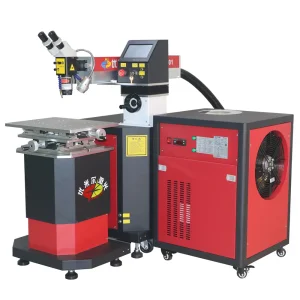
| Cantilever / Boom Mold Repair Welder | Fiber / QCW Hybrid (1070 nm) | 300 W – 600 W (Pulsed/CW) | 0.2 mm – 2.5 mm | < 0.20 mm | Plastic injection molds, stamping dies, casting porosity filling, worn turbine blade edges. |
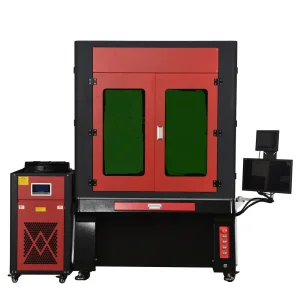
| Enclosed Multi-Axis CNC Welder | High-Brightness Fiber (1070 nm) | 1500 W – 3000 W | 0.8 mm – 6.0 mm | < 0.30 mm | Automated batch manufacturing, EV battery busbars, medical sensors, solenoid valves. |
Small-footprint laser welders unlock unique economic advantages when deployed across specialized workshops and high-mix, low-volume (HMLV) fabrication floors.
Injection mold tooling fabricated from hardened steels (such as NAK80, H13, and P20) frequently experiences corner fatigue, micro-cracks, and parting line chipping. Traditional TIG deposition introduces excessive heat, causing surrounding metal softening and micro-cracking that requires total mold re-annealing. Youmir boom-arm and cantilever mold welders allow operators to direct the laser beam precisely into deep cavities without removing the heavy mold from the injection molding machine, saving days of costly downtime.
Joining copper (C11000) to aluminum (Al 1060) busbars is inherently difficult due to stark differences in melting points, high thermal conductivity, and the formation of brittle intermetallic compounds (IMCs). Our customized galvanometer and CNC laser systems utilize high-frequency circular beam wobble paths combined with controlled pulse modulation. This limits intermetallic growth below 5 microns, delivering exceptional electrical conductivity and mechanical shear resistance in compact cleanroom environments.
High-end jewelry houses working in 18K yellow/rose gold, 925 sterling silver, and 950 platinum require micro-joining adjacent to sensitive gemstones (emeralds, opals, diamonds). Our desktop 60W–200W jewelry series incorporates continuous cross-hair stereomicroscopes with high-speed shutter eye-protection. The laser pulse duration is micro-tunable between 0.1 ms and 20 ms, generating concentrated spot diameters as small as 0.2 mm to re-tip prongs or weld chains without burning or stone discoloration.
In food-contact machinery and 316L medical instrumentation, seam crevices trap bacteria and harbor crevice corrosion. Conventional TIG welds leave rough scale and burn through thin-walled tubular components. Custom small fiber welders emit steady laminar argon shielding, yielding mirror-smooth, oxidation-free hermetic seals that eliminate secondary grinding, wire-brushing, or chemical pickling.
The compact laser processing ecosystem is rapidly transitioning from open-loop manual tools to intelligent, vision-guided, and multi-wavelength processing workstations.
Next-generation small workstations integrate coaxial high-speed CMOS sensors and edge-AI neural networks. The system computes joint deviations in sub-millisecond intervals, adjusting galvanometer offsets and laser power dynamically to guarantee 100% penetration consistency.
Pure copper reflects over 95% of standard infrared (1070 nm) laser energy at room temperature. Integrating a 450 nm blue direct-diode laser provides over 65% baseline optical absorption, while the fiber laser drives deep keyhole penetration with virtually zero spatter.
The ergonomic burden of handheld welding guns during 8-hour shifts is driving rapid cobot adoption. Lightweight 6-axis cobots mounted to mobile laser carts permit rapid path teaching via manual drag-and-drop programming, transforming handheld tools into automated precision cells.
Advancements in high-efficiency Gallium Nitride (GaN) power supplies and micro-channel copper heat pipes will progressively eliminate the bulky deionized water tank, pumps, and refrigerant compressors, yielding 1500W industrial fiber welders under 35 kilograms.
A rigorous CapEx and OpEx financial comparison between conventional joining equipment and custom small laser welders.
When engineering directors and procurement managers evaluate custom small laser welding systems, assessing the purchase price (CapEx) in isolation often leads to flawed operational planning. A rigorous financial review must factor in operational velocity, consumable replacement cycles, electrical efficiency, and post-weld surface finishing labor.
Certified TIG/MIG craftsmen command hourly wages exceeding $35–$65/hour in Western markets, and mastering complex out-of-position welds on aluminum or stainless steel requires years of apprenticeship. Conversely, a modern small laser welder equipped with automatic wobble heads and pre-programmed material parameter libraries allows entry-level operators to produce cosmetically flawless, structurally sound joints within 4 to 8 hours of hands-on training.
In standard sheet metal and architectural fabrications, manual grinding, deburring, and polishing of TIG spatter constitutes up to 40% of total shop labor. Fiber laser welding generates a narrow, smooth, spatter-free bead with virtually undetectable thermal warpage. Fabricated enclosures, appliance cases, and stainless cabinetry can transition directly from the laser cell to powder coating or passivation baths.
Ytterbium fiber laser engines achieve electrical-to-optical conversion efficiencies exceeding 35% to 40%. Compared to aging lamp-pumped YAG systems (which operated at a dismal 2%–3% efficiency) or legacy high-frequency arc welders, daily utility power consumption drops drastically. A standard 1500W fiber welder consumes approximately 5 to 6 kW under full production load, yielding direct utility savings.
Comprehensive engineering guidance directly addressing specifications, utility readiness, OEM custom options, and quote formulations.
Our engineering team bases custom quotes upon five essential criteria: (1) Laser power band (1000W, 1500W, 2000W, or 3000W CW, or 60W–300W pulsed); (2) Optical delivery method (manual ergonomic handheld wobble torch vs. automated galvanometer scanner vs. multi-axis CNC gantry); (3) Material grades and maximum single-pass penetration requirements; (4) Chiller architecture (integrated dual-temperature water loop vs. high-mobility air cooler); and (5) Local regulatory requirements (Class 1 interlocking safety enclosures, CE/FDA certification, and supply voltages such as 110V/220V single-phase or 380V three-phase).
Yes. While solid-state infrared laser light (1070 nm) is largely reflected by cold non-ferrous metals, modern small fiber welders utilize high peak-power densities and high-frequency circular wobble optics to rapidly overcome the initial surface reflection barrier. Once local melting begins, photon absorption increases dramatically. For difficult pure red copper (C11000), using nitrogen or argon shielding gas and slight forward beam tilt angles prevents optical back-reflections into the laser cavity.
Fiber laser modules boast maintenance-free solid-state lifetimes exceeding 100,000 hours (MTBF). The ongoing consumable profile is restricted to: (1) Protective quartz cover slides ($3–$6 each, replaced every 40–120 welding hours depending on cleanliness and spatter); (2) Brass nozzle tips ($4–$8 each); and (3) Shielding gas (industrial-grade Argon 99.99% or Nitrogen 99.999% at flow rates of 12–20 L/min). There are no expensive filaments, electrodes, or vacuum chambers to replace.
We provide a complimentary, structured Sample Evaluation Protocol. Overseas buyers mail their un-welded sample coupons, joint blueprints, and dimensional tolerances to our Guangming District factory in Shenzhen. Our laser metallurgical application engineers run controlled joining trials across varying power, frequency, gas, and wobble patterns. We provide a certified laboratory test report, high-speed macro weld video footage, and cross-section etch inspections with parameter recommendations before you finalize your machine build.
All Youmir machines carry an international 2-year factory warranty on the fiber laser source, along with comprehensive 1-year coverage on optics and chillers. We maintain 24/7 round-the-clock remote video diagnostics, software updates via Ethernet/Wi-Fi, and priority express dispatch for spare lenses, nozzles, and wire-feeder parts through DHL/FedEx/UPS hubs to ensure zero sustained factory downtime.
Explore our heavy-duty industrial series, multi-axis automated boom welders, precision sheet metal cutting systems, and fiber transmission units.
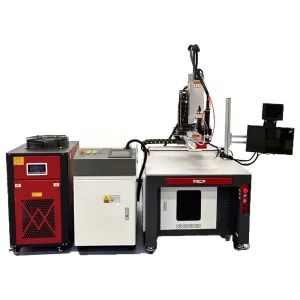
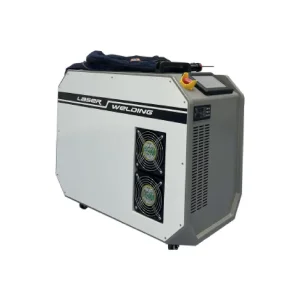




Send your material grades, target thickness drawings, or physical samples directly to our Shenzhen R&D application center. We engineer custom small laser welding systems tailored to your specific production cycle, line integration needs, and export voltage standards.
Consult with a Laser Metallurgical Engineer