
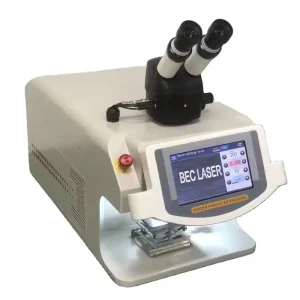
Engineered for extreme tolerance retention, micron-level wire deposition, and structural die-casting renewal.
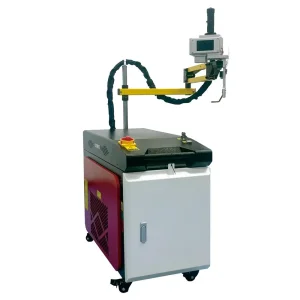
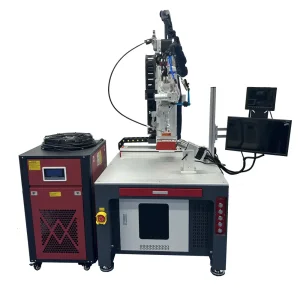
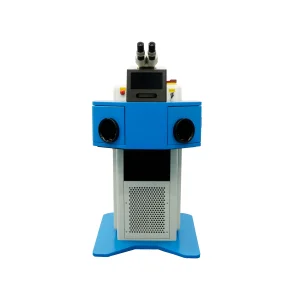
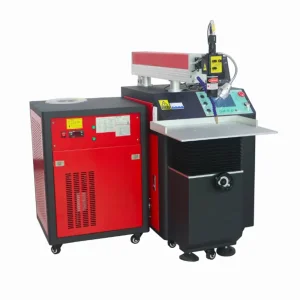
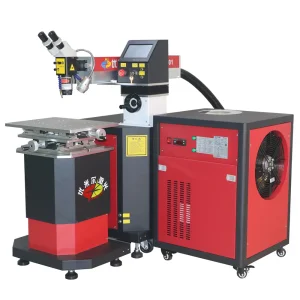

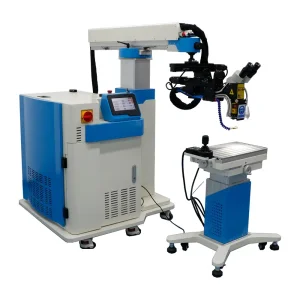
Evaluating the operational physics of micro-deposition laser welding across precision automotive, micro-electronic, and aerospace tooling sectors.
Eliminate heat-affected zone (HAZ) deformation during plastic injection mold gate restoration. Our specialized mold pulse parameters deposit micro-layers of NAK80, H13, and S136 tool steels directly on razor-sharp parting lines without inducing base-metal tempering, annealing, or sink marks.
Repair deep heat checking, cavitation erosion, and severe mechanical spalling on multi-ton hot-work tool blocks. By integrating extended cantilever arms and integrated boom optics, complex cavities are refurbished inside the press room, eliminating lengthy tear-downs and recalibrations.
Restore shear cutting edges on tungsten carbide inserts, high-speed steels (SKH-9/M2), and cold-work D2/Cr12MoV plates. Achieve metallurgical bonding strengths exceeding 95% of native parent metallurgy, allowing seamless wire EDM re-machining with no flaking or micro-cracking.
| Welding Process | Heat Input (HAZ Size) | Thermal Distortion | Filler Wire Diameter | Post-Machining Effort |
|---|---|---|---|---|
| Youmir Quasi-CW Mold Laser | Extremely Low (<0.12 mm) | Virtually Zero / Micron-level | 0.15 mm – 0.80 mm | Minimal (Micro-polishing only) |
| Micro TIG Welding | Moderate (1.2 – 2.5 mm) | High (Requires preheating) | 0.80 mm – 1.60 mm | Extensive CNC Grinding / Milling |
| Resistance Cold Welding | Low (Localized arc) | Low to Moderate | Sheet/Foil Cladding | Prone to delamination under shock |
| Continuous Fiber Handheld | Low to Medium (0.5 – 1.0 mm) | Very Low | 0.80 mm – 1.20 mm | Moderate Edge Profiling Needed |
How our integrated Greater Bay Area engineering ecosystems deliver speed, component consistency, and uncompromised cost efficiency for overseas manufacturers.
We independently calculate laser beam quality (M²), beam expander divergence ratios, and galvo scanning fields, eliminating third-party markups and enabling bespoke focal lengths suited for deep tool pockets.
Strategically anchored in Shenzhen with branches in Zhongshan and Hunan, our facilities access precision CNC machining centers and optical component vendors within a 45-minute logistics perimeter.
Every mold welding station undergoes 72 hours of uninterrupted QCW pulse testing, 45°C thermal chiller endurance validation, and high-frequency optic stability tests before crating.
Tailor everything from gantry dimensions, pneumatic clamping fixtures, multi-axis rotary tables, to proprietary proprietary HMI touchscreens with multilanguage native translations.
Demonstrated engineering impact across global mold-making facilities and automation plants.
Leading the transition from manual microscope welding to autonomous 3D trajectory-compensated die restoration.
Real-time spectral analysis and high-speed CMOS vision continuously monitor pool morphology, automatically adjusting pulse duration (ms) and peak power (kW) at 10 kHz to completely prevent undercut, porosity, and burn-through.
High-resolution blue-light profilometers scan damaged mold cavities, automatically calculating volumetric metal loss and generating 5-axis robotic laser cladding paths with zero manual teaching requirements.
Fusing 1064nm infrared with 532nm green and 450nm blue laser beams to conquer highly reflective non-ferrous molds, such as Beryllium Copper cores and Aluminum 7075 inserts, with zero spatter and ultra-high absorption.
Seamless customs clearance, strict electrical compatibility, and localized overseas lifecycle assurance for every equipment package.
Every unit arrives equipped with dual-channel safety interlocks, OD6+ laser safety viewing optics, emergency stop circuits, and comprehensive CE certification for EU and North American entry.
Pre-wired for region-specific inputs (110V single-phase, 220V split-phase, or 380V/480V 3-phase, 50/60 Hz) featuring industrial Schneider/Siemens electrical switchgear.
Direct remote diagnostic connection via encrypted industrial IoT gateways, coupled with multilingual video engineering walk-throughs and on-site commission options.
Guaranteed 48-hour dispatch on protective quartz cover slides, ceramic rings, specialized nozzles, and graded welding wires directly from regional hub inventories.
In-depth answers addressing thermal stress, metallographic integrity, alloy compatibilities, and ROI thresholds.
Micro TIG welding requires substantial base metal preheating and delivers broad thermal energy that anneals hardened tool steel, causing microscopic sink lines around the perimeter. Laser welding delivers power densities up to 10⁶ W/cm² in millisecond pulses, yielding an HAZ under 0.1 mm. The deposit maintains identical metallurgy with zero sink, making it immediately polishable to an SPI A-1 diamond finish.
Yes. By fine-tuning our proprietary laser pulse profile (peak shaping with programmable preheat ramp and post-anneal decay), our systems weld high-thermal-conductivity materials like Ampcoloy, Beryllium Copper, and high-cobalt Stellite without cold cracks, hot tears, or reflection feedback that could damage the optical fiber.
Our solid-state fiber laser engines are rated for over 100,000 operational hours (MTTF) with zero pump chamber maintenance. The only routine consumables are inexpensive quartz protective cover slides and shielding gas nozzles, requiring replacement only every few hundred hours under normal operational clean-room conditions.
We provide a comprehensive Free Application Testing Service. Send us your worn or test tooling coupons: our laser metallurgical team conducts real-world wire deposition tests, cross-sections the sample, documents micro-hardness gradients (HRC), and generates high-resolution video logs and parametric test reports prior to machine sign-off.
Heavy cantilever structures, high-power sheet cutting, multi-purpose cleaning, and jewelers' workstations directly from our production floor.
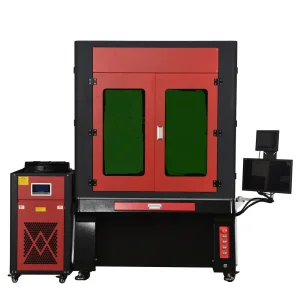
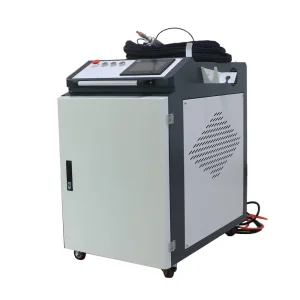
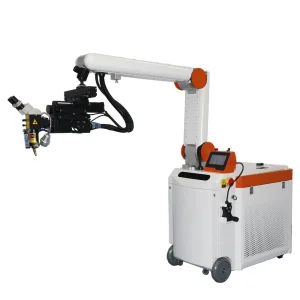
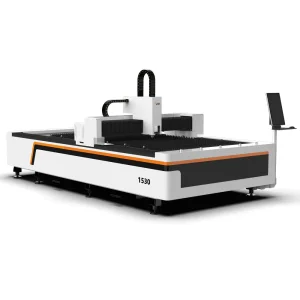
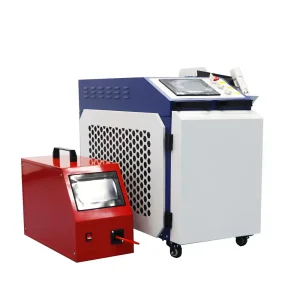
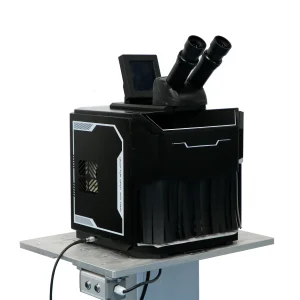
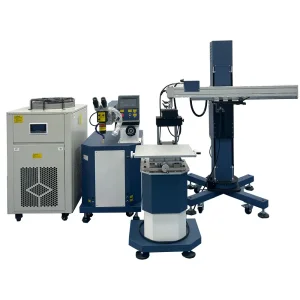
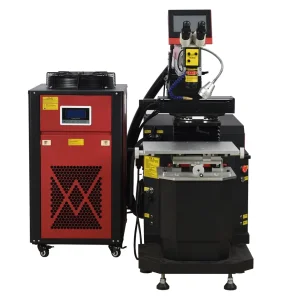
Consult directly with our Shenzhen optical and mechanical laser engineers. Get sample test feasibility reports, parametric guidance, and customized factory pricing.