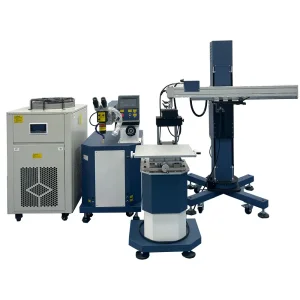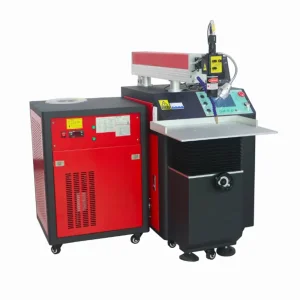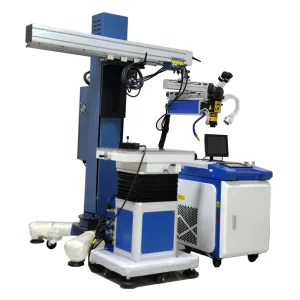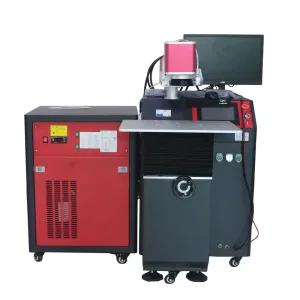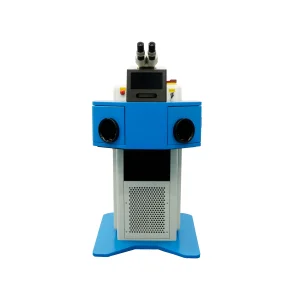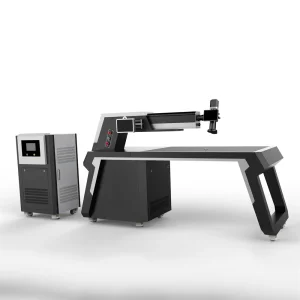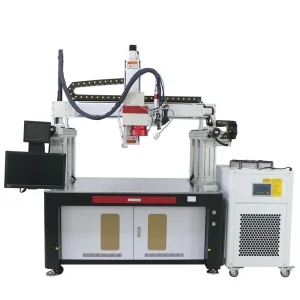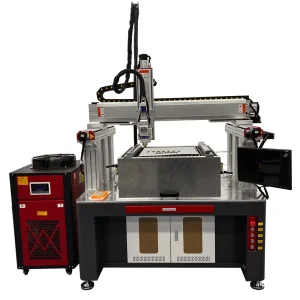
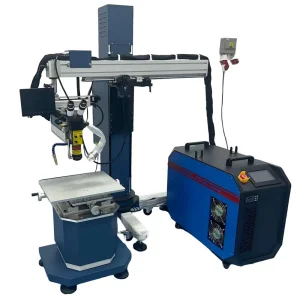
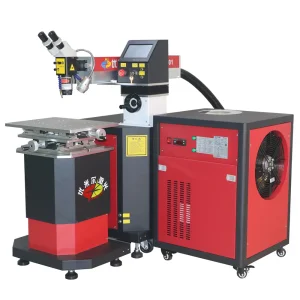
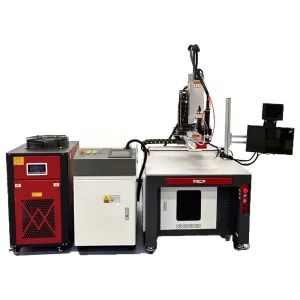
Factory-built optical systems, automated CNC interfaces, and hand-held multi-process laser machinery for mission-critical industrial manufacturing.
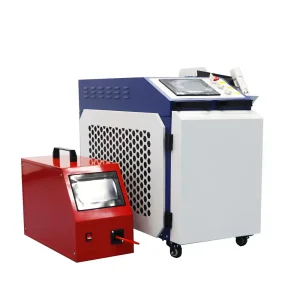
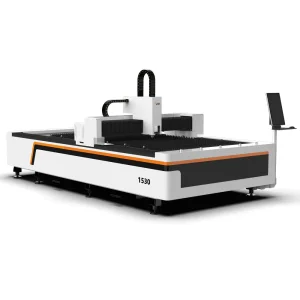
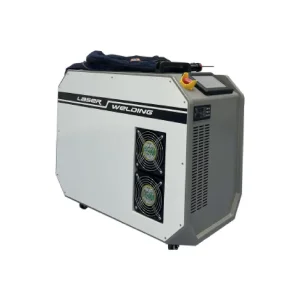
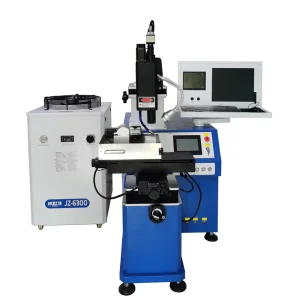
Understanding beam quality (M²), peak-pulse power densities, and thermal dissipation windows for sensitive metallurgical applications.
QCW fiber lasers operate in both continuous and high-peak pulsed states. By accumulating energy over microsecond cycles, a 150W continuous laser yields up to 1500W peak power, generating a keyhole effect without saturating the base substrate with residual heat.
Ideal for heat-sensitive electronics, micro-welding in medical instruments, and high-spec injection mold edge repairs where metallurgical shrinkage or tempering must be strictly prevented.
CW laser sources emit a steady, non-fluctuating photon beam that maintains uniform molten pool convection at linear speeds reaching meters per minute. It is the premier choice for deep penetration and high structural volume manufacturing.
CW is deployed extensively across battery pack busbar consolidation, structural carbon steel assemblies, automated automotive chassis joints, and thick sheet-metal enclosures requiring robust mechanical tensile strength.
Traditional laser spots are static (0.2–0.6 mm), making them prone to bridging voids when seam tolerances fluctuate. Our digital galvanometer systems introduce high-frequency beam oscillation (Circle, Triangle, Line, Infinity patterns).
This dynamic agitation wide-spans the melt pool up to 5 mm, de-gases molten zinc, prevents spatters on galvanized metals, and dramatically improves joint shear tolerances across non-ferrous alloys.
| Parameters & Factors | Standard TIG / MIG Arc | Traditional Nd:YAG Lamp-Pumped | Youmir Continuous CW Fiber | Youmir Custom QCW Fiber |
|---|---|---|---|---|
| Heat Affected Zone (HAZ) | Extremely Large (3.0–8.0 mm) | Moderate (0.8–2.0 mm) | Controlled & Narrow (0.3–0.8 mm) | Ultra-Minimal (< 0.15 mm) |
| Wall-Plug Efficiency | ~15%–20% (High Power Drain) | ~2%–3% (High Lamp Replacement) | > 35%–40% (Maintenance-free) | > 35% (Maintenance-free) |
| Peak vs. Average Ratio | 1 : 1 (Static Arc) | Up to 10 : 1 (Degrading Cavity) | 1 : 1 (Constant Energy) | Up to 10 : 1 (Solid-State Fiber) |
| Welding Precision Limit | Low (Rough welds, heavy slag) | High (Manual microscope) | Micro to High-Speed Macro | Ultra-Precision (Down to 0.05 mm spot) |
| Consumable Overhead | High (Electrodes, Gas, Wire) | High (Xenon Flashlamps, Filters) | Near Zero (Protective Lens Only) | Near Zero (Solid Diode Architecture) |
Analyzing high-growth manufacturing sectors transitioning from legacy thermal joining to automated QCW and continuous laser technologies.
Continuous joining of copper-to-aluminum busbars, prismatic battery cell seal caps, and lightweight battery enclosures with zero spatter and ultra-low internal resistance.
Micro-welding of high-temp titanium alloys, Inconel turbine seals, and sealed sensor casings where structural integrity must meet zero-porosity radiographic standards.
Hermetic joining of pacemakers, endoscopic instruments, surgical tools, and titanium implant fixtures requiring bio-compatible, sterile, smooth-finish welds.
QCW pulse energy repairs fine shearing blades, plastic injection parting lines, and die-casting surfaces on H13, NAK80, and S136 tool steels without base pre-heating.
De-risking offshore machinery procurement with turnkey certification, electrical safety validation, and boots-on-the-ground support channels.
Every laser source and enclosed system is fully certified to EN 60825-1 Laser Safety Class 4 / Class 1 standards. Featuring dual-channel safety interlocks, built-in optical power monitoring, CE LVD/EMC compliance, and ISO 9001 certified assembly protocols.
Configured out-of-the-box for destination countries: Single-phase 110V/220V or 3-phase 380V/480V (50/60Hz). Engineered pneumatic interfaces support standard Argon, Nitrogen, and active shield gases with quick-connect Euro and US industrial couplers.
Direct communication with R&D engineers, not generic resellers. Supported by regional spare-parts hubs across North America, Europe, and Southeast Asia, offering video diagnostic streaming, remote firmware calibrations, and on-site training engineers.
A rigorous five-tier qualification procedure executed inside our Shenzhen application lab to guarantee defect-free parameter windows before capital deployment.
Clients send production coupons. Engineers evaluate material reflectivity, melting points, oxide coatings, and mechanical gap tolerances (Butt, Lap, Corner, T-joint) under optical profilometers.
We execute multi-pass matrix trials adjusting peak pulse width (0.2–20 ms), pulse repetition frequency (PRF), continuous power modulation, and wobble frequency to isolate the ideal plume behavior.
Sample joints undergo cross-sectional microscopy to confirm penetration depth, weld root fusion, zero micro-cracking, and grain refinement, backed by tensile pull testing and hermetic helium leak checks.
Next-generation Youmir CNC welding workstations integrate coaxially aligned infrared cameras and machine-learning plasma spectrometers. By observing molten pool spectral emission in real-time, the system automatically adjusts laser wattage microsecond-by-microsecond, eradicating blow-through and ensuring 99.98% first-pass production yields across unpredictable alloy blends.
Comprehensive clarifications addressing high-level industrial integration, power specifications, and operational economics.
Submit your component specs, CAD drawings, or material combinations to our Shenzhen R&D team for immediate parameter reviews and comprehensive OEM factory quotes.
Advanced boom arm systems, high-speed optical scanner heads, and automated jewelry and signage welders ready for custom OEM/ODM delivery.