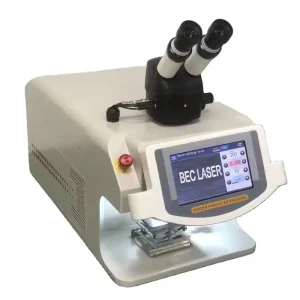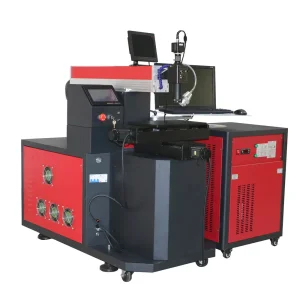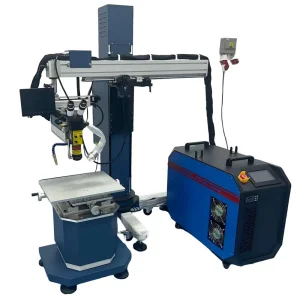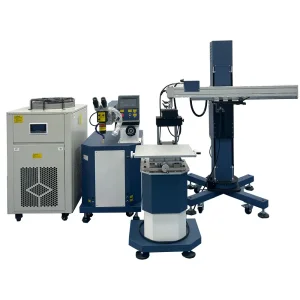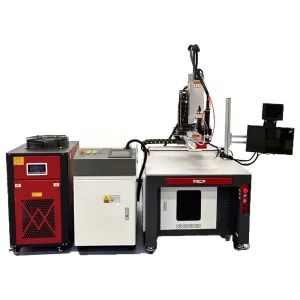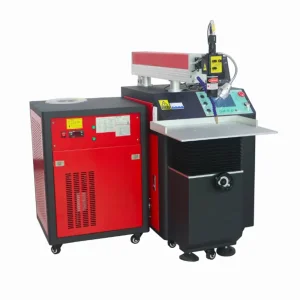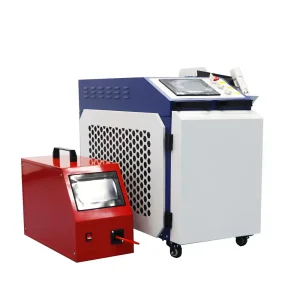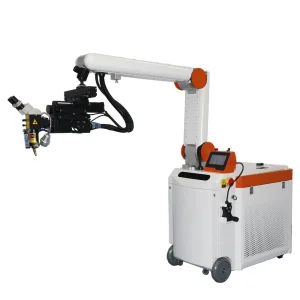
Comprehensive Technical Engineering Guide, Global Sourcing Standards, and Direct Factory Supply Chain Intelligence for Microelectronics and Precision Component Soldering.
Direct OEM & ODM fiber laser systems engineered for high-durability tooling, aerospace micro-welding, and automated micro-joining.
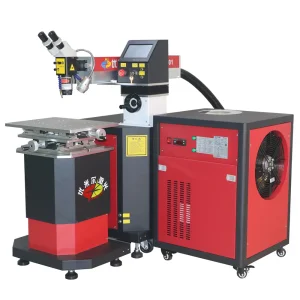
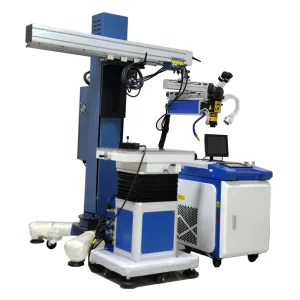
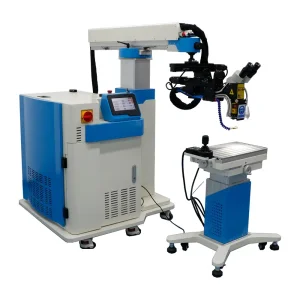
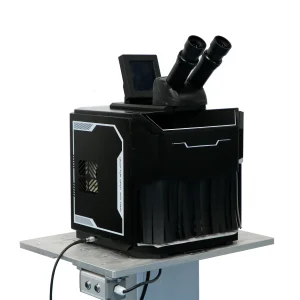
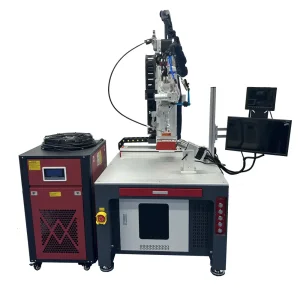
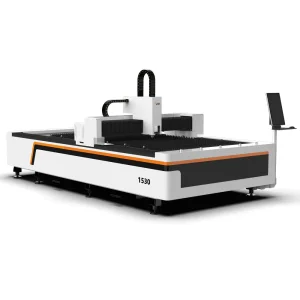
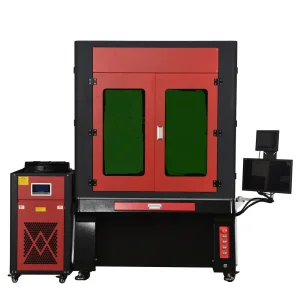
How QCW peak pulse energy delivers thermal stability without substrate degradation across micro-electronics.
Quasi-Continuous Wave (QCW) lasers operate in pulsed states where peak power can exceed continuous power by a factor of 10. This dynamic allows instant thermal melting of eutectic solder alloys (Sn-Pb, SAC305) within milliseconds, preventing intermetallic compound (IMC) embrittlement along substrate pads.
High-tier custom QCW soldering equipment employs in-axis infrared temperature monitoring measuring temperature up to 10,000 times per second. Real-time feedback alters laser pulse profiles instantaneously to prevent thermal stress, delamination, and charred flux residue.
Unlike contact soldering irons or hot-bar soldering tools, non-contact fiber delivery causes zero mechanical wear or board flexing. Fine-pitch array soldering down to 0.15 mm pitch is achieved through multi-axis precision stages combined with coaxial machine vision algorithms.
| Technology Type | Heat-Affected Zone (HAZ) | Intermetallic Layer Control | Energy Transfer Speed | Tooling Wear & Consumables |
|---|---|---|---|---|
| QCW Laser Micro-Soldering | Ultra-Narrow (< 0.05 mm) | Optimal (0.5 - 1.5 µm thickness) | 10 - 50 ms / joint | Non-contact; zero mechanical wear |
| Continuous Wave (CW) Laser | Moderate (> 0.25 mm) | Risk of overgrowth via thermal soaking | Continuous sweep | Optics cleaning only |
| Traditional Hot-Bar / Iron | Wide (Complete Board Heating) | Unstable thickness across multi-layer pads | 2000 - 5000 ms / joint | High wear; frequent iron tip replacement |
Shenzhen's Greater Bay Area holds over 70% of the world's precision optoelectronic manufacturing clusters, shortening procurement lead times and minimizing tooling costs.
Chinese manufacturers maintain complete domestic supply integration—from crystal growth (Nd:YAG/Yb) and fiber Bragg gratings to galvanometer scanning heads. This localized ecosystem slashes BOM (Bill of Materials) costs by 35% to 50% compared to Western counterparts.
Production lines require custom form factors, specific nitrogen shroud nozzles, and proprietary SMEMA line integration. In-house Chinese software and mechanical engineering departments produce functional engineering prototypes in as little as 14 to 21 business days.
Standard QA workflows include 72-hour continuous thermal laser cycling, beam profile inspection with camera-based profilers, and multi-axis repeatability tests using laser interferometers, ensuring zero-drift field deployment for Tier-1 supply chains.
International factory deployments demand cross-border safety certifications, electrical standardization, and factory-level traceability.
Compliance with EN 60825-1 (EU) and FDA CDRH (US 21 CFR 1040.10) requires fully enclosed housings equipped with dual-channel safety door switches, optical viewports with OD6+ attenuation at 1064nm/1070nm, and redundant emergency shutoffs.
Machines must configure seamlessly to global industrial grids (110V single-phase, 220V split-phase, or 380V/400V 3-phase). CE, UL-certified switchgear, and EMC filtering ensure high immunity to electrical line transients within heavy automated assembly floors.
Leading suppliers back operations through localized replacement optic hubs across Europe and North America, cloud-connected diagnostics for remote logic and motion troubleshooting, and on-site training for process engineers within 48 to 72 hours.
Where customized QCW laser soldering creates measurable economic moats for contract manufacturers.
Soldering voice coil motor pins and image sensor flex circuits without thermal distortion of surrounding optical lenses or barrel housings.
Joining radar pins, tire pressure monitoring sensors (TPMS), and high-frequency wire harnesses that must withstand continuous road vibrations.
Biocompatible micro-soldering of multi-lead platinum-iridium electrode ribbons onto ultra-thin polyimide flexible substrates.
Next-generation packaging of co-packaged optics (CPO) requiring flux-free soldering under nitrogen/formic acid purged atmospheres.
Engineered responses addressing design specifications, thermal limitations, and RFQ generation for QCW laser soldering equipment.
Expand your automated production capacity with tailored fiber, boom-arm, multi-axis, and open CNC equipment options.