Direct-from-factory laser repair welders, cleaning stations, and automated workcells engineered for heavy tooling, plastic injection molds, and stamping dies.







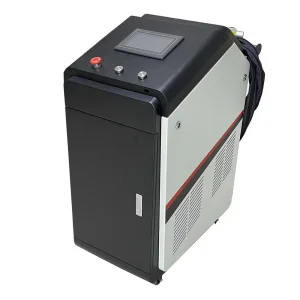
Evaluating the multi-billion dollar shift from conventional furnace pre-heating and TIG overlay welding toward sub-millimeter pulsed Nd:YAG laser deposition.
In modern automotive Tier-1 body panel stamping and multi-cavity medical injection molding, an unplanned tooling shutdown costs between $4,500 and $32,000 per hour. Traditional furnace preheating and Micro-TIG welding take 24 to 72 hours and induce high thermal distortion, requiring post-weld EDM or CNC re-machining. Pulsed Nd:YAG laser welding allows localized repairs directly inside the press shop within two hours.
Hardened tool steels such as AISI H13, DIN 1.2344, NAK80, and S136 suffer severe martensitic embrittlement and micro-cracking when subjected to excessive thermal input. Pulsed Nd:YAG systems emit a 1064 nm wavelength concentrated into a micro-spot (0.2–2.0 mm) with pulse durations of 0.5–20 milliseconds. This precise energy delivery restricts the Heat-Affected Zone (HAZ) to less than 100 microns, eliminating substrate annealing and base metal sinking.
Procurement teams in North America, Western Europe, and Southeast Asia are shifting away from European laser integrators that carry high brand premiums. Direct OEM partnerships with certified Chinese manufacturers offer equivalent optical delivery systems and pulse-shaping control boards at a 35% to 55% lower Total Cost of Ownership (TCO), with rapid availability of critical replacement optics.
An insider look into Shenzhen's optoelectronic industrial cluster, proprietary pulse boards, and precision engineering scalability.
Shenzhen Youmir Laser Technology Co., Ltd. operates within China's premier optoelectronic corridor in Guangming District, Shenzhen. Within a 30-kilometer radius, our facility is supported by world-class precision CNC bed fabricators, specialized dielectric optical coating labs, and automated xenon flashlamp manufacturing centers. This geographic clustering eliminates international component transit delays, compresses prototype development cycles from months to days, and insulates overseas buyers from localized supply disruptions.
Unlike Western assembly plants that outsource mechanical fabrications, our in-house facility executes precision boring, structural annealing of boom-arms, gold-plated reflector chamber polishing, and custom firmware flashing under one roof.
The core challenge of repairing beryllium copper, pre-hardened 718 steel, or stellite alloys is thermal shock cracking. Youmir Laser engineers have developed proprietary 32-bit DSP microcontrollers capable of 16-segment pulse shaping. Operators can configure custom ramp-up profiles (for preheating), holding plateaus (for uniform wire fusion), and controlled ramp-down stages (for gradual quench-rate deceleration).
This digital pulse precision eliminates center-line solidification cracks in tricky P20 and tool-grade aluminum repairs, achieving structural bonding strengths that match or exceed original substrate metallography.
Evaluating technical, operational, and metallurgical parameters across pulsed Nd:YAG, continuous fiber, micro-TIG, and QCW laser systems.
| Performance Parameter | Pulsed Nd:YAG Laser (Our Core) | Continuous Wave (CW) Fiber | Quasi-Continuous (QCW) Fiber | Micro-TIG / Argon Arc |
|---|---|---|---|---|
| Target Application | High-Precision Molds, Parting Edges, Micro-Cracks | Sheet Metal Seams, Deep Cladding | Micro-Electronics, Fine Mold Corners | Rough Structural Steel Builds |
| Heat-Affected Zone (HAZ) | < 0.10 mm | 0.50 – 1.80 mm | < 0.08 mm | 2.0 – 4.50 mm (High Warpage) |
| Minimum Spot Diameter | 0.15 mm – 0.30 mm | 0.80 mm – 2.0 mm | 0.05 mm – 0.20 mm | 1.5 mm – 3.0 mm |
| Micro-Hardness Retention | 95% – 102% of Parent Substrate | Anneals Base Steel (Drop 15-20%) | 98% – 102% Retention | Severe Annealing & Sink Marks |
| Filler Wire Gauge Range | 0.15 mm to 0.80 mm | 0.80 mm to 1.60 mm | 0.10 mm to 0.40 mm | 1.0 mm to 3.2 mm |
| Post-Weld Machining Need | Minimal / Diamond Hand Polish | Moderate to Heavy Grinding | Zero to Light Polish | Extensive CNC Milling / Re-EDM |
| Equipment Investment (Capex) | Economical ($7,000 – $15,000) | Medium ($11,000 – $22,000) | Premium ($18,000 – $38,000) | Low ($2,500 – $6,000) |
Engineered configurations addressing specific toolroom challenges across diverse manufacturing sectors.
Large injection molds for vehicle bumpers, instrument panels, and exterior sheet metal drawing dies weigh between 5 and 40 tons. Moving these tools to a machine shop table is impractical and risky. Our Cantilever Boom-Arm Laser Welders feature a 360-degree rotating optical head with an outreach up to 1.8 meters. The system docks directly alongside the injection molding press or stamping press for in-situ repairs without teardown.
Syringe barrels, microfluidic chips, and optical polycarbonate lenses require mirror-polished cavity surfaces (SPI A-1 finish) on stainless steels like S136 or Stavax ESR. Traditional welding introduces micro-porosity and grain boundary carbide precipitation that ruins mirror finishes. Our YAG laser welders, combined with pure Argon-shielded laminar nozzles and ultra-fine 0.2 mm wire, ensure deposit density with no gas inclusions or pinhole defects.
High-pressure aluminum die-casting tools (castings for EV battery trays, motor housings) endure repeated thermal cycling from 650°C molten alloy, causing surface network micro-cracking ("heat-checking"). Standard shop methods require grinding away substantial block mass. Nd:YAG laser deposition allows selective crack excavation and precise re-filling with matching H13 or premium maraging alloy wire, extending expensive tool life by 300,000+ shots.
Key technological evolutions shaping toolroom repair systems over the next five years.
The traditional mold repair process relies heavily on manual artisan control through a stereo microscope. Next-generation systems integrate structured-light 3D scanning optical heads directly onto the boom. The machine compares the worn cavity geometry against the native STEP CAD file, automatically isolates volumetric wear, and plans an automated multi-layer welding path with micro-wire deposition.
While flashlamp-pumped Nd:YAG remains the cost-to-performance leader for deep mold repairs, Quasi-Continuous Wave (QCW) fiber lasers are gaining ground in high-precision, low-maintenance settings. QCW delivers peak powers up to 6 kW with wall-plug electrical efficiency exceeding 30%. Dual-source hybrid machines featuring interchangeable optical heads will become the enterprise standard for elite toolmakers.
To prevent accidental overheat-induced micro-sink marks, optical pyrometers mounted coaxially through the beam delivery path monitor molten pool temperature at 10 kHz sampling rates. If heat buildup approaches the critical tempering threshold of the base steel, the digital pulse controller dynamically throttles pulse energy and width in real time.
A structured technical framework for international procurement teams evaluating supplier capabilities, component pedigrees, and warranty guarantees.
To ensure zero factory downtime, international buyers should request a factory spare-parts bundle with their equipment shipment:
Direct technical answers from our senior applications engineering team covering power sizing, alloy selection, and maintenance.
Explore our broader industrial lineup of multi-axis automated CNC welders, heavy-duty sheet cutters, cantilever repair units, and high-precision jewelry welders.
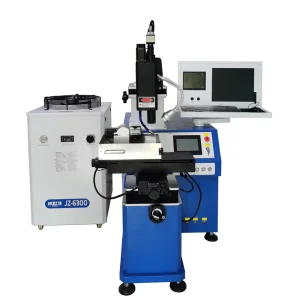
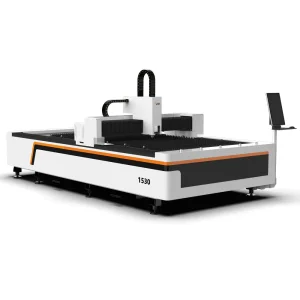






Share your mold material grade, typical defect geometries, and monthly repair volumes. Our application engineers in Shenzhen will prepare a customized weld parameter schedule, tooling layout, and formal FOB/CIF quote within 12 hours.
Guangming District, Shenzhen, China
Email: [email protected] Tel / WhatsApp: +86-137-8778-7637