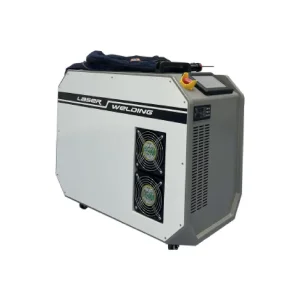
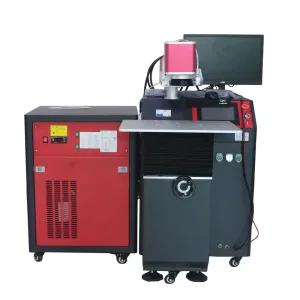
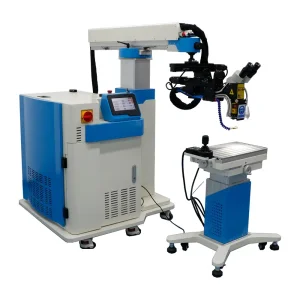
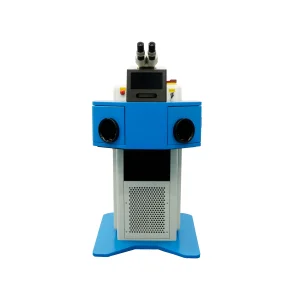
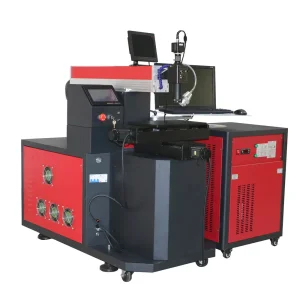
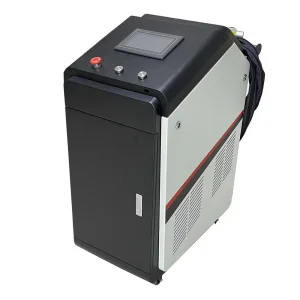
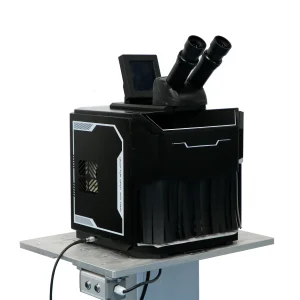
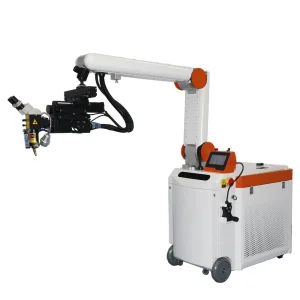
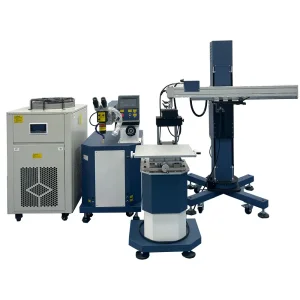
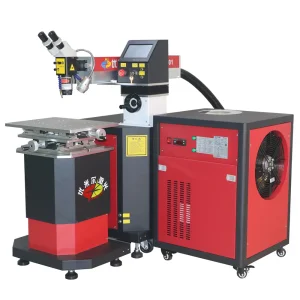
Explore our high-performance industrial laser cleaning, welding, and automated processing workstations trusted by fabricators and manufacturers across 50+ countries.
Understanding the actual total cost of ownership (TCO) across Continuous Wave (CW) and High-Peak Pulsed MOPA laser cleaning technologies.
| System Architecture | Source Category | FOB Shenzhen Price Tier | Typical Ablation Rate | Substrate Safety | Primary Industrial Use-Case |
|---|---|---|---|---|---|
| 1000W Handheld CW | Continuous Fiber (Raycus / Max) | $4,500 – $6,800 USD | 12 – 18 m²/hr | Thermal HAZ Present | Structural steel, heavy corrosion, ship hulls, fabrication weld pre-cleaning |
| 1000W Pulse MOPA (Standard) | High Peak Pulsed (JPT / Raycus) | $18,000 – $24,500 USD | 6 – 10 m²/hr | Zero Substrate Micro-Damage | Aerospace components, composite molds, nuclear maintenance, historical restoration |
| 1000W Automated Robotic Cell | Integrated CW / Pulse Dual | $28,000 – $42,000 USD | Programmable Path Speed | Strict Precision Tolerance | EV battery tray de-coating, automotive chassis degreasing, pipe inner-walls |
| 4-in-1 Multifunction (1000W) | Weld / Clean / Cut / Seam | $5,200 – $7,500 USD | 8 – 14 m²/hr (Clean mode) | Mild Thermal Impact | Contract fabrication job-shops, container repair, mobile maintenance vehicles |
Continuous wave 1000-watt systems utilize continuous diode-pumped fiber resonators. Their engineering advantage stems from massive photonic output density per dollar, making them 65-75% more cost-effective for large-surface derusting where base metal grain alteration is tolerable.
Pulsed 1000W laser cleaning systems deliver peak optical power exceeding several megawatts in ultra-short nanosecond bursts. This triggers instantaneous thermoelastic ablation rather than thermal burning, preserving the base metal morphology without micro-cracking.
Compared to traditional sandblasting, dry-ice blasting, and chemical dipping, laser rust removal slashes consumable operational costs to near zero. Electricity and occasional protective window replacement represent the sole operational expenditures.
A rigorous examination of energy fluence thresholds, optical absorption spectra, and high-frequency beam oscillating optics.
Every substance exhibits a critical ablation fluence ($J/cm^2$). Rust (predominantly Iron(III) oxide-hydroxide $FeO(OH)$ and hematite $Fe_2O_3$) has a significantly lower optical vaporization threshold than base carbon steel or ductile iron. The 1000W beam delivers an intensity that flash-evaporates the contaminant layer while the underlying metallic substrate reflects the 1064nm wavelength harmlessly.
Traditional single-mirror optical scanning produces linear streaks and uneven energy distribution. Youmir Laser integrates proprietary high-speed dual-galvanometer wobble heads that execute complex 2D geometric patterns—including spiral, sinusoidal, circular, and cross-hatch. This distributes energy evenly and prevents excessive heat accumulation at edge turnarounds.
When high-frequency nanosecond pulses strike the rust crust, the extreme localized energy gradient creates supersonic plasma detonation. This mechanical shockwave shatters the brittle corrosion interface into micro-particulates, which are cleanly evacuated via co-axial fume extraction before any ambient re-deposition can occur.
1000 Watt fiber lasers emit non-visible infrared radiation at 1064nm (1.064 μm). Industrial deployment mandates Class 4 safety controls: optical density OD 6+ certified protective eyewear, interlocked enclosure zones, dynamic optical plume exhaust filtering (HEPA + activated carbon), and compliant training aligned with IEC 60825-1 and ANSI Z136.1 frameworks.
Direct from Shenzhen—the world's photonics silicon capital—discover how our localized supply cluster delivers unparalleled quality assurance, lead-time compression, and cost advantages.
Unlike assembly-only aggregators, Shenzhen Youmir Laser Technology Co., Ltd. (incorporated in 2012, R&D roots since 2010) engineers its own optical systems, proprietary galvanometer motion controllers, and ergonomic cleaning heads. With manufacturing facilities spanning Shenzhen, Zhongshan, and Hunan, our production line handles sheet metal fabrication, optical alignment, and dual-loop thermal engineering under one roof.
Our strategic partnerships with tier-1 component suppliers—including Raycus, Maxphotonics, JPT, Schneider Electric, and Omron—ensure unmatched component-level traceability. Every batch of collimating lenses, protective mirrors, and fiber delivery cables undergoes rigorous optical interferometry and thermal load testing before assembly.
Every 1000 Watt machine leaving our Shenzhen plant undergoes 72 hours of uninterrupted optical power stability testing, thermal imaging dissipation audits, and vibrational resilience qualification. Overseas distributors receive complete test logs, beam quality factor ($M^2$) certificates, and calibrated parameter documentation.
From deep-sea maritime retrofits to cleanroom micro-electronics, how 1000W laser cleaning optimizes production line cycle times.
Ballast tank maintenance, hatch coaming derusting, and hull weld seam inspection. Laser rust removal bypasses abrasive media cleanup, permitting parallel trade work in confined shipyard zones.
Electrophoretic paint stripping, brake caliper refurbishment, and classic car frame restoration. Cleans intricate curves and stamped brackets without eroding parent metal thickness.
Pipeline flange face cleaning, atmospheric storage tank corrosion rehabilitation, and offshore rig weld nondestructive examination (NDE/NDT) surface pre-treatment.
Carbonized polymer residue, vulcanized rubber release, and tire mold maintenance. Cleans fine micro-textures and venting slots online at working temperatures up to 250°C.
A quantifiable technological comparison for corporate investment committees, plant managers, and procurement directors.
| Evaluation Parameter | 1000W Fiber Laser Cleaning | Sand / Grit Blasting | Chemical Acid Pickling | Dry Ice Pelleting |
|---|---|---|---|---|
| Direct Consumable Cost | $0 (Electricity only) | High (Abrasive media + freight) | High (Solvents, neutralizers) | Very High (Liquid $CO_2$ pellets) |
| Post-Process Waste Disposal | Dry dust collected via HEPA | Hazardous silica/heavy metal grit | Toxic chemical effluent sludge | None ($CO_2$ sublimation) |
| Base Metal Profile Alteration | None (Pulsed) / Minimal (CW) | Severe surface erosion & pitting | Hydrogen embrittlement risk | None |
| Operator PPE & Ergonomics | Laser safety goggles + mask | Full blast helmet, heavy suit | Respirators, acid aprons | Thermal gloves, ear defense |
| Automation Compatibility | Seamless CNC / 6-Axis Robot | Difficult, high abrasive wear | Batch dip tanks only | Moderate nozzle freezing |
| Hourly Operating Cost | $0.80 – $1.40 USD / hr | $14.00 – $28.00 USD / hr | $18.00 – $35.00 USD / hr | $40.00 – $75.00 USD / hr |
Real-world inquiries from international purchasers, safety compliance officers, and plant engineers.
Explore additional continuous wave, pulsed, mold-repair, and specialized CNC laser manufacturing hardware engineered in our Chinese factories.
Connect directly with our Shenzhen laser application engineering team. Receive customized system configurations, CIF/DDP freight calculations, and complimentary workpiece trial reports within 24 business hours.