Precision engineered by Shenzhen Youmir Laser Technology Co., Ltd. for extreme duty cycles, structural integrity, and versatile metallic joinery.




The global metal fabrication landscape is navigating an unprecedented structural shift. Legacy Gas Tungsten Arc Welding (GTAW/TIG) and Gas Metal Arc Welding (GMAW/MIG) are increasingly supplanted by continuous wave (CW) industrial fiber laser systems. Operating at near-infrared wavelengths (typically 1070 nm ± 10 nm), handheld fiber laser welding transforms thermal transfer dynamics through exceptional power density, enabling deep keyhole penetration welding alongside ultra-narrow heat-affected zones (HAZ).
In conventional arc welding, energy transfer efficiency rarely exceeds 30–45%, dissipating vast amounts of excess heat into the parent metal. This creates severe macroscopic thermal distortion, residual mechanical stresses, and grain boundary precipitation that compromises corrosion resistance in austenitic stainless steels and high-strength alloys. In contrast, handheld fiber laser welding achieves electrical-to-optical wall-plug conversion efficiencies between 35% and 42%. By concentrating 1000 W to 3000 W of laser energy into a high-intensity focal spot between 0.15 mm and 0.3 mm, the laser beam vaporizes the substrate almost instantaneously, creating a sustained vapor capillary (keyhole) surrounded by molten metal. The subsequent rapid cooling minimizes metallographic phase alteration and virtually eliminates post-weld straightening and secondary grinding operations.
A persistent operational barrier for traditional direct-beam laser systems was strict joint fit-up tolerance (<0.1 mm seam clearance). Modern industrial handheld welders eliminate this limitation through dual-axis galvanometer oscillation ("wobble") technology integrated directly into the hand torch. By scanning the beam across the seam at oscillating frequencies from 5 Hz to 300 Hz in circular, linear, triangular, or hourglass profiles, the effective beam width expands up to 5.0 mm. When coupled with automated dual-drive continuous wire feeding, the system accommodates root openings up to 2.5 mm while generating smooth, cosmetically uniform fish-scale bead profiles.
Energy densities exceeding 106 W/cm2 concentrate thermal action specifically along the seam, reducing total thermal consumption by over 80% compared to traditional TIG procedures.
Linear travel velocities consistently reach 15 mm/s to 50 mm/s on carbon and stainless steels up to 4 mm thickness, delivering 2x to 5x productivity gains over conventional pulsed TIG welding.
While mastering high-purity TIG welding on reactive alloys requires years of certified apprenticeship, operators achieve consistent, structural x-ray quality laser welds within 24 to 48 hours of baseline training.
Ex-Factory Shenzhen pricing guidelines for 2026-2027 enterprise procurement, itemized across emitter architectures, chilling modules, and optical assemblies.
| Optical Output | Cooling Architecture | Max Penetration (SS / CS) | Max Penetration (Al / Cu) | Standard Components | Ex-Factory Price (USD) |
|---|---|---|---|---|---|
| 1000 W CW | Dual-Circuit Chiller / Active Air | 3.0 mm / 2.5 mm | 1.5 mm / 1.0 mm | Single Wobble Head, Auto Wire Feeder | $2,800 – $3,600 |
| 1500 W CW | Refrigerated Dual Water Loop | 4.5 mm / 4.0 mm | 3.0 mm / 2.0 mm | Dual-Axis Wobble Torch, 10m Armor Cable | $3,400 – $4,500 |
| 2000 W CW | Refrigerated Dual Water Loop | 6.0 mm / 5.5 mm | 4.5 mm / 3.0 mm | High-Power Wobble, Smart Touch HMI | $4,600 – $6,200 |
| 3000 W CW | High-Capacity Water Chiller | 8.5 mm / 8.0 mm | 6.5 mm / 4.5 mm | Heavy-Duty Optical Head, Dual Feeders | $7,200 – $9,800 |
| 3-in-1 / 4-in-1 Multi | Integrated Chiller Cabinet | Per Laser Source (1.5–3kW) | Weld, Cut, Rust/Oxide Clean | Multi-Nozzle Set, Quick-Change Optics | $4,200 – $8,500 |
A rigorous financial appraisal of industrial welding must account for continuous operational variables, consumables consumption, secondary finishing labor, and energy throughput over a 36-month service cycle:
A standard 2000W fiber laser draws roughly 6.5 kW to 7.5 kW total line power under continuous keyhole welding. Delivering comparable penetration depths via legacy arc equipment requires multi-pass TIG runs consuming over 18 kW to 24 kW per meter of completed weld, cutting energy expenditures by up to 60%.
Because handheld laser welding travels at significantly higher speeds (3x to 5x faster than manual TIG), shielding gas volume per linear meter of weld seam drops from 12–15 L/min sustained over several minutes down to 10–12 L/min over fractional cycle times, reducing argon/nitrogen consumable costs dramatically.
In structural stainless steel and architectural enclosures, post-weld abrasive dressing, flap-disc grinding, and acid pickling frequently consume 40% to 60% of total shop labor. Fiber laser seams require virtually zero abrasive touch-ups, unlocking massive direct labor savings for fabrication plants.
China accounts for more than 70% of the world's commercial fiber laser system output. At the center of this industrial concentration is the Pearl River Delta / Greater Bay Area, with Shenzhen serving as the core innovation and manufacturing hub. Shenzhen Youmir Laser Technology Co., Ltd. (incorporated in Shenzhen in 2012, with technical roots established in 2010) exemplifies the direct industrial efficiencies delivered by this ecosystem.
Within a 30-kilometer perimeter across Shenzhen's Guangming and Bao'an districts, our factories source ultra-pure fused silica collimating lenses, galvanometer servo mirrors, high-capacity dual-loop water chillers, and precision CNC chassis. This reduces procurement lead times to mere hours and prevents international supply bottlenecking.
Rather than acting as simple box-assemblers, Tier-1 Chinese manufacturers like Youmir engineer internal optical path designs and digital control firmware in-house. This gives engineers direct control over pulse shaping algorithms, wobble frequency curves, and customized multi-language HMI software architectures.
Our Shenzhen facility operates dedicated optical laboratories where every fiber laser module undergoes a continuous 48-hour full-power burn-in test. We evaluate optical output stability, beam propagation parameter (BPP), and thermal chiller recovery before granting export packaging clearance.
High-powered handheld lasers generate concentrated optical radiation classified under international protocols as Class 4 Laser Systems. Deploying these units globally demands strict statutory compliance.
Exported machinery complies with the European Machinery Directive 2006/42/EC, Low Voltage Directive 2014/35/EU, EMC Directive 2014/30/EU, and EN 60825-1:2014 safety standards. For US markets, equipment is configured with FDA/CDRH accession numbers, key-switch interlocks, optical beam shutters, and remote terminal connections.
To protect operators and nearby personnel, our handheld welding guns integrate an intelligent safety circuit. The laser trigger remains electrically inhibited until the copper welding nozzle maintains direct electrical continuity with the grounded workpiece clamp, preventing accidental in-air emission.
Operating in 50+ countries requires responsive localized after-sales support. We supply regional distributors and manufacturing plants with plug-and-play spare parts kits (quartz protective windows, focus lenses, collimation seals, and wire-feed nozzles) paired with 24/7 video diagnostics from Shenzhen laser engineers.
Next-generation phase-change heat dissipation and high-efficiency micro-channel compressors eliminate heavy deionized water chillers, reducing machine footprint and weight down to under 40 kg for agile job-site structural joinery.
State-of-the-art handheld workstations allow operators to alternate between structural seam welding, metal cutting, rust/paint surface cleaning, and post-weld bead passivation simply by swapping optical nozzle tips and recalling digital presets on the touchscreen.
Handheld laser heads increasingly feature standardized robotic mounting brackets and industrial bus communication interfaces, enabling swift transition between manual handheld mode and automated 6-axis collaborative robot (Cobot) production cells.
Fiber laser absorption curves vary widely across elemental compositions. Selecting the appropriate power capacity requires evaluating thermal conductivity, reflectivity, and metallurgical cracking susceptibility:
Features high optical absorption and low thermal conductivity. Enables rapid keyhole formation with minimal surface oxidation when shielded with commercial Argon (99.99%) or high-purity Nitrogen to preserve corrosion-resistant chromium oxide films.
Delivers high tensile joint strength. Using dual-axis wobble oscillations with standard ER70S-6 filler wire reliably bridges mill scale and surface oxides, producing smooth, defect-free root passes.
Highly reflective with aggressive thermal dissipation. Successfully welding aluminum requires a minimum of 1500W to 2000W of optical energy paired with ER4043/ER5356 filler wire to prevent solidification cracking.
Detailed answers addressing laser power calibration, maintenance schedules, joint fit-up requirements, and international plant integration.
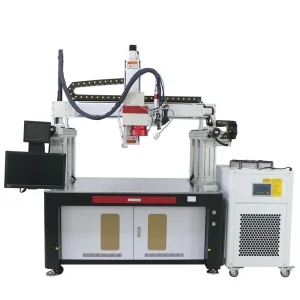
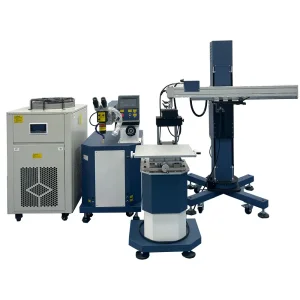
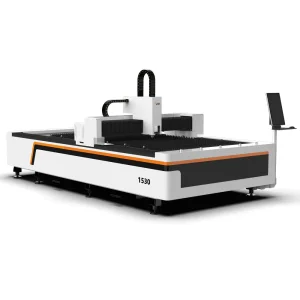
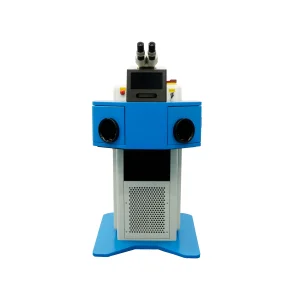
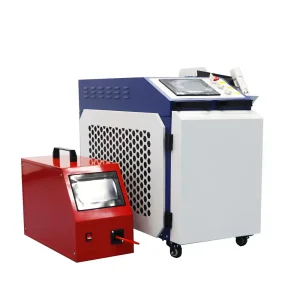
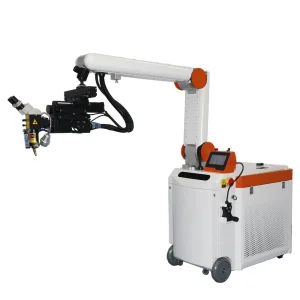
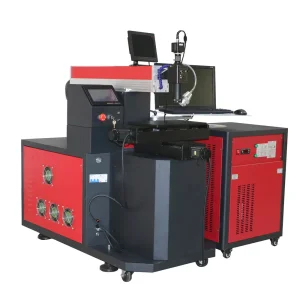
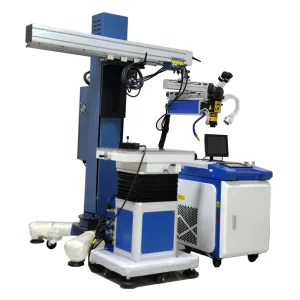
Explore our specialized heavy industrial cantilever, mold restoration, high-precision galvanometer, and automated cutting machinery.




Prior to executing volume procurement orders or establishing OEM/ODM distribution partnerships with Chinese laser manufacturers, enterprise engineering teams should apply the following factory qualification criteria:
Verify whether the manufacturer sources directly from Tier-1 optical fiber emitter producers with full factory serial tracing, avoiding second-tier relabeled components.
Require documented evidence of a continuous 48-hour environmental burn-in run under 40°C ambient temperatures, verifying that optical output fluctuation remains within ±1.5%.
Ensure that all safety circuits feature true dual-channel electromechanical relays with less than 5 ms shutoff response, rather than solely relying on software-level logic interrupts.
Confirm that optical nozzles, collimating lenses, and focus window dimensions adhere to universal standard specifications to avoid locked-in proprietary pricing schemes.
