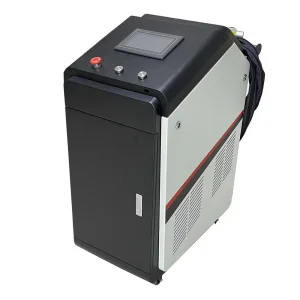
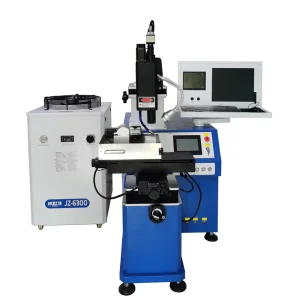
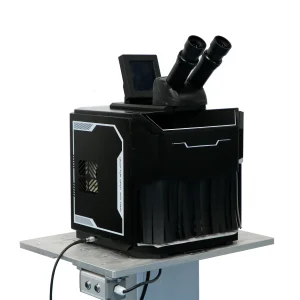
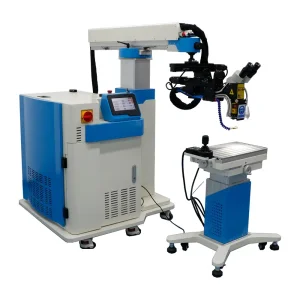
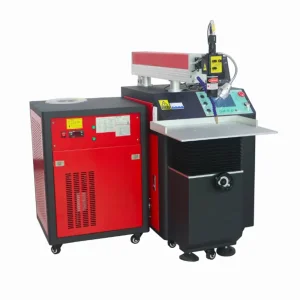
Explore our Shenzhen factory-manufactured industrial fiber laser cleaning, continuous laser welding, and automated cutting machinery engineered for extreme duty cycles and minimal thermal impact.
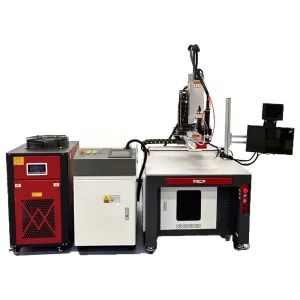
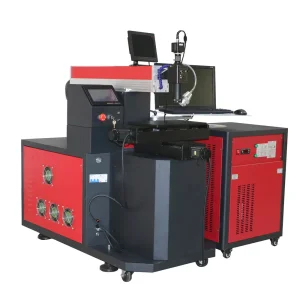

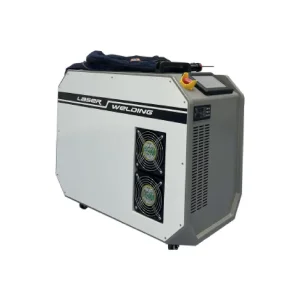
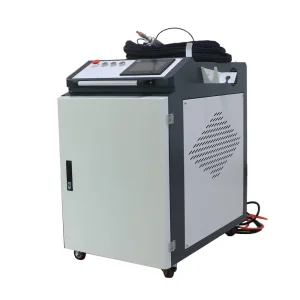

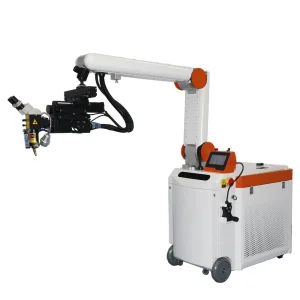
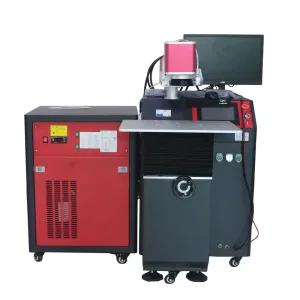
Modern heavy manufacturing, shipbuilding, semiconductor lithography, and aerospace maintenance are undergoing a historic, mandatory pivot away from abrasive grit blasting, hazardous chemical pickling, and dry ice blasting toward non-contact laser surface decontamination.
Compound annual growth driven by ESG directives and VOC bans.
Elimination of abrasive media disposal and chemical recovery costs.
Continuous operational lifespan without optical cavity realignment.
Compliant with ISO 14001, OSHA respirable silica, and EU REACH.
Across the European Union, North America, and high-precision Asian manufacturing belts, stringent environmental regulations such as OSHA 29 CFR 1926.1153 (respirable crystalline silica limits) and the European Green Deal Circular Economy Action Plan have rendered traditional sandblasting and toxic acid baths economically unviable. Industrial grit blasting introduces severe respiratory risks, micro-cracks on structural metal substrates, and immense hazardous waste disposal fees. In contrast, high-power fibre laser cleaners vaporize contaminants via localized thermo-elastic stress, delivering bare metal substrates with pristine molecular cleanliness (Sa 3.0 / ISO 8501-1 standards) without abrasive media contamination.
Unlike sandblasting, which alters surface geometry, induces work-hardening, and erodes base metal alloys, targeted laser cleaning operates within a precise energy fluence window that preserves Ra roughness specifications and microstructural metallurgy.
Dry, non-contact laser cleaning eliminates drying cycles, chemical rinsing, masking procedures, and grit clean-up stages. Surface preparation immediately proceeds to robotic laser welding, coating, adhesive bonding, or NDT ultrasonic testing.
Equipped with optical galvo scanning heads weighing under 1.2 kg and fieldbus industrial protocols (Profinet, EtherCAT, CC-Link), laser cleaning systems directly mount to 6-axis articulated robots, Cartesian gantries, and automated tooling fixtures.
Selecting the appropriate fiber laser cleaning architecture requires a deep technical comprehension of optical absorption coefficients, peak pulse power, thermo-mechanical shockwave generation, and plasma thresholds.
| Evaluation Parameter | Pulsed MOPA Fiber Laser | Continuous Wave (CW) Fiber | Grit / Sand Blasting | Chemical Pickling / Solvents |
|---|---|---|---|---|
| Primary Mechanism | Thermo-elastic shockwave & photonic vaporization | Thermal melting & rapid pyrolytic vaporization | Mechanical kinetic impact & abrasion | Chemical acid dissolution & etching |
| Substrate Heat Input (HAZ) | Zero to Negligible (< 5 µm) | Moderate (Requires thermal control) | None (Cold process) | None (Room / Bath temp) |
| Substrate Micro-Damage | Zero / Below Detection Limit | Risk of micro-melting thin sheet | High pitting & dimensional loss | Hydrogen embrittlement risk |
| Secondary Waste Generated | None (Dry HEPA extraction) | None (Dry HEPA extraction) | Tons of contaminated sand/grit | Hazardous toxic chemical sludge |
| Optimal Application | Precision molds, aerospace, EV batteries, jewelry | Heavy steel structures, shipbuilding, thick rust | Rough structural foundry castings | Batch dip tanks for complex tubulars |
| Operating Expense (OPEX) | < $0.80 / hour (Electricity only) | < $1.50 / hour (High power) | High (Media, nozzles, disposal) | High (Acid purchase, neutralization) |
Ablation occurs when laser energy fluence ($F = \frac{E}{\pi \cdot \omega_0^2}$, expressed in $J/cm^2$) exceeds the ablation threshold of the contaminant layer ($F_{th,contaminant}$) while strictly remaining below the damage threshold of the underlying metallic substrate ($F_{th,substrate}$). In high-frequency MOPA (Master Oscillator Power Amplifier) pulsed systems, peak power can reach hundreds of kilowatts in nanosecond bursts ($10-100\text{ ns}$), stripping oxides and paint instantly without thermal conductivity transferring into the base alloy.
Why international brand owners, heavy engineering tier-1 contractors, and regional distributors establish direct supply chain partnerships with Shenzhen laser manufacturing facilities.
Situated at the core of the Greater Bay Area photonics cluster, Shenzhen manufacturers source 100% of optical collimators, high-speed resonant galvanometers, active optical fiber, water chillers, and CNC DSP controllers within a 30-kilometer radius. This eliminates international component bottlenecks and lowers lead times from 12 weeks to under 10 business days.
Direct factory procurement eliminates multi-tiered importer markups and regional dealership margins, yielding a 40% to 60% reduction in capital expenditure (CAPEX). Enterprises obtain flagship-grade MOPA and continuous fiber laser cleaning machines engineered with genuine Raycus, MAX, or IPG laser sources at factory pricing.
From custom dual-axis wobble optical handguns and embedded automation PLC software to private-label CNC sheet metal chassis and multilingual human-machine interfaces (HMI), Shenzhen factories execute complete ODM design cycles with on-site rapid prototyping labs.
Engineered for diverse demanding environments—from offshore shipyard corrosion abatement to cleanroom semiconductor wafer tool maintenance.
Selective layer-by-layer de-painting of aircraft aluminum and carbon-fiber skins without altering titanium fastener tolerances or micro-structural composite resins.
Pre-weld laser oxide stripping on aluminum battery trays, hairpin copper stator enamel ablation, and automated degreasing of die-cast transmission casings.
Continuous 2000W-3000W laser remediation of heavy marine bio-fouling, mill scale, and thick rust on ballast tanks, offshore drilling rigs, and structural pipeline joints.
Sub-micron residue removal from vulcanized rubber tire molds, polyurethane injection tooling, and precision die-cast cavities without tool downtime or wear.
Advanced developments that are redefining industrial productivity, precision scanning, and artificial intelligence diagnostics.
Next-generation systems integrate coaxial CCD cameras and real-time LIBS (Laser-Induced Breakdown Spectroscopy). The system optically analyzes atomic emission spectra during ablation, automatically terminating the laser pulse the microsecond it detects underlying pure metal, completely preventing over-cleaning.
Gone are simple linear raster scans that risk thermal accumulation. Modern galvo heads leverage dual-axis dynamic galvanometer optics delivering spiral, concentric circular, sinuous, and grid scan geometries that distribute thermal energy uniformly across complex contours.
Through additive manufacturing of aerospace aluminum and carbon-fiber optics enclosures, hand-held cleaning heads have dropped from 3.5 kg down to under 700 grams, enabling prolonged continuous single-operator use without fatigue and seamless mounting on lightweight cobots.
A systematic evaluation framework designed for engineering heads, supply chain procurement managers, and plant supervisors when evaluating Chinese laser manufacturers.
Always verify the genuine serial number, internal optical isolation architecture, and beam parameter product (BPP) of the fiber laser engine (Raycus, JPT MOPA, MAX, or IPG). Ensure back-reflection defense is present for highly reflective metals like copper and aluminum.
Verify factory burn-in protocols. Reputable Shenzhen tier-1 manufacturers subject every machine to minimum 72-hour continuous full-power firing within controlled environmental chambers with IR thermographic inspection of all optical couplers.
Mandate verified compliance documentation: CE (Machinery Directive 2006/42/EC and Low Voltage Directive 2014/35/EU), FDA CDRH registration for Class 4 laser radiation safety compliance, and ISO 9001:2015 quality management certification.
Establish clear Service Level Agreements: 24/7 online technical diagnostic support, rapid-dispatch replacement optical protection windows, focus lenses, galvo mirror sets, and localized field technician dispatch availability.
Direct, technically rigorous answers from senior laser application engineers addressing core operational, safety, and metallurgical concerns.
Browse our extended line of high-precision mold welders, pulse cleaning machines, jewelry repair workstations, and multi-axis automated laser systems.