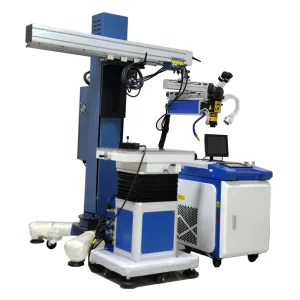
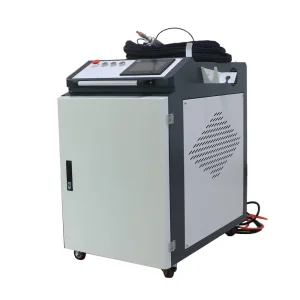
Enterprise-grade equipment engineered for rapid deployment, micro-machined thermal tolerance, and maximum throughput across complex manufacturing cycles.
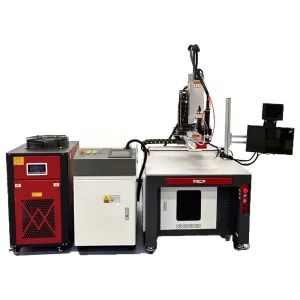




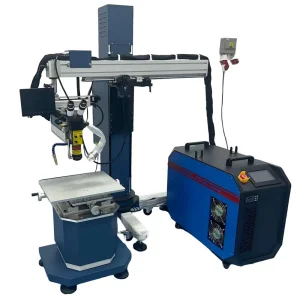

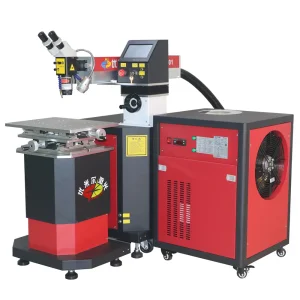
Strategic shifts in North American, European, and Asia-Pacific manufacturing ecosystems toward non-abrasive, environmentally compliant surface decontamination.
Global regulatory protocols—such as EU REACH, EPA clean air guidelines, and OSHA dry-abrasive mitigation—are eliminating toxic chemical stripping, pickling acids, and sandblasting. Handheld laser cleaning provides an immediate zero-consumable pathway that drastically cuts scope 1 and scope 2 emissions across tier-one manufacturing facilities.
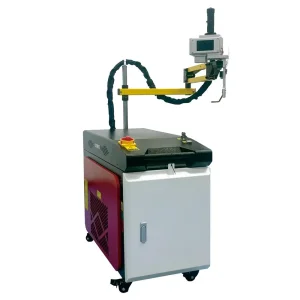
Traditional abrasive blast systems incur recurring consumable logistics, waste media reclamation, and labor-intensive protective post-processing. Handheld pulsed and continuous systems slash preparation times by up to 400%, allowing immediate pre-weld bonding or coating application without dust contamination or profile distortion.
Unlike mechanical grinding which damages the micro-roughness profile or work-hardens parent alloys, selectively tuned photon wavelengths vaporize contaminants through thermomechanical shockwaves and photothermal ablation, maintaining structural grain stability across critical aerospace and automotive components.
A rigorous engineering comparison determining beam dynamics, fluence thresholds (J/cm²), and thermodynamic thermal dissipation requirements.
| Evaluation Parameter | Pulsed Laser Cleaner (MOPA / Q-Switched) | Continuous Wave (CW) Fiber Laser Cleaner |
|---|---|---|
| Ablation Mechanism | High peak power photomechanical shockwave vaporization with negligible heat diffusion. | High-throughput photothermal melting and combustion-assisted vaporization. |
| Heat Affected Zone (HAZ) | Virtually zero HAZ (< 5 µm), ensuring the substrate undergoes zero metallurgical alterations. | Localized thermal penetration; requires controlled scanning speed to avoid surface discoloration. |
| Typical Power Classes | 100W, 200W, 300W, 500W, 1000W (Ultra-high peak pulses up to MW level). | 1000W, 1500W, 2000W, 3000W (Continuous direct output). |
| Substrate Sensitivity | Critical: Molds, historical heritage, composite carbon fiber, precision aerospace tooling. | Heavy-duty: Structural steel beams, thick rust scales, pipeline welds, maritime hulls. |
| Capital Expenditure (CapEx) | Higher initial investment per watt; significantly lower long-term maintenance costs. | Economical entry point for large-surface, heavy-scale industrial rust mitigation. |
Equipped with intelligent galvo-scanning optics capable of line, circular, raster, spiral, and polygon beam patterns. By adjusting beam focus and scan patterns, operators eliminate focal hot-spots and prevent localized surface over-etching.
Industrial dual-circuit refrigeration architectures stabilize internal optical cavities and beam transmission fibers within ±0.5°C, sustaining 24/7 continuous shift operation across high ambient temperature environments up to 45°C.
Optional integrated spectral sensors analyze reflected plasma signatures to determine layer removal completion, executing automatic shut-off or parameter shifting the microsecond the parent alloy is fully decontaminated.
Engineered to resolve acute operational bottlenecks across critical heavy-industry manufacturing sectors.
Selective removal of cathodic electrophoretic coatings (e-coat) and adhesive oxide layers on aluminum battery trays, EV battery cell busbars, and hydroformed chassis members before laser welding.
De-painting titanium turbine blisks, carbon composite surface activation, and localized oxide ablation on aircraft skin assemblies without abrasive grain embedment or mechanical micro-crack induction.
Online residue removal of vulcanized rubber, liquid silicone injection compounds, and polyurethane mold buildup. Restores sub-micron vent gaps without degrading critical edge sharpness.
Continuous heavy corrosion and mill scale removal along pipeline joints and ship ballast tanks. Field-deployable fiber umbilical lines extend up to 15-20 meters for complex access environments.
Strategic integration of artificial intelligence, machine vision, and robotic kinematics shaping the next decade of surface processing.
Next-gen hand units integrate coaxial CMOS imaging and hyperspectral machine-learning inference engines to automatically categorize surface rust severity, paint thickness, and grease depth, dynamically auto-tuning beam intensity and scanning frequency in real time.
Standardized quick-dock kinematic interfaces allow our lightweight hand heads to seamlessly interchange between manual ergonomic hand-operation and direct robotic arm mounting (UR, Fanuc, Kuka), facilitating overnight automated cleaning sweeps across expansive aerospace structures.
Cloud-tethered industrial 4.0 telemetry actively monitors laser diode junction temperatures, back-reflection dissipation metrics, and lens contamination alarms, projecting component wear schedules weeks before unplanned production stoppages occur.
Rigorous certifications fulfilling European Machinery Directives, North American FDA/CDRH standards, and global environmental mandates.
Engineered strictly compliant with ISO 11553-2 and IEC 60825-1 protocols. Featuring dual-channel emergency safety loops, ground-contact continuity interlocks, remote warning beacon outputs, and optical shut-off triggers within 5 milliseconds of target disengagement.
High-energy laser ablation converts surface coatings into vaporized particulates. Our cleaning heads interface synchronously with multi-stage HEPA and activated carbon extraction systems, maintaining ISO 14644-1 cleanroom compliance and safeguarding respiratory zones.
Direct engineering deployment hubs across Europe, North America, Southeast Asia, and the Middle East deliver rapid consumable replenishment (protective quartz windows, focal collimators, gas nozzles), complete with factory-certified operator training programs.
Comprehensive engineering clarifications addressing power selection, material compatibility, capital expenditure justification, and warranty services.
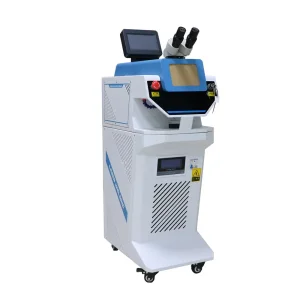
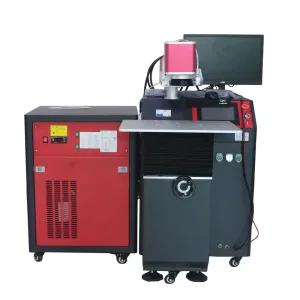
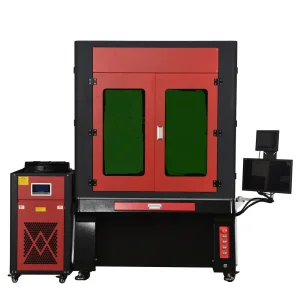
Explore customized mold restoration units, micro-jewelry benches, automated multi-axis cells, and high-throughput cleaning machinery.