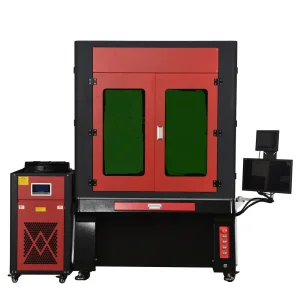
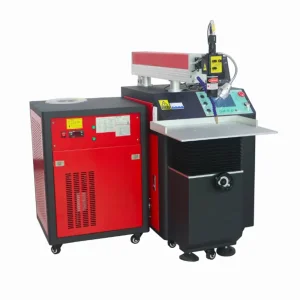
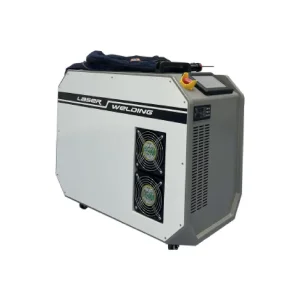
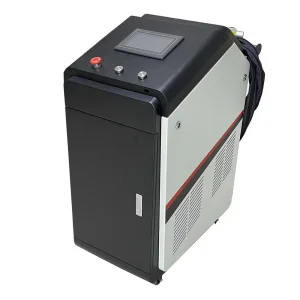
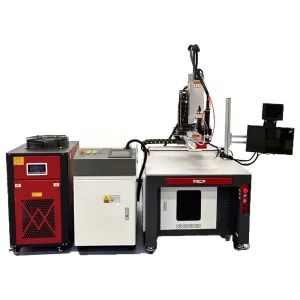
Engineered for high duty-cycle industrial welding, fabrication repair, and integrated manufacturing lines.
How the structural shift from conventional arc processes to high-density photon welding is redefining modern fabrication economics.
Modern continuous-wave (CW) fiber resonators regularly achieve electrical-to-optical conversion efficiencies exceeding 35% to 40%. Compared to traditional legacy Nd:YAG crystals or traditional TIG rectifiers, this translates to an immediate 60-70% reduction in base operational power expenditure, drastically lowering ongoing facility overhead.
Early handheld laser welders were hampered by microscopic beam spot sizes, mandating tight zero-gap part fit-up tolerances. Contemporary systems incorporate high-speed galvanometer-driven oscillating mirrors directly within the ergonomic torch, projecting circular, linear, triangle, and figure-eight beam envelopes up to 5.0 mm wide.
By transitioning internal optical collimators to ultra-light aircraft-grade aluminum alloys and optimizing liquid cooling channel geometries, cutting-edge handheld torch weights have been lowered to between 0.68 kg and 0.85 kg. This ergonomic upgrade eliminates repetitive strain injuries and welder fatigue during continuous, intensive shifts.
Data-driven cost modeling illustrating how industrial enterprises amortize capital investments through substantial throughput gains.
| Evaluation Parameter | Conventional TIG Process | High-Power MIG Setup | Handheld Fiber Laser (1.5kW - 3kW) |
|---|---|---|---|
| Typical Travel Velocity | 100 – 250 mm/min | 300 – 600 mm/min | 600 – 2200 mm/min (Up to 4-10x) |
| Thermal Heat-Affected Zone (HAZ) | Extensive (High thermal warping) | Moderate to severe distortion | Extremely narrow (< 0.5 mm) |
| Post-Weld Processing Time | 40% – 60% of total operator hours | Grinding, de-spatter, pickling required | Virtually Zero (Smooth seam finish) |
| Operator Skill Ramp-up | 2 – 5 Years (Certified Master) | 6 – 12 Months (Skilled) | 2 – 5 Days (Basic qualification) |
| Annual Energy Draw (2-Shift) | High (~12-18 kWh average load) | Substantial (~14-22 kWh) | Low (~4.5-8.5 kWh integrated) |
Global manufacturing hubs across North America, Germany, Japan, and Australia face acute shortages of certified TIG welders. Handheld fiber laser machines democratize precision joining, enabling entry-level operators to consistently produce structurally sound, aesthetic welds after minimal procedural training.
Because the focused laser beam transfers energy directly into base metals via keyhole or conduction mode, light-gauge sheet fabrication often requires zero filler wire. When filler is needed, intelligent dual-wire feeders consume standard alloys with zero tungsten contamination, reducing overall consumable spend.
With global industrial directives increasingly penalizing carbon-intensive manufacturing methods, fiber laser machinery delivers an immediate environmental dividend. The combination of minimal shielding gas wastage and high electrical efficiency satisfies Scope 1 and Scope 2 plant emissions reduction targets.
Shenzhen's integrated photonic industrial cluster offers clear technological and supply chain advantages for global machine delivery.
The Greater Bay Area manufacturing corridor houses a complete domestic supply chain for high-power semiconductor pump diodes, rare-earth doped silica fibers, and precision F-theta lenses. This geographic concentration removes cross-border supply bottlenecks and shields foreign purchasers from volatile raw material lead times.
Standardized Industry 4.0 production includes continuous 72-hour full-load burn-in protocols, high-temperature chiller cycling, and calibrated optical power degradation assessments before machine crating. This rigorous quality screening keeps international field warranty rates well below 0.8%.
All core subsystems—fiber source, dual-circuit digital water chiller, central bus control motherboard, and wire feeder—are configured as field-replaceable modular subassemblies. In the event of a component failure, international buyers can swap modules on-site with simple tooling, supported by real-time video telemetry.
Budgetary FOB price tiers, structural power envelopes, and recommended penetration depths across common industrial substrates.
| System Power Category | Estimated Industrial Price (USD) | Stainless Steel Penetration | Carbon / Mild Steel | Aluminum Alloys | Primary Industrial Sector |
|---|---|---|---|---|---|
| 1000W Air/Water Cooled | $2,800 – $4,200 | Up to 3.0 mm | Up to 2.5 mm | Up to 1.5 mm | HVAC ducting, electronics enclosures, sheet signcraft |
| 1500W Standard Workhorse | $3,600 – $5,400 | Up to 4.5 mm | Up to 4.0 mm | Up to 3.0 mm | Commercial kitchen equipment, architectural metals, furniture |
| 2000W Heavy-Duty Workhorse | $4,800 – $7,200 | Up to 6.0 mm | Up to 5.5 mm | Up to 4.5 mm | Automotive chassis, pressure containers, marine hardware |
| 3000W High-Penetration Pro | $7,500 – $11,800 | Up to 8.5 mm | Up to 8.0 mm | Up to 6.5 mm | Heavy plant engineering, shipbuilding, structural infrastructure |
System quotes reflect your selected core resonator vendor. Premium international sources provide top-tier beam quality and power stability, while reliable tier-one Chinese resonators deliver 95% of that performance profile at a much lower capital investment.
Multi-purpose models combine welding, surface laser cleaning, and thin-sheet cut-off operations into a single platform. Switching modes takes only seconds via quick-change optical nozzles and pre-configured operational parameter profiles.
When bridging wide joints or managing dimensional fit-up variations up to 2.5 mm, adding an integrated micro-stepping, dual-roller wire feeder ensures stable wire delivery without bird-nesting, even under heavy production conditions.
Real-world integration workflows across varied industrial environments, from automotive manufacturing to fine jewelry crafting.
In high-end commercial kitchens and pharmaceutical installations, internal weld surfaces must remain free of oxidation and micro-porosity to prevent bacterial harboring. Nitrogen-shielded fiber laser welding creates smooth, mirror-grade seams that eliminate manual post-weld passivation and grinding.
Welding lightweight 5000 and 6000-series aluminum alloys has traditionally been prone to hot cracking and excessive thermal distortion. Dual-wobble high-frequency laser welding creates fine grain structures and minimal heat-affected zones, preserving structural integrity across thin panels.
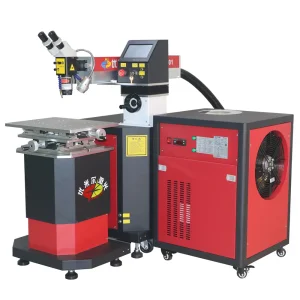
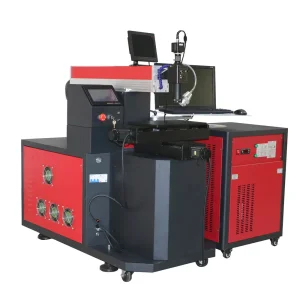
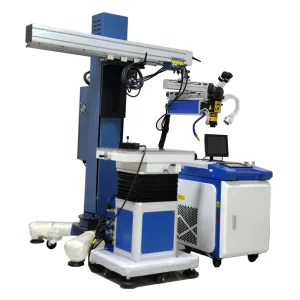
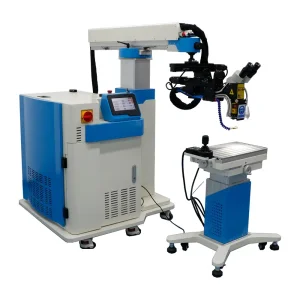
Industrial tool-and-die maintenance requires precise weld deposition to rebuild worn shear edges, parting lines, and surface cracks. Specialized boom-arm and cantilever laser welding systems deposit tool steel filler wire with minimal base heat input, preventing substrate softening and cracking.
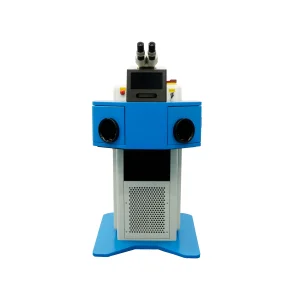
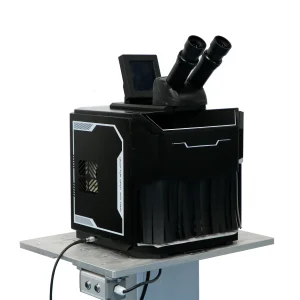
Specialized systems engineered for mold refurbishing, jewelry manufacturing, and precision pulse cleaning operations.
Expert answers addressing electrical integration, safety protocols, consumable lifespans, and operational maintenance.