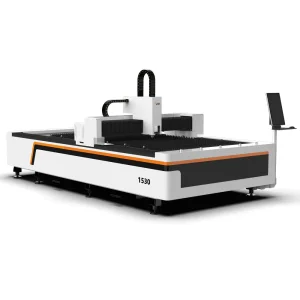
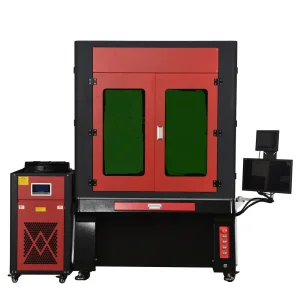
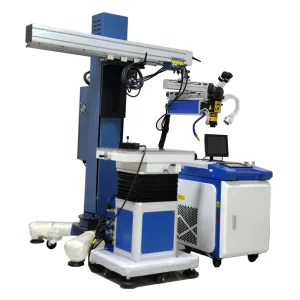
Direct factory configurations engineered for heavy-duty shop floors, mold tooling, continuous wire-fed sheet jointing, and automated CNC fabrication.








Modern metal joining has shifted from conventional TIG and MIG arc welding to fiber-based laser photonics. Understanding the supply chain clustering, domestic component integration, and engineering economies of scale inside Shenzhen and the Greater Bay Area reveals why Tier-1 manufacturers dominate international procurement.
Shenzhen hosts an unmatched density of laser source developers (Raycus, Maxphotonics, IPG-certified partners), optical lens polishers, wobble collimator machinists, and embedded DSP control developers. This complete physical supply perimeter reduces prototype-to-delivery loops to under 72 hours, guaranteeing zero supply chain bottlenecks for overseas importers.
Unlike regional trading companies that simply assemble third-party modules, direct Chinese factories design their own optical paths, wire feeding synchronization algorithms, and handheld ergonomic heads. In-house control allows direct fine-tuning of beam oscillation (wobble frequency, sweep width, duty cycle) for specific alloys like high-reflectivity copper and aircraft aluminum.
Direct sourcing delivers an immediate 40% to 60% capital savings over Western-branded label equipment without compromising beam parameter product (BPP) quality. Lower initial machinery acquisition costs, paired with readily accessible industrial consumables (protective windows, ceramic rings, brass copper nozzles), drastically accelerate shop-floor ROI.
Handheld fiber laser welding is evolving beyond basic manual beam delivery. Breakthroughs in multifunctional beam control, intelligent safety telemetry, and high-efficiency thermal architectures define the modern equipment paradigm.
Equipment architecture has unified welding, surface laser rust cleaning, post-weld seam cleaning, and air-assisted sheet metal cutting into a single handheld laser workstation. Operators can switch focal field geometries via touchscreen presets and swift nozzle interchanges in under 60 seconds, eliminating standalone surface prep tools.
Traditional laser spot welding required near-zero joint fit-up tolerance (<0.2mm). The integration of dynamic high-speed galvanometer oscillate mirrors (single-line, triangle, circle, double-circle wobble up to 5mm width) enables deep-penetration weld pools across wider seam gaps up to 1.5mm with minimal consumable filler wire consumption.
While 1500W to 3000W continuous heavy shop fabrications rely on dual-circuit industrial water chillers for sustained 100% duty cycle operation, the market is actively expanding with phase-change, refrigerant-based direct air-cooled units. These ultra-compact, field-portable welders offer total system weights below 45kg for mobile structural maintenance.
Solid-state fiber laser pumping modules tested for round-the-clock industrial duty without resonant optical degradation.
Linear feed velocity outpaces traditional tungsten inert gas arc welding across 1mm-5mm sheet joints.
Extremely narrow heat-affected zone (HAZ) prevents metal deformation, heat tinting, and costly manual abrasive reworking.
Direct CE, FDA, and ISO certified industrial deployments spanning North America, the EU, ASEAN, and the Middle East.
Explore how handheld laser welders replace legacy joining methodologies across precision fabrication, tool restoration, hygienic sheet equipment, and infrastructure maintenance.
In food-grade equipment, kitchenware, and architectural balustrades, thermal distortion ruins thin gauge 304 and 316 stainless sheets. Handheld fiber welding produces smooth, pore-free, cosmetic-grade seams without toxic pickling paste treatments or mechanical weld seam planishing.
Integrated boom and cantilever mold laser welding platforms deploy pulsed YAG and quasi-continuous wave (QCW) lasers to deposit specialized matching tool steel wires onto micro-cracks, chipped edges, and eroded cavity shoulders without base-metal annealing or shrinkage.
Aluminum alloy (5000/6000 series) and copper battery inter-cell terminals demand high power density to overcome high natural thermal conductivity and surface reflectance. Fiber lasers running nitrogen or argon purge create hermetic, spatter-free joints that maintain electrical conductivity.
Modern Chinese manufacturing plants do not merely ship standalone units; they architect scalable industrial workstations engineered to integrate with multi-axis CNC machines and automated robotic cells.
Laser welding requires strict beam-to-joint alignment. Tier-1 manufacturers provide in-house design and fabrication of pneumatic fixtures, automated rotary chucks for cylindrical pipe welds, and custom magnetic clamp systems that guarantee continuous zero-gap tolerances during volume manufacturing.
Handheld laser heads can be quickly mounted to lightweight 6-axis collaborative robotic arms (cobots) via quick-release kinematic couplers. Using Modbus, EtherCAT, and discrete I/O protocols, factory managers can seamlessly transition an operator-guided torch into a fully automated batch-welding system.
Deploying Class 4 industrial laser machinery requires comprehensive protection. Direct factories implement dual-channel safety interlock circuits, loop circuit continuity clamps that halt beam firing if the nozzle leaves the metal workpiece, and integrated laser-safe extraction cabinets.
| Laser Resonator Output | Stainless Steel Penetration | Carbon Steel Penetration | Aluminum Alloy Depth | Recommended Power Feed | Typical Application Sector |
|---|---|---|---|---|---|
| 1000W CW Fiber | 0.5 mm – 3.0 mm | 0.5 mm – 2.5 mm | 0.5 mm – 1.5 mm | 220V Single-Phase / 16A | Kitchen cabinets, signage, sheet metal enclosures |
| 1500W CW Fiber | 0.8 mm – 4.5 mm | 0.8 mm – 4.0 mm | 0.8 mm – 2.5 mm | 220V Single-Phase / 25A | HVAC ducting, architectural balustrades, doors & windows |
| 2000W CW Fiber | 1.0 mm – 6.0 mm | 1.0 mm – 5.5 mm | 1.0 mm – 4.0 mm | 220V / 380V Optional | Automotive chassis parts, agricultural tools, pressure tanks |
| 3000W CW Fiber | 1.5 mm – 8.5 mm | 1.2 mm – 8.0 mm | 1.2 mm – 6.0 mm | 380V Three-Phase / 32A | Heavy structural steel, shipbuilding, machinery frames |
When procuring industrial laser machinery from China, procurement officers and plant engineers should scrutinize technical criteria beyond price per watt to safeguard lifetime reliability.
Inspect the fiber cable delivery core diameter (typically 20µm to 50µm) and armored conduit quality. Industrial units must feature a minimum 10-meter to 15-meter double-sheathed flexible conduit with integrated gas-electric routing to permit wide workshop maneuvering.
Ensure the integrated water chiller uses eco-friendly R410a/R134a refrigerant with dual-temperature closed-loop circuits (one loop dedicated to the QBH collimating connector, the second to the fiber diode). Verify stable operation in high ambient shop temperatures (up to 45°C).
Examine the wire feeder control unit. High-performance setups feature dual-drive stepper motors with encoder feedback, programmable push/pull retraction, and delay-stop parameters to prevent wire sticking at the end of every weld seam.
Clear, engineering-backed answers addressing the most common technical, operational, and commercial questions raised by international procurement teams.
Browse our extended lineup of jewelry microsoldering benches, CNC enclosed gantries, boom mold platforms, and high-power continuous laser welders.