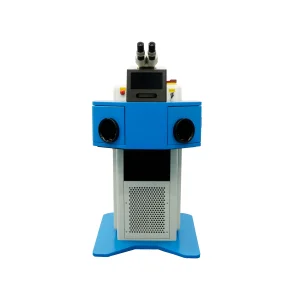
Original OEM manufacturing portfolio engineered in Shenzhen, covering deep fiber transmission, structural mold welders, and versatile sheet processing.
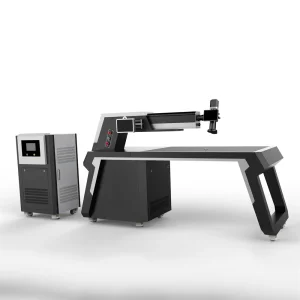

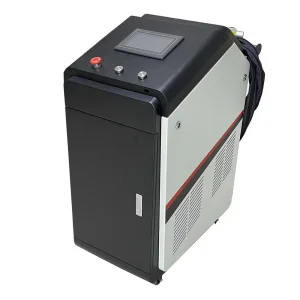
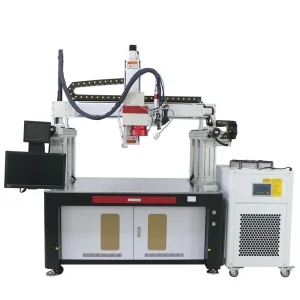
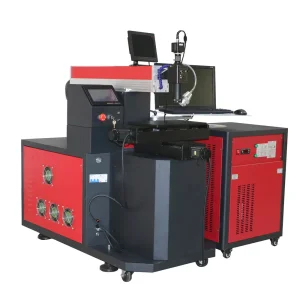
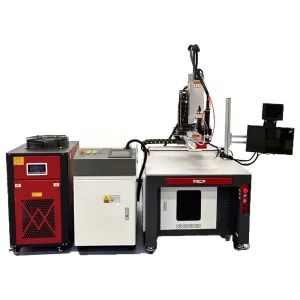
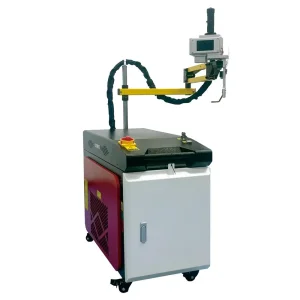
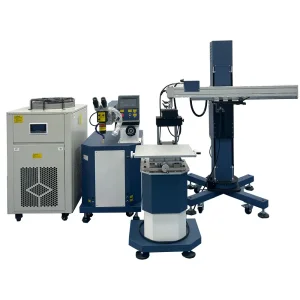
Strategic shift away from abrasive media and toxic chemical pickling toward 2000W fiber laser cleaning platforms in global manufacturing hubs.
Traditional industrial decontamination relies heavily on chemical solvolysis, hazardous acid rinsing, and abrasive grit blasting (sandblasting/dry ice). Strict environmental frameworks, including EU REACH and EPA environmental directives, penalize VOC emission and hazardous slag handling. The 2000W fiber laser cleaner represents a pure non-contact, dry photonic ablation alternative, consuming solely electrical power and minimal assist inert gas.
Across automotive gigafactories, shipbuilding yards, and structural steel plants, 2000W continuous wave (CW) lasers remove mill scale, high-build epoxy, and weld oxidation fringes at velocities exceeding 15 m²/h. High average power allows rapid thermodynamic expansion, breaking interfacial Van der Waals bonds without degrading internal grain structures of metallurgical substrates.
The 2000W laser power window delivers an optimal balance between electrical efficiency, thermal conduction boundaries, and physical surface throughput. Compared to 1000W platforms, the 2000W architecture cuts process duration by over 55%, amortizing plant capital expenditures while keeping fiber core thermal lens effects within rigorous optical tolerances.
Physical dynamics of continuous beam wobble delivery systems, beam shaping optics, and material damage thresholds.
When the high-flux 1064nm-1080nm near-infrared beam hits contaminated substrates, energy absorption relies on differential absorption coefficients. Oxides, rust (Fe2O3/Fe3O4), primer coats, and polyurethanes possess absorption rates 4 to 8 times higher than base steel or aluminum alloys. Rapid microsecond-level surface thermal spikes generate thermoelastic shockwaves, disintegrating foreign matrices into sub-micron particulates evacuated via coaxial localized exhaust systems.
| Critical Engineering Metric | Continuous Wave (CW) 2000W Spec | High-Peak Pulsed Alternative | Engineering Impact / Assessment |
|---|---|---|---|
| Nominal Laser Output | 2000 Watts Stable CW | 2000W Peak / 100mJ Energy | Continuous system prioritizes bulk area throughput over substrate coldness. |
| Galvanometer Wobble Width | 10 mm – 150 mm Adjustable | 5 mm – 100 mm Dual-Axis | Dual-galvanometer mirrors prevent substrate hot spots and track uneven profiles. |
| Cooling Medium | Dual-circuit Deionized Water | Precision Chilled Circuit | Maintains QBH connector and laser diode array at ±0.5°C equilibrium. |
| Cable Delivery Core | 50 μm / 100 μm Multimode Fiber | Core-tailored Homogenized | Armored fiber delivery up to 15 meters for shipyard and tower applications. |
| Linear Cleaning Efficiency | Up to 25 m²/h (Light Rust) | 8 – 12 m²/h (Precision De-grease) | CW provides high industrial throughput on thick rust and structural bridge steel. |
By adjusting wobble oscillation frequencies (up to 300 Hz) and line velocities, operators modulate the thermal penetration depth to under 5 microns. This ensures base hardness, grain orientation, and tensile properties remain unaffected during multi-pass processing.
Integrated F-theta lenses with quartz anti-reflective coatings deliver consistent beam density across working widths up to 150mm. Integrated gas-knife purge channels protect optics from reflective backsplatter, prolonging lens lifespan in continuous operating shifts.
Real-time thermal monitoring across laser cavities, optical connectors, and internal water jackets interlocks the high-voltage bus bar during flow aberrations, protecting fiber delivery runs against catastrophic failure.
Documented field metrics from active automated lines and mobile manual interventions around the world.
Cleaning residual drawing lubricants, thermal oxides, and phosphating layers from high-strength dual-phase steels before resistance spot welding and laser brazing. Eliminates micro-porosity defects in battery pack seals and structural frame nodes.
Treating severe marine corrosion crusts and marine growth on structural alloy bulkheads prior to non-destructive testing (NDT). Portable 2000W units with umbilical lengths up to 20 meters allow shipboard and tank-interior deployment.
Stripping vulcanized polymers, carbon crusts, and release agents from intricate mold textures without edge-rounding or dimension ablation. Minimizes cycle disruptions compared to offline ultrasonic baths or bead blasting.
Integration of embedded AI machine vision, real-time LIBS spectral monitoring, and robotic synchronization.
Integrating Laser-Induced Breakdown Spectroscopy directly into the 2000W output path. By analyzing plasma flash emissions shot-by-shot, the platform identifies contaminant breakdown and cuts laser power down to milliwatts upon reaching base alloy, preventing substrate ablation.
Pairing cleaning optics with 3D structured-light cameras. Deep learning models map rusted surfaces, automatically adjusting focus depth, wobble width, and scan rate to match complex part geometries without manual re-programming.
Standardizing PROFINET, EtherCAT, and clean industrial I/O architectures. 2000W cleaning heads integrate seamlessly onto 6-axis articulated robots, enabling uninterrupted, worker-free operations across hazardous containment lines.
Explore precision jewelry welders, structural cantilever platforms, and heavy-duty 1530 cutting solutions engineered for global export.
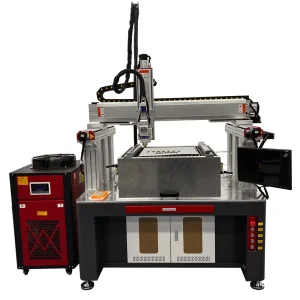
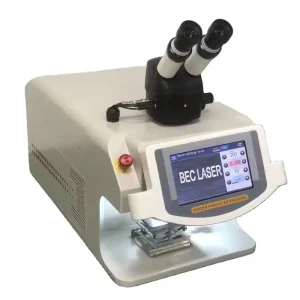
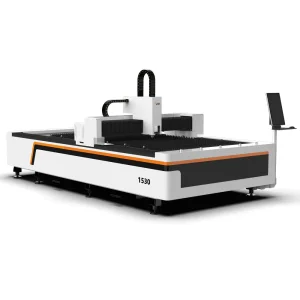
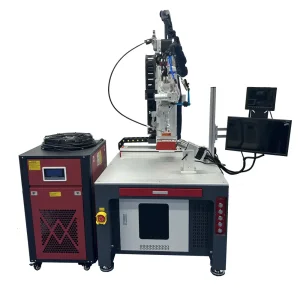
Expert answers addressing the selection, operation, maintenance, and factory support for our 2000W laser cleaning systems.
