Direct from our specialized Shenzhen manufacturing and R&D facilities: precision optical configurations designed to resolve severe thermal distortion, porosity, and low travel speed bottlenecks across global production lines.
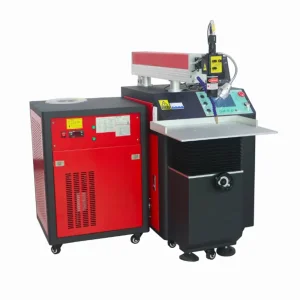
Ergonomic open-frame architecture designed for oversized workpieces, rapid crane loading, and high-duty continuous seam fabrication across heavy stainless steel and structural aluminum.
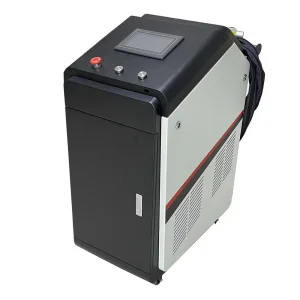
Non-destructive pulsed laser ablation engineered specifically for aerospace tooling, tire mold de-vulcanization, and oxide layer striping without affecting metallurgical substrates.
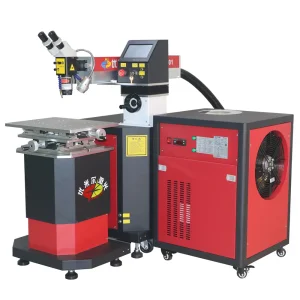
High-precision laser deposition platform optimized for P20, H13, and NAK80 injection tool refurbishment, delivering micro-scale filler wire fusion with zero heat sink cracking.

Specialized slender optical head configuration engineered for tight radius 3D channel letters, mirror stainless steel, and titanium sheet bonding with zero weld discoloration.
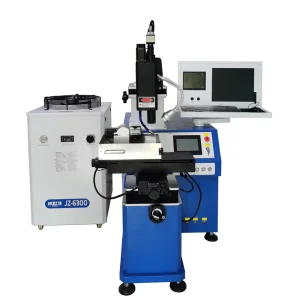
Precision ballscrew CNC workstation featuring programmable 3-axis motion, integrated CCD coaxial vision tracking, and automated multi-station circular seam interpolation.
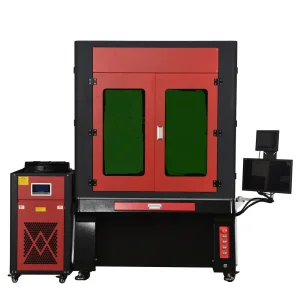
Fully enclosed Class 1 laser safety cell designed for Western industrial compliance, featuring interlocked sliding doors, internal extraction, and high-speed multi-axis motion.

Deep-penetration continuous fiber laser engine capable of producing hermetic joints in thick pressure vessels, heat exchangers, and continuous tube and pipe rolling lines.
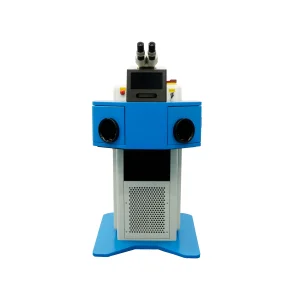
Ergonomic benchtop-upright micro-welding station optimized for precious metals (Au, Ag, Pt, Ti), fine chain link fusing, prong re-tipping, and delicate porous casting filling.
Across modern industrial sectors, conventional fusion welding methods—predominantly Gas Tungsten Arc Welding (GTAW/TIG) and Gas Metal Arc Welding (GMAW/MIG)—are reaching physical efficiency limits. International manufacturing leaders are aggressively replacing legacy arc processes with concentrated fiber laser systems to achieve higher manufacturing throughput and lower unit manufacturing costs.
Traditional arc welding injects broad, diffuse thermal energy into the base metal, producing severe angular distortion and degradation of structural temper. Fiber laser radiation operates at energy densities surpassing 10^6 W/cm2, vaporizing metal almost instantly to initiate narrow, deep-penetration keyholes that restrict thermal dissipation and eliminate costly secondary hydraulic straightening.
In safety-critical applications—such as EV battery busbars, liquid-cooled cold plates, and aerospace heat exchangers—micro-porosity and hot cracking result in immediate component scrap. Dual-axis wobble optical scanning patterns dynamically stir the weld pool, allowing entrapped metal vapors and shielding gases to escape prior to solidification, achieving class-A radiographic hermetic seals.
Global shortages of certified manual TIG welders have inflated shop-floor wage rates. Handheld and automated fiber laser systems enable operators with only basic technical training to execute pristine weld beads after hours rather than months of onboarding. Coupled with 35% electrical wall-plug efficiency (compared to under 15% for older solid-state lasers), payback periods routinely clear within six months.
Selecting laser hardware requires matching output wavelength, beam quality (BPP), and peak energy density to target materials. Below is an engineering baseline for single-pass full-penetration butt welds using dual-axis wobble optical heads and matching shielding gas dynamics.
| Laser Source Power | Austenitic Stainless (304/316) | Structural Carbon Steel | Wrought Aluminum (5000/6000) | Pure Copper & Brass | Recommended Shielding Gas |
|---|---|---|---|---|---|
| 1000 W Continuous | Up to 3.0 mm | Up to 2.5 mm | Up to 1.5 mm | Up to 1.0 mm (Wobble) | Pure Argon (99.999%) / 15 L/min |
| 1500 W Continuous | Up to 4.5 mm | Up to 4.0 mm | Up to 3.0 mm | Up to 2.0 mm (Preheated) | Ar or N2 (18-20 L/min) |
| 2000 W Continuous | Up to 6.0 mm | Up to 5.5 mm | Up to 4.5 mm | Up to 3.0 mm | Pure Argon / 20 L/min |
| 3000 W Continuous | Up to 8.5 mm | Up to 8.0 mm | Up to 6.5 mm | Up to 4.5 mm (Argon Purge) | Ar / Ar-He Blend (25 L/min) |
| 6000 W Automated CNC | Up to 16.0 mm | Up to 14.0 mm | Up to 12.0 mm | Up to 8.0 mm (Keyhole Mode) | He-Ar 70/30 or High-Purity Ar |
Continuous Wave (CW) fiber lasers deliver an uninterrupted beam of constant high photon flux, making them the standard choice for sheet metal enclosures, structural frames, and linear high-speed tubing where deep keyhole penetration is required. Conversely, Quasi-Continuous Wave (QCW) and nanosecond pulsed lasers concentrate electrical energy into millisecond bursts with high peak powers (often 10x rated nominal power), permitting micro-joining of temperature-sensitive components such as jewelry, electronics, and precision injection mold edges without microstructural damage.
Early handheld laser welders were restricted to static focal spots of 0.2 mm diameter, demanding virtually zero joint fit-up tolerance (<0.05 mm gap). Modern Youmir Laser welding heads incorporate high-speed dual-axis galvanometer scan mirrors driven by internal microprocessors. By oscillating the beam in customizable patterns (Circle, Triangle, Line, Figure-8) at frequencies up to 300 Hz and widths up to 5.0 mm, operators can bridge gaps up to 1.5 mm while simultaneously reducing spatter and smoothing molten pool surface tension.
High-reliability laser welding depends on understanding keyhole physics, Marangoni convection flows, and vapor recoil pressures. Operating with calibrated beam parameters prevents weld flaws before production begins.
At irradiance levels below 10^5 W/cm2, welding occurs in conduction mode where thermal energy transfers strictly through material conductivity, creating smooth, shallow aesthetic beads. When power density exceeds 10^6 W/cm2, local metal vapor recoil pressure depresses the liquid surface, opening a slender vapor capillary (the keyhole). The keyhole acts as an optical black body, trapping over 90% of incident photons via multiple internal reflections.
Keyhole instability is the root cause of porosity in deep-penetration laser welding. Surface surface tension gradients (Marangoni effect) can cause the molten pool neck to collapse inward, trapping vapor pockets as frozen voids. Utilizing engineered oscillating wobble beams stabilizes the front keyhole wall, relieves back-pressure, and maintains an open vapor exit channel, effectively eliminating radiographic-reject pores.
At standard 1070 nm fiber laser wavelengths, polished copper and aluminum reflect upwards of 95% of room-temperature photon energy, introducing hazards of back-reflection damage to laser delivery fibers. Youmir incorporates optical isolators, high-gain feedback suppression circuits, and localized pre-pulse heating, causing initial surface temperature spikes that drop material reflectivity and lock in efficient laser absorption.
We design, validate, and build application-specific processing cells that integrate laser sources, beam-delivery optics, specialized clamping fixtures, automated motion systems, and digital monitoring systems.
In high-capacity battery pack assembly, joining dissimilar metals—specifically nickel-plated copper tabs to aluminum prismatic cell terminals—presents severe metallurgical challenges due to brittle intermetallic compound (IMC) formation. Youmir’s multi-axis automated fiber welding cells implement precision energy-tailored wobble pulses to restrict heat input, maintaining IMC layer thicknesses below 2.5 microns, ensuring low contact resistance and high mechanical fatigue tolerance under severe road vibration.
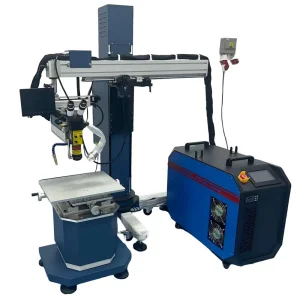
Scrapping a multi-ton automotive stamping die or precision plastic injection core due to cosmetic edge chipping or thermal cracking is financially prohibitive. Our mobile boom and cantilever mold welding stations bring focused fiber energy directly to the press bed. Operating with 0.1 mm to 0.6 mm micro-wires, toolmakers deposit matching alloys with zero thermal sinking, eliminating pre-heating ovens and post-weld stress relieving.
High-end architectural stainless fabrication and commercial food-grade kitchen equipment demand pristine surface aesthetics. Conventional TIG welding causes unsightly blue-black oxidation heat tint that requires harsh chemical pickling pastes and extensive abrasive wheel polishing. Youmir’s handheld fiber systems with coaxial argon shielding deposit clean, mirror-smooth fillet welds that pass hygiene inspections with minimal buffing.
For high-throughput manufacturing plants, we manufacture turn-key enclosed automated Class 1 laser welding workstations. Utilizing industrial PLCs, EtherCAT communications, pneumatic indexing rotary chucks, and integrated seam-tracking machine vision, our systems achieve cycle times measured in seconds, providing 24/7 continuous operation with comprehensive safety enclosure interlocks.
Industrial photonics continues to evolve toward shorter wavelengths, closed-loop machine vision, and real-time process intelligence. Here is our engineering roadmap for next-generation joining solutions.
Co-axial integration of 450 nm blue diode lasers with 1070 nm fiber lasers. Blue light achieves 60%+ room-temperature absorption in pure copper, producing completely spatter-free conductive welds for electric vehicle battery busbars.
Sub-micron coaxial interferometry embedded inside the welding head to measure keyhole depth in real-time at 50 kHz. Closed-loop algorithms continuously adjust power to guarantee penetration depth without destructive sectioning.
Real-time neural-network seam tracking that dynamically alters wobble amplitude, wire feeding velocity, and energy profiles to adapt instantaneously to shifting gap geometries and mill-scale edge contamination.
Autonomous factory fleet management communicating via OPC-UA and 5G/6G protocols. Real-time predictive telemetry on internal optical contamination, chiller pump health, and automatic beam alignment optimization.
Operating high-power Class 4 industrial laser machinery requires strict safety standards and dependable field service support. Shenzhen Youmir Laser complies with rigorous global certification frameworks.
Our manual systems incorporate dual-channel ground interlock loops, safety triggers, and automated optical shutoff sensors that disable laser emission if the welding tip leaves the workpiece. Enclosed CNC stations feature certified OD6+ optical viewing windows, interlocked access panels, and integrated HEPA filtration to eliminate harmful respirable nanoparticles.
Youmir machinery ships with full compliance documentation, including European CE Machine Directive (2006/42/EC), Low Voltage Directive (2014/35/EU), and Electromagnetic Compatibility (2014/30/EU). Laser sources and control cabinets comply with international safety norms IEC/EN 60825-1, ensuring straightforward installation approval for import into North America and the EU.
We eliminate downtime risks via cloud-connected tele-diagnostics, allowing our factory laser optical engineers to access system alarms, optimize pulse parameters, and verify drive voltages remotely. Furthermore, spare optical assemblies, protective lenses, and copper nozzles are stocked in key international hubs for rapid cross-border air dispatch.
Expanding your facility's processing capabilities: explore our heavy-duty cutting, surface preparation, precision boom deposition, and fiber transmission industrial laser stations.

All-in-one mobile chassis integrating continuous fiber laser source, high-capacity dual-temperature water chiller, and lightweight ergonomic wobble torch with auto-wire feeder.

Rigid gantry-style fiber sheet cutter delivering fast accelerations, high edge perpendicularity, and dross-free profiling on stainless, carbon steel, and architectural brass.

Heavy-duty counterbalanced boom system with 360-degree radial articulation, built to reach deep cavities in massive plastic injection and stamping molds without moving the tooling.

Industrial 1500 x 3000 mm flatbed fiber cutting workstation equipped with a 2000W continuous fiber engine, aviation-grade aluminum gantry, and dual-rack drive kinematics.
High peak power Quasi-Continuous Wave laser source offering fine energy pulse control, ideal for precision edges, parting lines, and delicate micro-mold repairs.
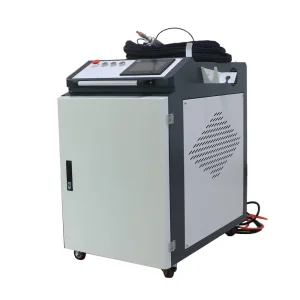
High-speed surface preparation system designed for structural rust removal, heavy mill-scale stripping, marine surface maintenance, and weld-seam pre-treatment.
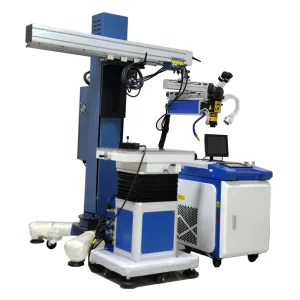
Ergonomic benchtop toolroom laser welder combining fiber delivery reliability, digital pulse adjustment, and high-precision joystick-controlled XYZ motorized tables.
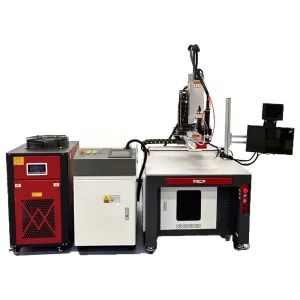
Advanced optical splitting architecture enabling simultaneous multi-beam output or time-shared multi-station welding for medical devices, sensors, and precision electronics.
In-depth technical answers addressing operational mechanics, metallurgy, facility electrical demands, and total cost of ownership for engineering and procurement directors.
Traditional arc processes introduce large, uncontrolled heat inputs that lead to severe grain coarsening, dissolution of precipitation-strengthening phases (such as Mg2Si in 6000-series alloys), and widespread shrinkage porosity caused by hydrogen entrapment. Continuous fiber laser welding delivers localized, high-energy-density radiation (exceeding 10^6 W/cm2) that melts and solidifies the joint within milliseconds. This rapid thermal cycling produces an ultra-fine dendritic grain structure, narrows the heat-affected zone by over 80%, and reduces volatile magnesium boil-off, retaining significantly higher joint yield strength without extensive filler wire dilution.
Conventional static laser beams generate a focused spot diameter of only 0.15–0.3 mm. If joint fit-up gap exceeds 0.1 mm, the beam punches through the seam, causing severe underfill or burn-through. Dual-axis galvanometer wobble optics oscillate the beam transverse and longitudinal to the travel direction at frequencies up to 300 Hz. This oscillation widens the effective melt zone up to 5.0 mm, bridging joint air gaps up to 1.5 mm strictly by melting base material from adjacent sidewalls, generating a convex, defect-free weld reinforcement bead without requiring external filler wire.
A standard 1500W to 2000W system generally operates on single-phase 220V ±10% (50/60Hz) pulling roughly 6 kW to 8 kW of peak electrical load (including integrated refrigeration compressor and optical drive). Units of 3000W power require 3-phase 380V (or 480V for North American installations via step-up transformer) pulling 12 kW to 15 kW. For shielding gas, high-purity Argon (99.999%) or clean, moisture-free Nitrogen is supplied at 0.15 to 0.25 MPa line pressure, with working flow rates configured between 15 and 22 Liters/minute. Nitrogen produces harder, highly clean seams in stainless steel, while pure Argon is required for reactive aluminum and titanium.
The core difference lies in pulse duration and peak thermal flux. Pulsed laser cleaning utilizes Q-switched or MOPA fiber modules firing nanosecond pulses (10–150 ns) with mega-watt peak powers. Contaminants (rust, release agents, paint) vaporize via rapid thermo-elastic acoustic shockwaves before heat can conduct into the substrate, preserving toolroom ground tolerances without surface pitting. Continuous Wave (CW) cleaners deliver uninterrupted thermal energy; they are substantially more economical for bulk rust and mill-scale stripping across civil steel structures and shipyards where mild substrate surface warming is acceptable.
Non-ferrous precious metals and pure copper absorb under 5% of 1070 nm photon energy in their solid room-temperature state. Unabsorbed photons reflect straight back into the torch, risking catastrophic optical damage to the delivery fiber core and combiner. Youmir systems protect equipment through a three-stage defense: first, the torch is held at a 10°–15° incident lead angle to deflect direct specular reflections away from the optical axis; second, an integrated hardware optical isolator absorbs reverse-traveling light; third, our proprietary high-speed waveform controller delivers an initial high-energy spike that instantly vaporizes the surface micro-layer, triggering an immediate drop in material reflectivity and locking in stable keyhole absorption.
Manual handheld laser welders are classified as Class 4 laser products due to open-beam reflection risks. Full regulatory compliance requires: 1) Dual-channel electrical interlocks ensuring laser power is disabled if the torch grounding clip breaks continuity with the metal workpiece; 2) Key-operated master safety switches and high-visibility illuminated emission status beacons; 3) Fully isolated safety enclosures built with flame-retardant laser-safe curtains or certified OD6+ acrylic viewing windows rated at 1064–1080 nm; and 4) Mandatory PPE including optical density (OD) 6+ certified eyewear and local fume extraction equipment to evacuate metal vapor particulate.
Financial modeling across fabrication plants demonstrates an average payback period between 4.2 and 7.8 months. While initial capital expenditure is higher than legacy TIG equipment, operational expenditures decrease significantly: 1) Travel speed increases 4x to 10x, substantially lowering direct labor hours per linear meter of weld; 2) Post-weld secondary grinding, acid pickling, and leveling labor are reduced by up to 85%; 3) Wall-plug electrical efficiency of 35% cuts power consumption relative to older welding generators; and 4) The simplified learning curve enables cross-trained workshop staff to produce sound welds, mitigating skilled-welder hiring shortages.
Shenzhen Youmir Laser Technology Co., Ltd. operates dedicated in-house hardware, optical, and software R&D divisions. For international distributors and machinery brand owners, we provide custom chassis industrial design, sheet-metal powder coating in brand colorways, and tailored digital HMI touchscreen software with localized multi-language firmware. For factory automation engineers, our automated CNC cells and standalone laser sources interface with external PLC networks via industrial fieldbus protocols including Profinet, EtherCAT, Ethernet/IP, and standard digital 24V I/O, allowing seamless integration into multi-axis robotic fixtures, indexing tables, and continuous automated assembly lines.
