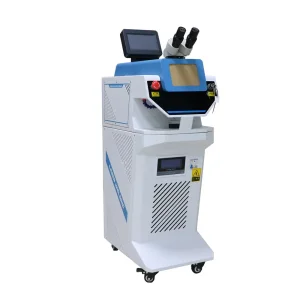
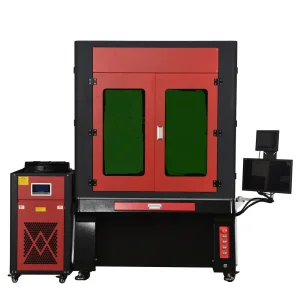
Explore high-power Raycus-driven continuous, handheld, and automated CNC laser equipment built to ISO 9001 and CE industrial standards for defect-free metallic joins.
Analyzing the paradigm shift in heavy metal joinery, structural welding, and advanced automation as fiber laser technology displaces legacy fusion welding protocols globally.
Raycus (Wuhan Raycus Fiber Laser Technologies Co., Ltd.) represents one of the premier industrial laser source architectures in modern manufacturing. Integrating high-brightness semiconductor diode pump assemblies with robust double-clad fiber designs, Raycus sources achieve superior beam quality (M² ≤ 1.2 to 1.5) for both single-mode precision joins and multi-mode deep penetration structural seams.
From North American automotive fabrication to European sheet-metal processing hubs, industrial companies are aggressively shifting toward fiber laser welding machines driven by Raycus sources. The fundamental driver is operating expenditure containment. By slashing electric power consumption, eliminating argon filler wire requirements in narrow butt seams, and diminishing secondary grinding labor, payback horizons drop under 9 months.
Global integration requires rigorous adherence to functional safety and electromagnetic compliance. Factory implementations feature certified double-interlock laser safety heads, gas pressure monitors, thermal cutoff circuits, and dual-channel safety relays. When paired with CE (EN 60825-1) and FDA CDRH certifications, Raycus-equipped workstations are deployed smoothly in tier-1 manufacturing facilities worldwide.
Why leading global enterprises partner directly with specialized Chinese OEM/ODM laser factories for custom configurations and competitive factory-direct quotes.
Operating from Shenzhen and the Pearl River Delta industrial basin, factories benefit from a complete laser optoelectronics ecosystem within a 50-kilometer radius. From high-grade optical collimation lenses, dual-axis wobble galvanometer scan heads, and industrial chillers to sheet-metal chassis fabrication, immediate supply chains eliminate cross-border lead times and minimize sub-assembly holding costs.
Unlike trading entities that assemble commodity knock-down kits, established manufacturers invest heavily in custom optical design, embedded DSP control software, and structural mechanics. Owning the complete firmware stack allows engineers to tune wobble frequencies (0–300 Hz) and beam shapes (circle, line, triangle, figure-eight) to specific alloy requirements directly on the shop floor.
High reliability stems from systematic testing. High-quality Raycus laser welding machines undergo 72-hour continuous beam firing, optical stability stress checks, thermal cycling, and high-pressure gas tightness assessments before container packing. Detailed metallographic cross-section reports are provided with custom tool calibrations.
Comprehensive engineering matrix detailing continuous single-pass penetration, recommended shielding gases, and welding speed rates across common industrial alloys.
| Laser Source Power | Stainless Steel (304/316) | Carbon Steel (Q235) | Aluminum Alloys (6061) | Recommended Shielding Gas | Typical Linear Speed |
|---|---|---|---|---|---|
| 1000W Raycus Fiber | Up to 3.0 mm | Up to 2.5 mm | Up to 1.5 mm | Pure Nitrogen / Pure Argon | 25 – 45 mm/sec |
| 1500W Raycus Fiber | Up to 4.5 mm | Up to 4.0 mm | Up to 2.5 mm | Argon (for Al) / N2 (for SS) | 35 – 65 mm/sec |
| 2000W Raycus Fiber | Up to 6.0 mm | Up to 5.5 mm | Up to 4.0 mm | Pure Argon / N2 (≥0.2 MPa) | 40 – 90 mm/sec |
| 3000W Raycus Fiber | Up to 8.5 mm | Up to 8.0 mm | Up to 6.5 mm | High-Purity Argon (99.999%) | 60 – 120 mm/sec |
| 6000W CNC High-Power | Up to 16.0 mm (Deep Keyhole) | Up to 14.0 mm | Up to 12.0 mm | Argon + Helium Blends | 80 – 160 mm/sec |
Targeted manufacturing sectors where high-stability Raycus fiber laser integration solves keyhole instability, porosity, spatter, and thermal warping.
High-speed sealing of lithium battery aluminum casings, busbar connections, exhaust manifolds, and chassis hydroformed tubes with zero spatter and superior gas tightness.
Aesthetic, mirror-finish welds on stainless steel sinks, cabinetry, and designer architectural furniture without discoloration or heat sink marks.
Boom-mounted and optical-fiber-delivered laser welders allow localized micro-cladding on cracked or worn stamping dies and plastic injection molds without pre-heating.
Joining thin-gauge titanium alloys, Inconel high-temp turbine housings, and aviation sensor enclosures where microstructural integrity is non-negotiable.
Key technological advancements transforming industrial laser welding, alongside a buyer's evaluation framework for factory audits and quotes.
As EV battery demand surges, hybrid solutions combining standard 1080nm Raycus infrared fiber lasers with 450nm blue semiconductor lasers are entering volume production. Blue light exhibits over 60% absorption in pure copper and gold at room temperature, virtually eliminating initial reflectivity melt blow-outs and porosity.
Modern automated Raycus welding workstations integrate coaxial machine-vision cameras and AI optical algorithms. These systems calculate weld joint variations, groove gaps, and bevel shifts in under 5 milliseconds, dynamically auto-correcting laser focus, wire feed velocity, and galvanometer wobble paths without human intervention.
When requesting factory quotes from Chinese manufacturers, industrial buyers must clarify source authenticity (official Raycus QR tracing), optical head models (Qilin, Sup20S, or Raytools), dual-circuit refrigeration capacity, and auxiliary wire feeder drive types. Direct factory procurement secures transparent pricing and guaranteed access to critical spare optics.
In-depth responses from optical and welding application engineers covering equipment selection, operational costs, maintenance, and factory quote structures.
Raycus is a tier-1 global laser brand recognized for its exceptional performance-to-cost ratio, high electro-optical efficiency (>35%), and robust resistance against back-reflections when welding high-reflectivity alloys like aluminum, brass, and copper. In addition, its extensive global service network ensures accessible warranty support and field maintenance worldwide.
The standard pump diodes in Raycus fiber laser sources boast an MTBF (Mean Time Between Failures) exceeding 100,000 operational hours, translating to over 10 years of typical two-shift operations. Factory warranties standardly cover the laser source for 24 months, with core machine mechanical and optical components supported by comprehensive OEM warranties.
Handheld laser welding speeds are typically 2 to 4 times faster than traditional TIG welding. Because the wobble beam bridges root gaps easily, novice operators can produce structural, high-cosmetic weld seams within days of basic safety training, bypassing the high labor costs and scarcity of certified TIG welders.
For stainless steel and mild steel, industrial pure nitrogen (≥99.9%) or argon yields clean, bright, and non-oxidized weld beads. For aluminum, titanium, and copper alloys, high-purity argon (≥99.999%) is mandatory to prevent oxidation and porosity. Shielding gas pressure is typically regulated between 0.15 and 0.35 MPa.
Yes. Contemporary Raycus fiber laser sources incorporate multi-stage anti-reflection optical isolators that divert reflected back-scatter photons harmlessly into internal absorption heat sinks. Using high-frequency wobble beam modes with suitable incidence angles allows safe, continuous welding of brass and copper alloys.
Quotes are determined by laser power output (1kW, 1.5kW, 2kW, or 3kW), the automation level (manual handheld versus 3-axis/4-axis CNC enclosed work cells), optical wobble head specifications, wire feeder mechanisms, and chiller refrigeration capacities. Direct factory sourcing removes regional distributor markups, lowering procurement costs.
Review additional configurations including CNC enclosed systems, heavy-duty boom mold welders, high-speed cleaning machines, and specialized jewelry craft systems.